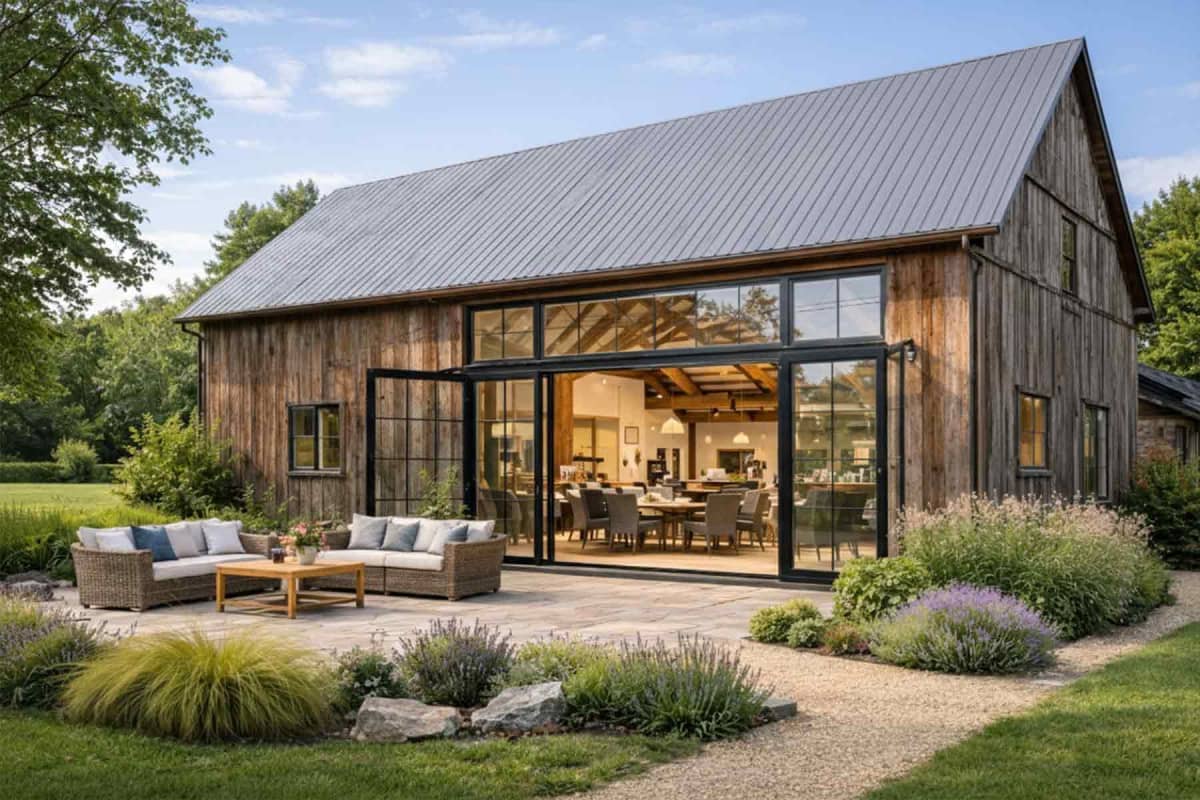
How much does a barn conversion cost?
How much does a barn conversion cost?
$200 – $375 average cost per square foot

Average barn conversion cost
A barn conversion costs $200 to $375 per square foot on average for minimal to moderate structural work and upgrades. High-end conversions or those requiring major structural repairs can exceed $500 per square foot. The final cost depends on your location, the barn's condition, size, and layout, and your desired finishes.
Barn restoration costs $100 to $225+per square foot and focuses on stabilizing and preserving the structure rather than creating a full-time residence.
| Project scope | Average cost per square foot | Average total cost* |
|---|---|---|
| Basic conversion (minimal structural work) |
$200 – $275 | $200,000 – $825,000 |
| Mid-range conversion (moderate structural & system upgrades) |
$275 – $375 | $275,000 – $1,125,000 |
| High-end / historic conversion | $375 – $525+ | $375,000 – $1,575,000+ |
| Restoration only (preserving historic features) |
$100 – $225+ | $100,000 – $675,000 |
*For a 1,000 to 3,000-square-foot barn
Breaking down the cost to convert a barn
Every barn conversion project starts with a unique structure. The following table breaks down how specific components might impact your overall budget:
| Category | Average cost* | What this includes |
|---|---|---|
| Structural repairs & framing | $40,000 – $200,000 | Repairing beams, posts, trusses, sills, and structural reinforcement |
| Roof repair or replacement | $15,000 – $60,000 | New roofing, underlayment, ventilation, insulation, and structural roof fixes as needed |
| Foundation & flooring | $25,000 – $100,000 | New slab, frost walls, crawlspace, subfloor, and finished flooring |
| Insulation & weatherproofing | $10,000 – $40,000 | Wall and roof insulation, air sealing, vapor barriers, and windows |
| Plumbing, electrical, HVAC | $40,000 – $120,000 | Full residential systems and code upgrades |
| Interior finishes | $60,000 – $200,000 | Drywall, cabinetry, countertops, trim, tile, and lighting |
| Appliances | $4,000 – $15,000 | Standard to mid-range kitchen and laundry appliances |
| Design, permits, & professional fees | $25,000 – $90,000 | Architect, engineer, permits, and inspections |
| Contingency (15% – 30%) | $40,000 – $150,000+ | Reserve for hidden damage, code upgrades, price increases, and design changes. |
*For full residential conversion of a 1,000 to 3,000-square-foot barn
Barn conversion cost factors
Many factors can push your budget in one direction or another, often in ways you wouldn't expect from a traditional home build.
Barn type & condition
A sturdy, well-maintained post-and-beam barn is a much cheaper starting point than a neglected structure with sagging walls or rotted sills. The barn's starting condition is often the single biggest factor in your budget, as structural stabilization must happen before any "pretty" work begins.
Location
Labor rates, material availability, and building codes vary significantly by location. Urban and suburban areas often have higher labor costs, while rural properties may incur delivery fees or utility extension costs. Historic or zoning restrictions can also increase permitting expenses and timelines.
Intended use
A simple workshop or guest space costs significantly less than a primary residence with multiple bathrooms, full HVAC, and high-end finishes. The table below shows how costs vary based on the type of space you want to end up with.
| Conversion type | Average cost per square foot | Primary requirements |
|---|---|---|
| Residential home | $200 – $375 | Full kitchen; bathrooms; HVAC; insulation |
| Luxury / historic residence | $375 – $525+ | Custom finishes; preservation standards |
| Commercial (venue; restaurant) | $225 – $400 | ADA compliance; fire and safety systems |
| Workshop / studio | $100 – $200 | Basic electrical; limited plumbing |
| Storage / garage | $50 – $125 | Minimal finishing and utilities |
Barn size and layout
Larger barns naturally require more materials and labor, but they often cost less per square foot due to economies of scale. Complex layouts with multiple levels or unusual rooflines also increase labor costs compared to a simple, open rectangle.
Roof
Most agricultural roofs aren't built to the same standards as residential ones and often lack the strength to hold heavy insulation and modern shingles. Repairing or replacing an asphalt shingle roof costs $3 to $6+ per square foot. A standing seam metal roof costs $9 to $16+ per square foot installed and is popular for its durability and authentic appearance.
Proper roof insulation and ventilation add another $4 to $10 per square foot but are essential for comfortable living spaces.
Foundation & flooring
Many old barns have dirt floors or thin concrete pads that cannot support the weight of residential walls and appliances. You may need to jack up the entire structure to pour a proper, insulated concrete foundation. A new concrete slab foundation costs $6 to $14 per square foot.
Utilities & systems
Bringing water, sewer, and internet to a barn that has never had them is a major expense. If the barn is far from the road, the cost of running utilities can escalate quickly, often totaling $25,000 to $50,000+ for a full system.
Once you have the service connections in place:
New electrical wiring costs $5 to $10 per square foot.
New plumbing pipes cost $5 to $8 per square foot.
A new HVAC costs $7,000 to $16,000+ installed.
Appliances
Modern kitchens and laundry rooms require heavy-duty electrical circuits and dedicated plumbing lines. When converting a barn to a home, budget $3,000 to $5,000+ for a standard set of major appliances.
Features and finishes
Your finish selections dramatically impact your barn conversion cost:
Budget finishes, including basic drywall, laminate countertops, and builder-grade fixtures, range from $30 to $60 per square foot.
Mid-range finishes with quality cabinetry and stone counters cost $60 to $110 per square foot.
Luxury finishes incorporating custom millwork and premium materials can exceed $110 to $225+ per square foot.
Permits & planning costs
Zoning boards often have strict rules about converting agricultural buildings into residential homes, which can require special use permits. Permit fees range from $500 to $2,000+, but professional fees for an architect to draw up the necessary plans can add another 5% to 20% to your budget.
Additional costs
Don't forget the unseen expenses that can pop up during a conversion. Barns are famous for hiding expensive surprises.
Asbestos removal costs $5 to $25+ per square foot.
Lead paint removal costs $6 to $17+ per square foot on average.
Fumigation costs $1 to $4+ per square foot to exterminate unwanted pests.
Landscaping costs and site work like driveways and drainage add $10,000 to $50,000.
Barn conversion pros and cons
Barn conversions are rewarding but challenging. Consider all the pros and cons to determine if a barn conversion fits your goals and budget.
Pros and cons of barn conversion
| Pros | Cons |
|---|---|
|
|
Steps to convert a barn
Barn conversions are multi-phase construction projects that blend structural rehabilitation, new systems installation, and detailed finish work. Unlike standard home renovations, barns often require additional engineering and permits to safely transform an agricultural structure into a livable space.
The following steps outline the standard progression for a barn conversion project. Some of these steps overlap because contractors can tackle different parts of the project at the same time.
Structural assessment (1 – 3 months): Hire a structural engineer and architect.
Design and permitting (2 – 4 months): Secure zoning approvals and permits.
Stabilization and foundation work (1 – 3 months): Repair or replace structural components.
Weatherproofing (2 – 3 months): Install roof, windows, and siding.
Systems installation (2 – 4 months): Install electrical, plumbing, and HVAC systems.
Interior finishing (3 – 6 months): Install insulation, drywall, flooring, and cabinetry.
Total timeline: 9 to 18 months, with complex projects lasting up to 24 months
Barn conversion FAQs
Are barn conversions worth the cost?
Barn conversions can be worth the investment if you value unique architecture, spacious layouts, and sustainable building practices. Quality conversions often increase property values, though the actual increase varies by location and the quality of the conversion.
If you're primarily concerned with cost-per-square-foot efficiency, building a new house or barndominium might be more economical.
Can you get a mortgage for a barn conversion?
Securing a traditional mortgage for a barn conversion can be challenging since many lenders hesitate to finance unconventional properties. You may need a specialized construction-to-permanent loan or a specialty lender to cover the renovation phase.
Is it cheaper to convert a barn or build new?
Converting a barn is often more expensive per square foot than building new. While you have an existing shell, the costs of reinforcing an old structure, meeting modern building codes, and installing utilities in a remote building often outweigh the savings of not building new walls.
How long does a barn conversion take?
Most barn conversions take 9 to 18 months from initial planning to completion, though timelines vary significantly based on project scope and complexity. Simple conversions might finish in 6 months, while extensive renovations of historic barns can stretch to 24 months or longer.
Weather delays, permit processing, and unexpected structural issues commonly extend timelines.
Do barn conversions hold their value?
Well-executed barn conversions typically hold value very well, often appreciating faster than comparable conventional homes in their area. Poorly executed conversions or those in undesirable locations may struggle to recoup costs.
Work with experienced professionals and choose quality materials to ensure your barn conversion remains a sound investment.
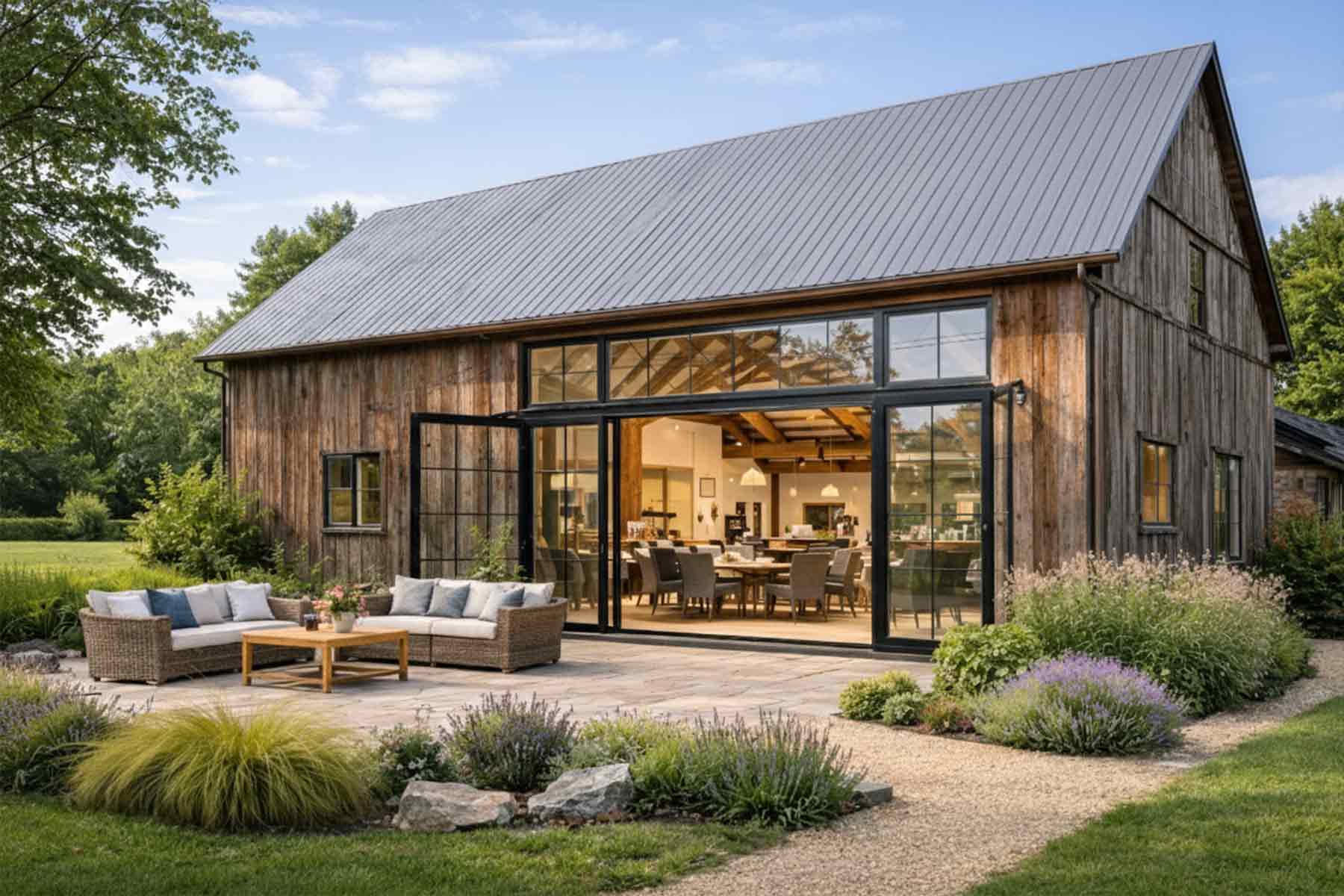
Getting estimates for a barn conversion
A barn conversion is a specialized niche within the construction industry that requires a deep understanding of both historic preservation and modern building science. Follow these tips to find a qualified barn contractor near you:
Search for contractors who specifically list "historic restoration" or "adaptive reuse" in their portfolios.
Read reviews of local restoration contractors on HomeGuide and Google.
Request detailed, itemized estimates from at least three contractors.
Ask for examples of completed barn conversions.
Verify their licensing and insurance.
Confirm their experience with local zoning and permits.
Questions to ask a contractor when converting a barn
Important questions to discuss with potential contractors include:
How many barn conversions have you completed?
Can I see examples of your work or speak with previous clients?
Are you licensed and insured for the full scope of this project, including structural modifications?
What structural concerns do you anticipate, and how will you address them while preserving the barn's character?
How do you handle unexpected issues discovered during construction?
What's your estimated timeline, and what might cause delays?
Do you work with architects, engineers, and subcontractors experienced in barn conversions?
How do you approach preserving original features while meeting modern building codes?
What's included in your quote, and what might cost extra?
What warranties do you provide on your work?
How do you handle communication and updates throughout the project?
Using our proprietary cost database, in-depth research, and collaboration with industry experts, we deliver accurate, up-to-date pricing and insights you can trust, every time.