
How much does an attic inspection cost?
How much does an attic inspection cost?
$200 – $500 average inspection cost

Average attic inspection cost
An attic inspection costs $200 to $500 on average, but prices can range from $100 to $1,000, depending on the size and condition of the space. Unfinished attics cost less to inspect, while finished attic inspections are priced higher. Most attic inspections take one to two hours and include a comprehensive evaluation of all major attic components.
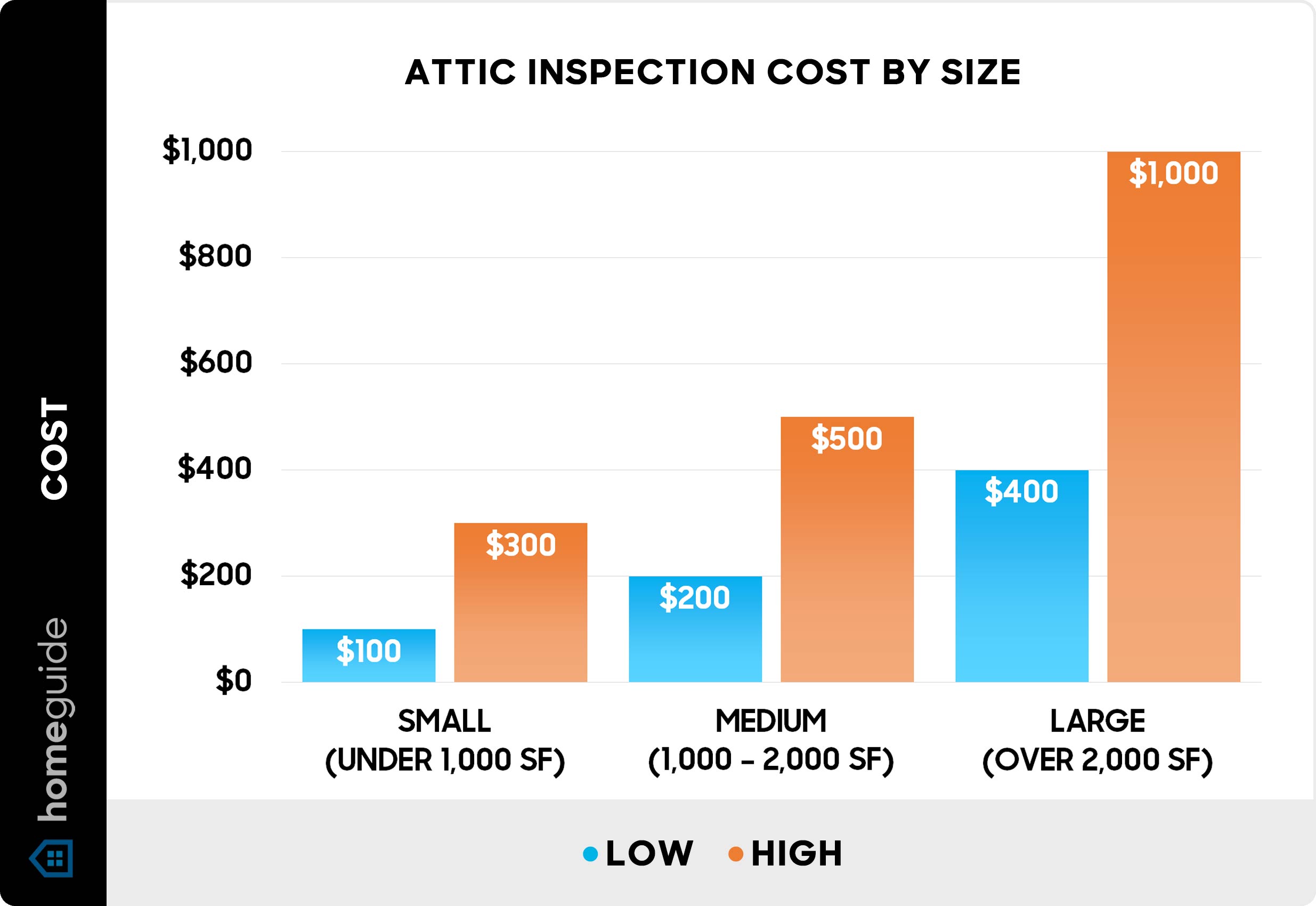
| Attic size | Average inspection cost |
|---|---|
| Small (under 1,000 square feet) | $100 – $300 |
| Medium (1,000 – 2,000 square feet) | $200 – $500 |
| Large (over 2,000 square feet) | $400 – $1,000 |
Your attic plays a critical role in maintaining your home's energy efficiency and structural integrity. Regular inspections help identify problems like inadequate insulation, poor ventilation, pest infestations, and moisture damage before they become expensive repairs.
Attic inspection cost factors
Several factors influence the final cost of your attic inspection:
Attic size and accessibility
The size of your attic will often be the most impactful cost factor, as larger spaces take longer to inspect and come with higher inspection costs. Multi-story homes and attics with limited access points require additional time and effort.
Steep roof pitches and complex attic layouts also increase inspection difficulty. Some attic inspections require special equipment or safety measures that add to the overall cost.
Attic condition and type
Unfinished attics are easier to inspect since everything is readily accessible. All structural elements, insulation, and systems remain visible for direct examination, so inspections take less time and cost less.
Finished attics have flooring, drywall, and other materials covering the structural elements. Inspectors must work harder to assess hidden components, which increases the cost.
| Type of attic | Average inspection cost |
|---|---|
| Unfinished attic | $100 – $350 |
| Finished attic | $350 – $1,000 |
Location
Labor prices vary based on the geographic location. Inspectors in urban areas typically charge more than those in rural locations for the same services.
Climate also affects pricing, as homes in regions with extreme weather conditions may require more frequent or detailed inspections. Areas prone to moisture issues or severe temperature fluctuations often see higher inspection costs.
Age of home
The age of your home can affect inspection costs, with attics in older homes generally taking longer to inspect.
Older homes require assessment of material deterioration, outdated building practices, and accumulated damage. Inspectors spend extra time evaluating the remaining lifespan of aging components. Newer homes primarily need verification of proper installation and code compliance.
Type of inspection
Different inspection methods serve various purposes and budget levels. A standard visual inspection works well for routine maintenance checks and real estate transactions. Thermal imaging identifies energy loss patterns and hidden moisture problems. An energy audit results in detailed savings recommendations, often with utility rebate eligibility.
| Inspection type | Average cost | Description |
|---|---|---|
| Standard visual inspection | $200 – $500 |
|
| Thermal imaging inspection | $400 – $600 |
|
| Comprehensive energy audit | $200 – $800 |
|
Additional services
Some inspections include specialized testing that increases the overall price. If you require additional services like mold testing or pest evaluations, there are often extra costs involved. Some inspectors offer package deals that include multiple assessment types.
When priced individually:
A pest inspection costs $50 to $200 on average.
A visual plumbing inspection costs $100 to $200.
An average electrical inspection costs $100 to $200.
A roof inspection costs $100 to $400.
A mold inspection costs $300 to $650.
Asbestos inspection and testing cost $250 to $850.
Professional radon testing costs $125 to $400.
A home inspection costs $400 to $600 for an average-sized home and typically includes a visual inspection of the attic.
What's included in an attic inspection?
A thorough attic inspection examines multiple components that affect your home's performance and safety. Professional inspectors evaluate both visible and hidden elements that could impact your comfort and energy costs.
Structural components
The inspector checks the joists, rafters, and walls for any signs of structural damage that could affect the building's integrity. They look for cracking, rotting, sagging, or excess moisture in framing members.
Inspectors also examine the roof decking from below to identify potential problems. Professional inspectors can spot early indications of moisture issues, including minor changes in wood color, subtle stains, or high humidity, which are often missed by homeowners.
Insulation assessment
Your inspector evaluates insulation depth, coverage, and condition throughout the attic space. The assessment includes checking the insulation's R-value to ensure it meets local building codes. Inspectors note areas where insulation has settled, shifted, or been damaged by pests or moisture.
If the attic insulation is at the same level or lower than the floor joists, you probably need to add more.
Ventilation systems
In an unsealed attic, adequate ventilation is key, allowing the roof and attic to "breathe" properly. Inspectors check the soffit vents for adequate intake, and the ridge and gable vents for exhaust airflow.
Proper attic ventilation should keep temperatures below 110°F in summer. Temperatures exceeding this threshold indicate inadequate airflow that increases cooling costs.
Moisture and leak detection
Inspectors search for evidence of current or past water intrusion throughout the attic. They use moisture meters and sometimes thermal imaging cameras to detect hidden water problems. Early detection prevents costly mold remediation and structural repairs.
Leaks don't always come from holes in the roof. They are most common around vents, plumbing stacks, radon systems, and chimneys.
When to schedule an attic inspection
Timing your inspection appropriately maximizes its value and helps prevent seasonal damage. Regular inspections catch problems early, reducing repair costs significantly.
Annual maintenance
Experts recommend getting an attic inspection once per year, ideally in the spring or fall.
Spring inspections assess winter damage from ice and snow before summer heat stress begins.
Fall inspections prepare your attic for winter weather challenges.
After severe weather
After severe weather events including storms, hail, or heavy snow loads, inspect your attic for damage that might not be immediately visible from ground level. Wind-driven rain often causes hidden leaks that only appear in attics.
Schedule inspections within two weeks of major weather events for best results. Early detection prevents secondary damage from developing.
Before buying or selling
A detailed attic check is essential before buying or selling a home because it often shows maintenance issues that affect the property's value.
Buyers gain negotiating power from inspection findings. Sellers benefit from addressing problems before listing their homes. Pre-sale inspections prevent deal-breaking surprises during buyer inspections.
Signs to schedule an urgent inspection
You should schedule an immediate inspection if you notice any of the following:
Water stains on ceilings
Unexplained increases in energy bills
Musty odors from above
Mold, rusty nails, or condensation on sheathing
Animal sounds or droppings
Attic inspection FAQs
How long does an attic inspection take?
A standard attic inspection takes 1 to 2 hours, depending on the size and complexity of your attic space. Larger attics or those with accessibility challenges may require additional time. Comprehensive inspections including specialized testing can extend to three hours or more.
Do home inspections include the attic?
Most home inspections include a limited visual or full physical examination of the roof covering and the attic as part of the standard service. However, some inspectors charge extra for detailed attic assessments. Always confirm what's included before scheduling to avoid unexpected costs.
Can attic inspections help lower energy bills?
Yes, attic inspections frequently identify energy efficiency problems that increase utility costs. A properly insulated attic will save homeowners 15% to 20% on their energy bills. Attic inspectors may find air leaks, inadequate insulation, and ventilation issues that waste energy.
Should I be present during the attic inspection?
You should be present during your attic inspection if possible. Experts encourage clients to shadow the inspector and ask plenty of questions. You'll gain insights into maintenance needs and understand any identified problems better.
How often should attics be inspected?
Whether you're looking to sell your home or just focusing on its upkeep, you should inspect your attic at least once a year. Older homes or those in severe climates benefit from twice-yearly inspections. Regardless of your regular inspection schedule, any signs of problems warrant immediate professional evaluation.
Can I inspect the attic myself?
While homeowners can perform basic attic checks, an experienced, licensed home inspector knows exactly what to look for and can identify problems, their sources, and action plans to follow. Professionals also carry specialized equipment and liability insurance.
DIY inspections work for routine monitoring between professional visits. However, safety risks and missed problems make professional inspections essential for comprehensive evaluation.
Getting estimates for home inspection
Follow these guidelines to help you choose a qualified attic inspector near you:
Choose inspectors certified by organizations like InterNACHI or NRCIA.
Look for inspectors with at least five years of experience and positive customer feedback on HomeGuide and Google.
Get estimates from three to five inspectors in your area.
Review example inspection reports to see their thoroughness and clarity before hiring.
Ensure they carry errors and omissions insurance as well as general liability protection.
Clarify whether thermal imaging, moisture testing, or detailed reports cost extra.
Questions to ask a home inspector
Before hiring an inspector, ask these essential questions to ensure you're getting comprehensive service and value:
What specific areas of my attic will you inspect?
Do you use thermal imaging or moisture meters during inspections?
How long will the inspection take for my size attic?
Will you provide a detailed written report with photos?
What's your experience with homes similar to mine in age and style?
Are you licensed and insured for attic inspections in this state?
Do you offer any guarantees on your inspection services?
Can you provide references from recent attic inspections?
What additional services might you recommend based on your initial findings?
When can I expect my report after the inspection?
Do you offer follow-up consultations to discuss findings?
Are you available to reinspect after repairs are completed?
Using our proprietary cost database, in-depth research, and collaboration with industry experts, we deliver accurate, up-to-date pricing and insights you can trust, every time.