
How much does ductwork insulation cost?
How much does ductwork insulation cost?
$3 – $13 average cost per square foot
$1,000 – $4,500 average total cost

Average ductwork insulation cost
Ductwork insulation costs $3 to $13 per square foot or $1,000 to $4,500 total on average for labor and materials. The cost to insulate ductwork depends mostly on the insulation material, local labor charges, and HVAC system size. Rigid foam boards and spray foam tend to cost more than traditional fiberglass insulation.
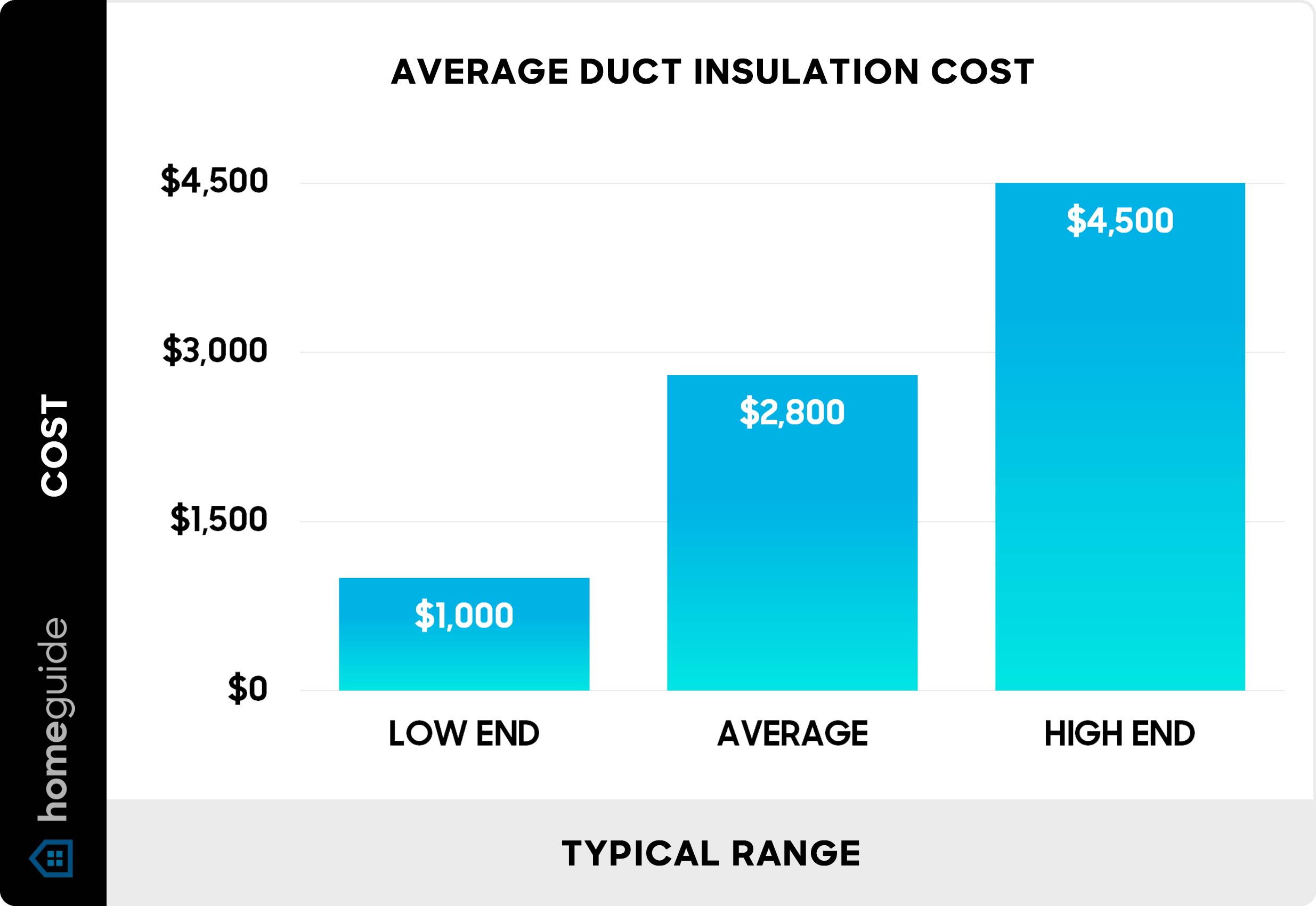
| National Average Cost | $2,800 |
| Minimum Cost | $750 |
| Maximum Cost | $12,000 |
| Average Range | $1,000 to $4,500 |
Cost to insulate ductwork by material
Insulation costs vary depending on the type, material thickness, R-value, and installation difficulty. Fiberglass wrap is the most common type used to insulate ductwork, while duct board and foam insulation can cost more. The table below shows cost ranges with professional installation:
| Insulation type | Average installed cost |
|---|---|
| Fiberglass wrap | $3 – $7 |
| Rigid foam board | $5 – $10 |
| Reflective insulation | $4 – $11 |
| Spray foam coating | $8 – $13 |
Fiberglass wrap
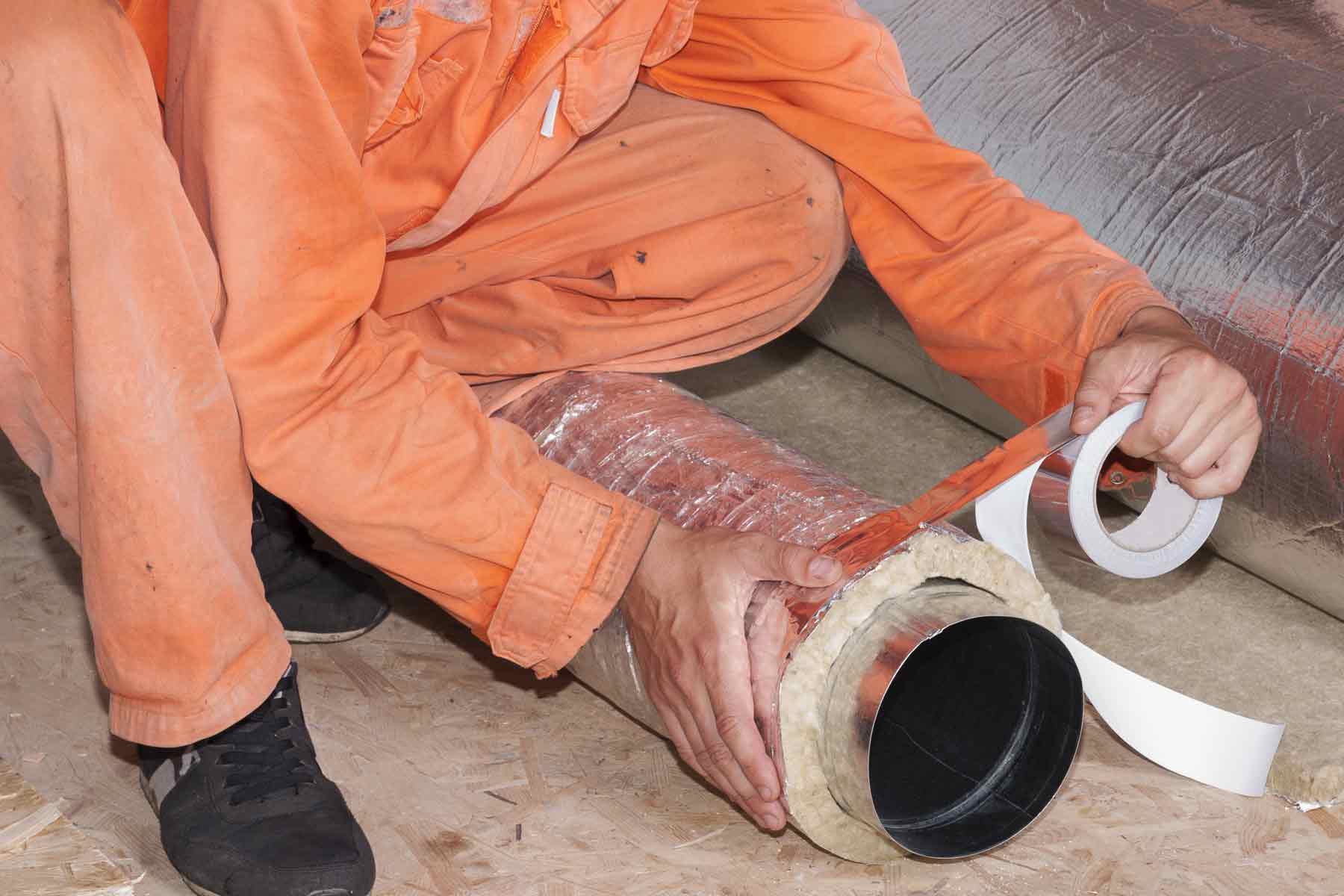
Fiberglass duct wrap costs $3 to $7 per square foot with installation. It is the most common solution for homes because it balances price and performance. Proper installation requires sealing at every seam to prevent air leaks. Pros stretch and tape the wrap tightly to maintain maximum efficiency.
Rigid foam board
Rigid foam board insulation costs $5 to $10 per square foot. Contractors cut panels to fit against ducts and seal joints with foil tape. Foam board resists moisture better than fiberglass wrap, making it a strong choice for crawlspaces. Installation requires precision and more labor, raising the material cost.
Reflective insulation
Reflective insulation costs $4 to $12 per square foot. This type uses foil (sometimes attached to rigid foam boards) to reflect heat away from ducts, especially in warmer climates. It's lightweight, easy to install, and particularly useful in attics and other areas where ductwork may be exposed to radiant heat.
Spray foam
Spray foam costs $8 to $13 per square foot installed, making it one of the most expensive methods. Professionals spray insulation directly around duct surfaces, sealing gaps and improving airtightness. Foam resists moisture damage and air leaks well. Because it requires specialized equipment, labor costs are higher than other methods.
AC duct insulation cost factors
Many conditions impact ductwork insulation prices:
Duct material condition: If ducts are leaking, rusted, or bent, repairs or replacement add to the cost. HVAC repairs cost $75 to $150 per hour on average. Total ductwork replacement costs $25 to $55 per linear foot or $1,400 to $5,600 total.
Accessibility of ducts: Labor hours increase when contractors must crawl or cut through surfaces.
Length of ductwork: More square footage means higher labor and material costs.
R-value requirements: Higher insulation ratings improve efficiency but cost more per square foot for materials.
Climate demands: Hot or humid regions often require thicker insulation or vapor barriers.
Removal of old duct wrap: If old insulation needs stripping, expect extra labor charges.
Inspection and sealing
Before starting, your technician may recommend an inspection or pressure test. An air duct inspection costs $150 to $500 and checks the safety of the entire HVAC system and detects any potential issues.
If there are any gaps or leaks in the system, duct sealing costs $1 to $2 per square foot or $1,000 to $6,000 total, depending on the size of your house.
Duct insulation FAQs
Does ductwork need to be insulated?
Yes, ductwork in unconditioned spaces requires insulation. Without insulation, ducts lose heated or cooled air, forcing furnaces or air conditioners to run longer. Proper insulation lowers utility bills and improves comfort. In crawlspaces or attics, insulation also prevents condensation from forming on ducts in humid conditions.
What kind of insulation do pros use on ductwork?
Most professionals use fiberglass duct wrap, rigid foam board, or spray foam. Fiberglass wrap remains the most common due to cost. Foam board offers better moisture protection, while spray foam excels at air sealing. Choice depends on duct location, home climate, and homeowner budget.
How long does duct insulation take?
Insulating ductwork often takes one day for small projects. A standard 200-square-foot duct system in a basement may wrap in 5 to 6 hours. Larger attic or crawlspace jobs can take two days. Time depends on duct layout complexity, insulation type, and whether old materials need removal.
Getting estimates from HVAC companies
Find the best ductwork contractors or insulation companies near you by following these tips:
Request at least three written quotes for comparison.
Ask contractors for material choices and R-values.
Evaluate their reputation in reviews on HomeGuide and Google.
Confirm if old insulation removal is included.
Ensure quotes include labor, sealing, and disposal.
Questions to ask technicians
When hiring a contractor for duct insulation, be clear on expectations and scope before agreeing to terms. Prepare with specific questions such as:
What type of insulation do you recommend for my ducts, and why?
What R-value meets code in my region?
How do you seal seams and joints for air leaks?
Is old insulation removal in the quote?
How do you address moisture issues in attics or crawlspaces?
What warranties cover insulation and labor?
Can you provide references from recent duct insulation projects?
Will you need to shut off my HVAC during insulation work?
Do you handle disposal of old insulation materials?
How many days will the project take?
Using our proprietary cost database, in-depth research, and collaboration with industry experts, we deliver accurate, up-to-date pricing and insights you can trust, every time.