How much does spray foam insulation cost?
How much does spray foam insulation cost?
$1.50 – $5.00 average cost per square foot

$1.50 – $5.00 average cost per square foot
Are you a pro?How much will your project cost?TABLE OF CONTENTSEdited by Tara Farmer
Average spray foam insulation cost
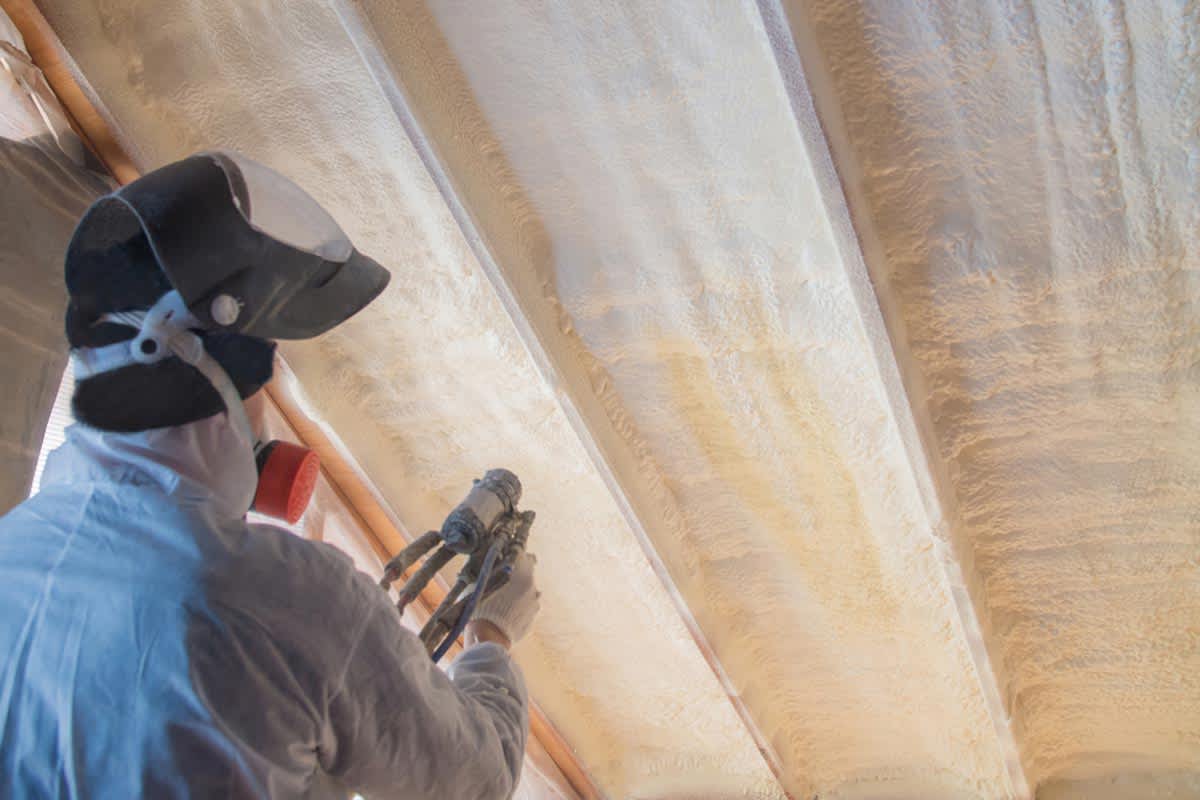
Spray foam insulation costs $1.50 to $5.00 per square foot on average with professional installation. The total project cost depends on the size of the area being treated, foam type and thickness, R-value requirements, and location in your home. Most spray foam insulation companies have minimum job fees of $1,000 to $2,000 or more.
| Square feet* | Average cost |
|---|---|
| 800 | $1,200 – $4,000 |
| 1,000 | $1,500 – $5,000 |
| 1,200 | $1,800 – $6,000 |
| 1,500 | $2,250 – $7,500 |
| 1,800 | $2,700 – $9,000 |
| 2,000 | $3,000 – $10,000 |
| 2,500 | $3,750 – $12,500 |
| 3,000 | $4,500 – $15,000 |
| 3,500 | $5,250 – $17,500 |
| 4,000 | $6,000 – $20,000 |
*Based on square feet of treated surface area, not floor square footage
Spray foam insulation cost by type
The type of spray foam significantly impacts both the upfront cost and long-term performance of your insulation. Two main types are available—open-cell foam and closed-cell foam—each with distinct characteristics, price points, and benefits.
| Foam type | Average cost per square foot* | Best for |
|---|---|---|
| Open-cell spray foam | $1.50 – $3.50 |
|
| Closed-cell spray foam | $3.00 – $5.00 |
|
*Including materials and professional installation
Open-cell spray foam
Open-cell spray foam costs $1.50 to $3.50 per square foot with installation and has an R-value of 3.5 to 3.7 per inch. This lighter, softer foam expands more during application, making it ideal for interior walls and sound dampening.
Closed-cell spray foam
Closed-cell spray foam costs $3.00 to $5.00 per square foot with installation and has an R-value of 5 to 7 per inch. This denser, more rigid foam provides superior insulation and structural support. It resists pests, water infiltration, and mold growth, making it ideal for exterior applications.
What affects the cost of spray foam insulation?
In addition to the type of spray foam, several other factors influence the total project cost, including the project size, the part of the home being insulated, the insulation thickness, and more:
Project size
Most contractors offer better rates for larger jobs since they can complete the work more efficiently. Small projects may incur minimum fees of $1,000 to $2,000+.
When determining the project size, the treated surface area includes all walls, ceilings, and floors that receive foam application. This calculation differs significantly from the floor square footage.
Location in home
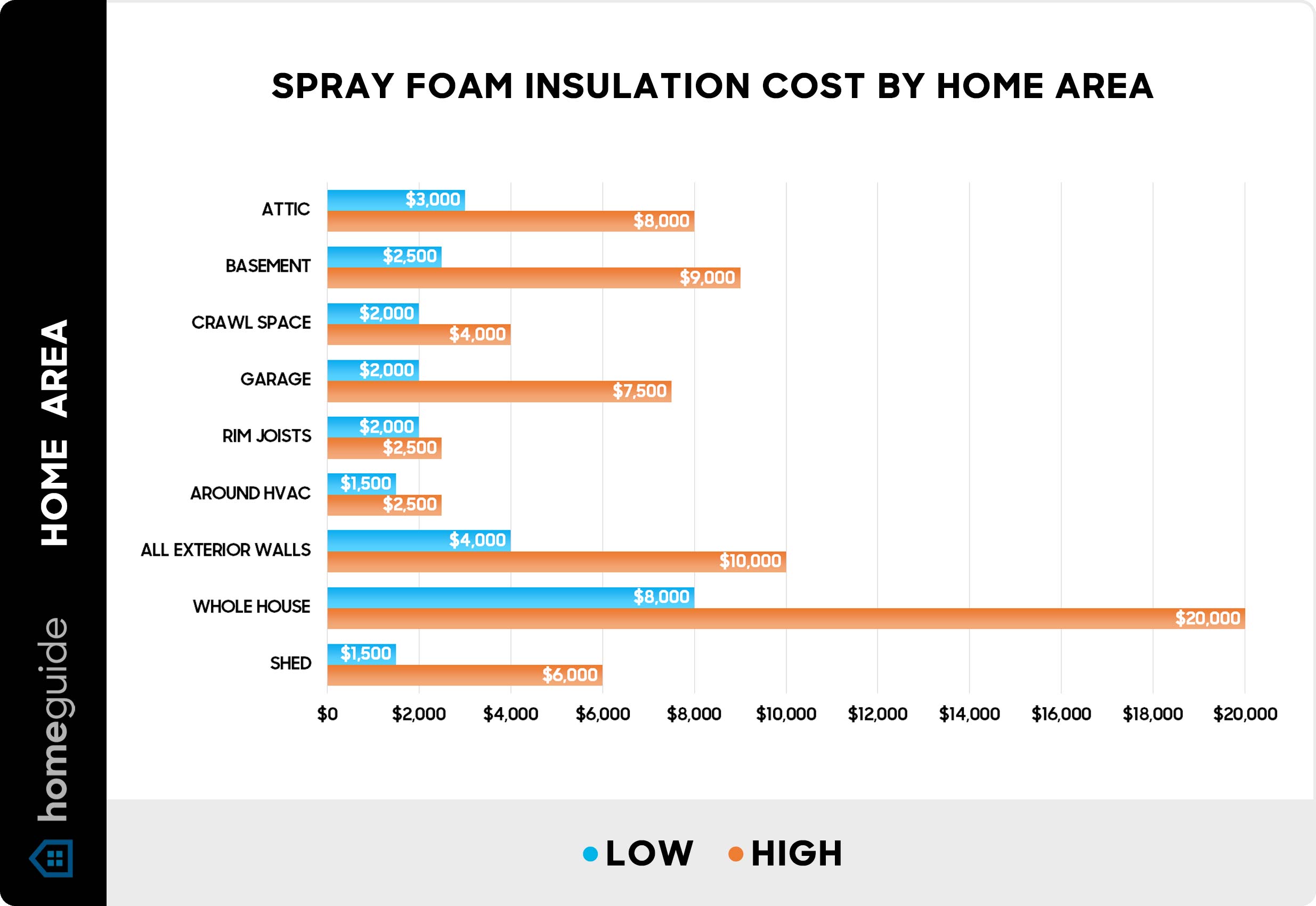
Where you install spray foam insulation affects the project complexity, required thickness, and overall cost. Different areas of your home have unique insulation needs and accessibility challenges.
| Home area | Average total cost |
|---|---|
| Attic | $3,000 – $8,000 |
| Basement | $2,500 – $9,000 |
| Crawl space | $2,000 – $4,000 |
| Garage | $2,000 – $7,500 |
| Rim joists | $2,000 – $2,500 |
| Around HVAC | $1,500 – $2,500 |
| All exterior walls | $4,000 – $10,000 |
| Whole house | $8,000 – $20,000 |
| Shed | $1,500 – $6,000 |
Insulation thickness
The thickness of spray foam directly impacts both the cost and insulation performance. More thickness means higher R-values and better insulation but also increases material and labor costs. To achieve the required R-value, open-cell foam needs greater thickness than closed-cell foam.
Accessibility
Accessibility significantly impacts the labor costs and project complexity. Areas that are difficult to reach require more time, specialized equipment, and careful maneuvering. Installation costs less in easy-access areas like open attics and unfinished basements compared to tight crawl spaces or finished walls.
Labor
The labor cost for spray foam insulation ranges from $0.50 to $2.00+ per square foot, depending on the project complexity and local rates. Labor costs increase for projects requiring extensive preparation, difficult access, or roofs with steep pitches.
Siding type
When insulating a home's exterior walls, the type of siding also affects the cost. Contractors typically spray foam in existing exterior walls from the outside. Vinyl siding is the easiest to remove and reattach. Brick and wood siding require the most labor.
Removing old insulation
Removing existing insulation costs $1.00 to $2.50 per square foot. Some spray foam projects work over existing insulation if it's in good condition. However, removing old material often provides better results and allows inspection of underlying structures.
Existing home vs. new construction
Spray foam insulation costs less for newly constructed homes because wall cavities are open and easily accessible. Contractors can spray foam before drywall installation without additional preparation or access work.
Existing homes require more labor and preparation. Installers must either remove drywall sections to access wall cavities or drill holes for injection foam methods. Closed walls may also have obstacles like wiring and plumbing that complicate the installation.
Spray foam cost vs. other insulation types
Spray foam insulation costs more up front than other types of insulation but offers superior air sealing and R-value per inch. Spray foam also lasts longer than other insulation materials when properly installed.
The table below compares the price and R-value of spray foam versus other insulation options.
| Insulation type | Cost per square foot installed* | R-value per inch |
|---|---|---|
| Spray foam | $1.50 – $5.00 | 3.5 – 7.0 |
| Fiberglass batts | $1.00 – $2.60 | 2.2 – 2.9 |
| Wool | $1.50 – $3.80 | 3.2 – 4.1 |
| Blown-in | $1.00 – $2.80 | 2.2 – 4.1 |
| Rigid foam board | $1.20 – $3.70 | 3.6 – 5.0 |
*Based on square feet of treated surface area, not floor square footage
Spray foam insulation pros and cons
While spray foam offers exceptional performance, it's not perfect for every situation. The table below shows the benefits and drawbacks to help you determine whether it's the right choice for your home.
| Pros | Cons |
|---|---|
|
Get free estimates from spray foam insulation contractors near you.
|
Spray foam insulation FAQs
Is spray foam insulation worth it?
Spray foam insulation is worth it for most homeowners due to significant energy savings and improved comfort. The investment typically pays for itself within 5 to 10 years through reduced heating and cooling costs.
Beyond energy savings, spray foam eliminates drafts, reduces noise, prevents moisture problems, and increases home value. The superior air sealing capabilities make it especially valuable in extreme climates.
However, spray foam may not be worth it for homes with minimal insulation needs, very mild climates, or tight renovation budgets. Traditional insulation alternatives work well for many situations at lower costs.
Is spray foam insulation hazardous?
Properly installed spray foam insulation is inert and generally safe after it cures. Most spray foam is polyurethane, which contains chemicals that are dangerous to the skin and lungs until the foam cures. Installation requires protective gear, and professionals follow strict safety protocols to prevent exposure to uncured chemicals.
You must vacate the sprayed area for 24 hours or more until cured. After proper curing, the foam is safe and releases no harmful emissions. Poor installation or inadequate curing time can cause lingering odors or health concerns.
Is spray foam insulation flammable?
Spray foam insulation is combustible but includes fire retardants to slow ignition and the spread of flames. Building codes require fire barriers like drywall over spray foam in living spaces. When exposed to fire, spray foam can release toxic smoke and fumes. However, the foam itself burns more slowly than many building materials and doesn't support active flames.
What is the R-value of spray foam insulation?
The R-value of spray foam insulation is 3.5 to 7 per inch, depending on the type and manufacturer. R-value is the measure of a material's heat transfer resistance. Higher R-values indicate better insulation.
| Type | R-value per inch |
|---|---|
| Open-cell | 3.5 – 3.7 |
| Closed-cell | 5 – 7 |

Getting estimates from spray foam installers
Follow these tips to find the best spray foam insulation contractors near you:
Get quotes from at least three companies that specialize in spray foam insulation.
Ask for a detailed quote including areas to be sprayed, estimated R-value, insulation depth or thickness, and spray foam brand and type.
Look for certified spray foam insulation professionals.
Read their reviews on HomeGuide and Google.
Ask for a foam removal guarantee in the event of incorrect installation.
Confirm the installers are licensed and insured.
Get a detailed estimate, contract, and warranty in writing before the work begins.
Questions to ask spray foam companies
Ask installers these questions to help you choose the right pro for the job:
How long have you been in business?
What experience do you have with spray foam insulation?
Are you licensed and insured?
Will the work be subcontracted?
Is spray foam the best insulation type for my space?
Do you recommend open-cell or closed-cell insulation for my space, and why?
Does your quote include removing the old insulation?
What additional costs should I expect?
How long does the spray foam take to cure, and when can we safely re-enter the house?
How long will the project take?
How long should the insulation last?
Is there a warranty, and if so, what does it include?
Do you offer a whole-house discount?
Do you offer financing options?
Are there rebates available, and do you apply for them?
Using our proprietary cost database, in-depth research, and collaboration with industry experts, we deliver accurate, up-to-date pricing and insights you can trust, every time.