
How much does basement insulation cost?
How much does basement insulation cost?
$1,300 – $5,000 average total cost (1,000 SF basement)

$1.00 – $4.50 average cost per square foot of wall area
Are you a pro?How much will your project cost?TABLE OF CONTENTSEdited by Tara Farmer
Average basement insulation cost
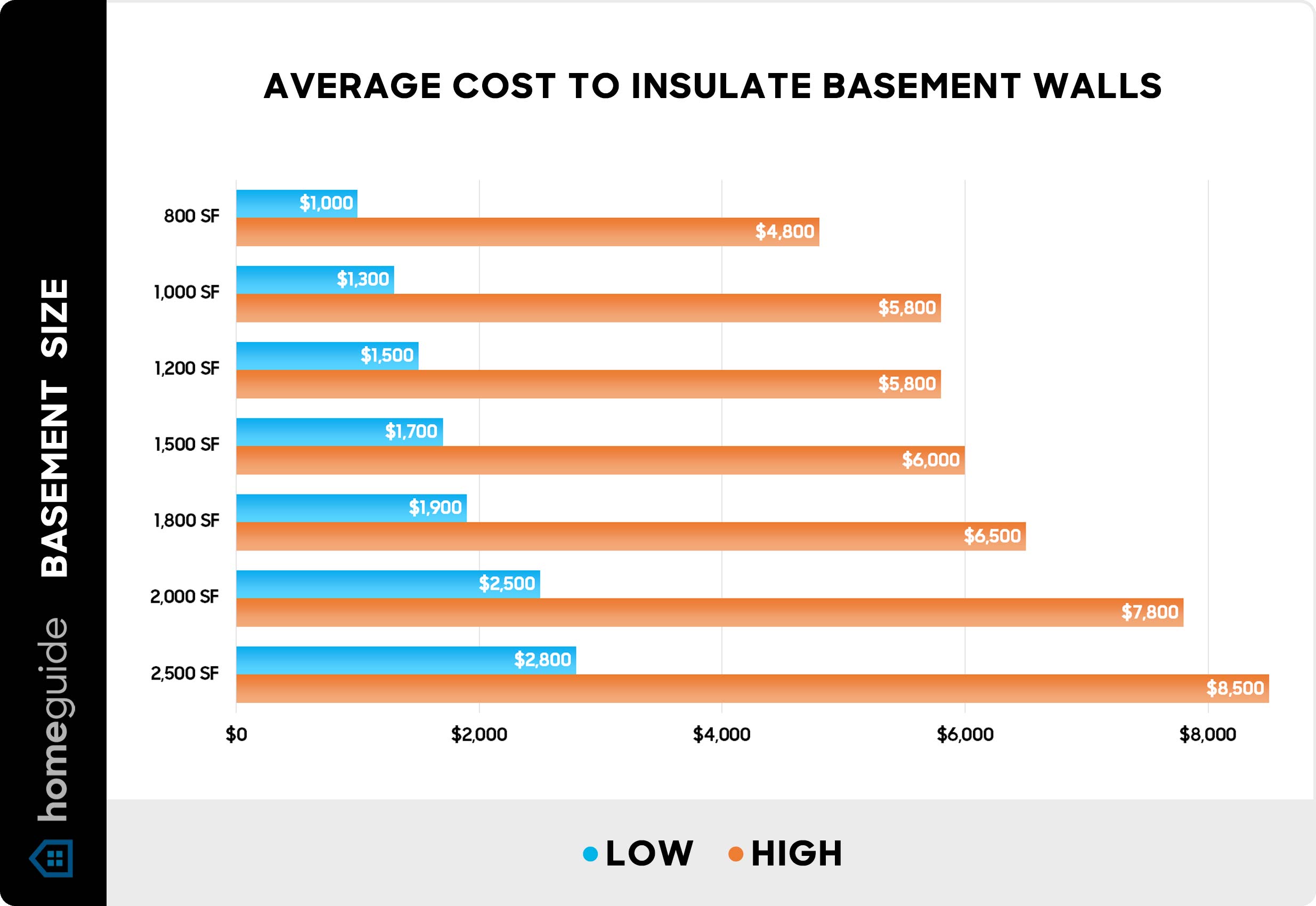
Basement insulation costs $1 to $5 per square foot of wall or ceiling area, or about $1,300 to $5,000 total for a 1,000-square foot basement. The total cost to insulate a basement depends on the insulation type and R-value, the project size, and local labor rates.
| Basement size (square feet) |
Average cost |
|---|---|
| 800 | $1,000 – $4,800 |
| 1,000 | $1,300 – $5,800 |
| 1,200 | $1,500 – $5,800 |
| 1,500 | $1,700 – $6,000 |
| 1,800 | $1,900 – $6,500 |
| 2,000 | $2,500 – $7,800 |
| 2,500 | $2,800 – $8,500 |
Basement insulation cost by type
Different insulation materials offer varying levels of performance, installation complexity, and cost. Your choice depends on your basement's condition, whether the walls are finished or exposed, and your budget. Each type has unique advantages for basement applications.
The table below shows the average cost per square foot and R-value for the most popular types of basement insulation.
| Insulation type | Cost per square foot installed* | R-value per inch |
|---|---|---|
| Fiberglass batts | $1.00 – $2.60 | 2.2 – 2.9 |
| Wool | $1.50 – $3.80 | 3.2 – 4.1 |
| Spray foam | $1.50 – $5.00 | 3.5 – 7.0 |
| Rigid foam board | $1.20 – $3.70 | 3.6 – 5.0 |
*Based on square foot of wall area, not floor space.
Fiberglass batts
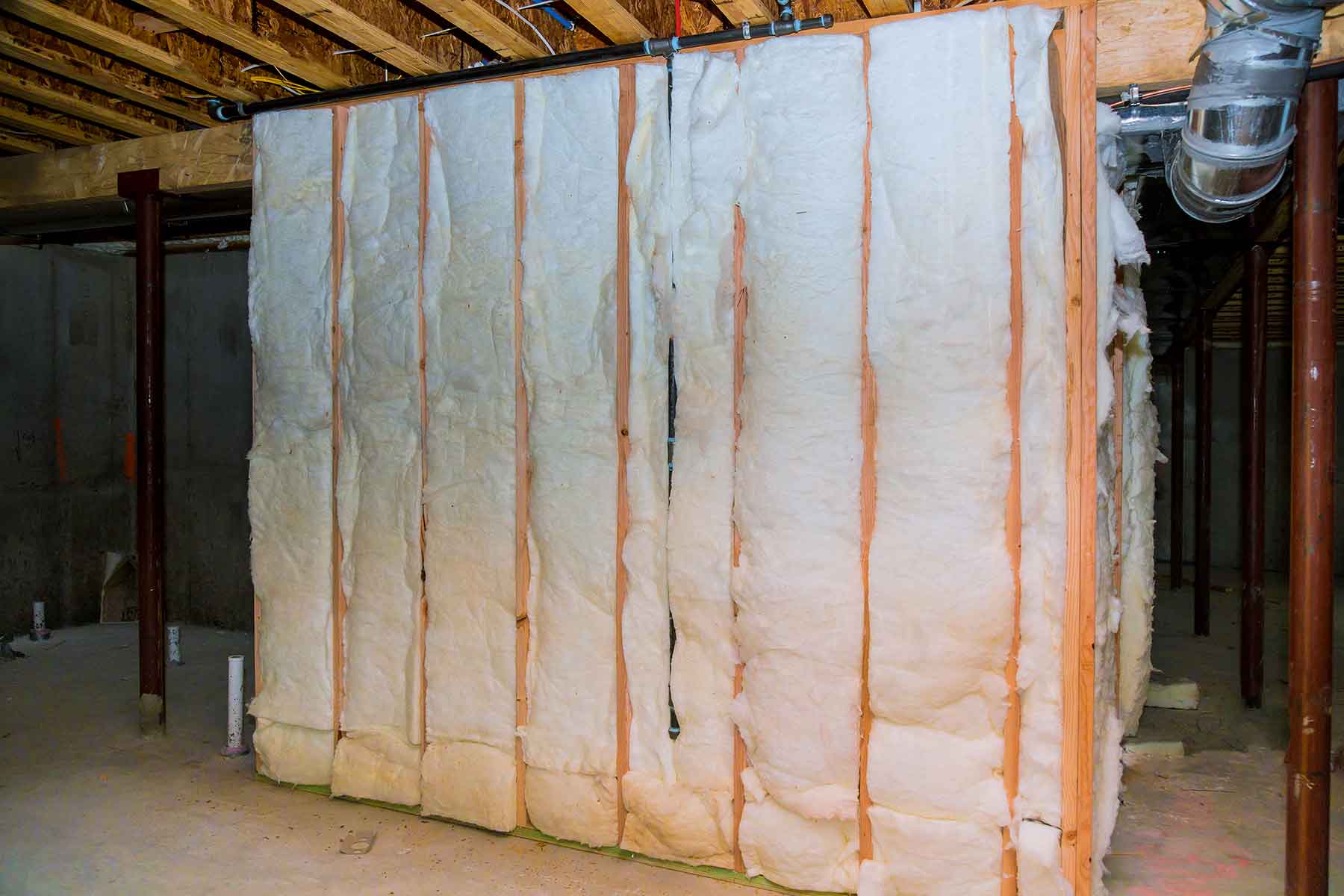
Fiberglass batt insulation costs $1.00 to $2.60 per square foot installed, depending on the R-value. Batt insulation is ideal for exposed wall or ceiling cavities and fits between wall studs and joists.
Fiberglass batt insulation is the most budget-friendly option and works well if you're framing out your basement walls. However, it can absorb moisture if not properly protected, so it's best used with a vapor barrier in basement applications.
Wool
Wool insulation costs $1.50 to $3.80 per square foot installed, depending on the wool type. Wool insulation naturally resists moisture, mold, and fire, making it an excellent choice for basements. Mineral wool is particularly popular because it won't sag over time and provides good soundproofing.
Rigid foam board
Rigid foam board insulation costs $1.20 to $3.70 per board foot with installation. The material is lightweight, easy to install, and has a higher R-value than traditional fiberglass batts, offering more effective insulation.
Rigid foam board is perfect for insulating concrete basement walls directly. It resists moisture damage and can be installed against foundation walls without framing, saving space and money.
Spray foam
Spray foam insulation costs $1.50 to $5.00 per square foot installed, depending on the type, R-value, and project size. Closed-cell foam blocks air and moisture, making it ideal for basements when leaving the basement walls exposed. Open-cell foam is best if you plan to finish the basement walls with drywall.
Spray foam provides the best air sealing of any insulation type, filling every crack and gap. While it costs the most up front, it offers superior moisture protection and energy savings that can offset the initial investment.
Basement insulation cost factors
In addition to the insulation type, several other factors also influence the cost, including the basement size, the insulation's R-value, local labor rates, and more.
Basement size
Larger basements naturally cost more to insulate, but the price per square foot often decreases as the project size increases. Contractors may offer volume discounts for bigger jobs since they can work more efficiently on larger spaces.
Keep in mind the square footage used for pricing is based on the wall area, not floor space.
Insulation R-value
R-value measures insulation's resistance to heat flow. The higher the number, the better it insulates. Building codes typically require R-10 to R-15 for basement walls, though colder climates may need R-19 or higher.
The R-value you choose directly impacts cost. Higher R-values require thicker insulation or more expensive materials like closed-cell spray foam. Your local climate determines which R-value is necessary.
Labor cost
The labor cost to install insulation in a basement ranges from $40 to $80+ per hour, depending on the insulation type and material, the project size, and your location. Simple batt insulation installation is priced on the lower end, while spray foam requires specialized equipment and training, pushing labor costs higher.
Additional costs
These other projects are commonly paired with basement insulation work:
Framing basement walls costs $18 to $24 per linear foot, or about $2,300 to $3,500+ total for a 1,000-square-foot basement with an open floorplan.
Basement drywall costs $1.50 to $3.50 per square foot of wall surface, including installation.
Basement waterproofing costs $6,000 to $18,000.
Mold remediation costs $15 to $30 per square foot.
Address any moisture problems before insulating a basement.
Basement insulation FAQs
Should you insulate basement walls?
Insulating basement walls is highly recommended for most homes. Proper insulation significantly reduces heat loss, potentially lowering your heating bills by 10% or more. It also prevents cold floors above the basement and reduces condensation that can lead to mold growth.
Even if you don't plan to finish your basement, insulating the walls makes your entire home more comfortable and energy efficient. In cold climates, it's one of the most cost-effective home improvements you can make.
Should you insulate a basement ceiling?
Insulating the basement ceiling makes sense if you want to keep heat in the basement separate from the upper floors, or if you're dealing with noise issues. However, most energy experts recommend insulating the walls instead, as this treats your basement as part of the home's thermal envelope.
If your basement stays unfinished and unheated, ceiling insulation can save energy by keeping warmth in your living spaces above.
What type of insulation is best for a basement?
The best insulation for your basement depends on its current condition, your plans, and your budget. Rigid foam board excels for concrete walls in unfinished basements, while spray foam offers the best moisture protection and air sealing. Mineral wool works well for framed walls and provides excellent fire resistance.
What R-value insulation is best for basement walls?
Most building codes require R-10 to R-15 for basement walls, though R-19 or higher is recommended in colder climates like the northern U.S. Check your local building codes for specific requirements in your area.
Higher R-values provide better energy savings but cost more up front. In moderate climates, R-13 offers a good balance of performance and cost. If energy costs are high in your area or you experience cold winters, investing in R-19 or higher pays for itself more quickly.
Getting estimates from insulation installers
Before hiring an insulation contractor near you:
Get quotes from at least three insulation companies to compare.
Ask for a detailed quote including the insulation type and brand, estimated R-value, and insulation depth or thickness.
Read installers' reviews on HomeGuide and Google.
Confirm the company is licensed and insured.
Ask for references.
Get a detailed contract and warranty in writing before the work begins.
Questions to ask insulation contractors
Ask insulation installers these questions to help you choose the best pro for the job:
How long have you been in business?
What experience do you have installing insulation in basements?
Are you licensed and insured?
What insulation type do you recommend for my space, and why?
How long should the insulation last?
How long will the project take?
What additional costs might come up during the project?
Is there a warranty? If yes, what does it include?
Using our proprietary cost database, in-depth research, and collaboration with industry experts, we deliver accurate, up-to-date pricing and insights you can trust, every time.