
How much does roof insulation cost?
How much does roof insulation cost?
$2 – $7+ per square foot
$1,500 – $7,000+ average total cost (1,000 square feet)

Roof insulation cost
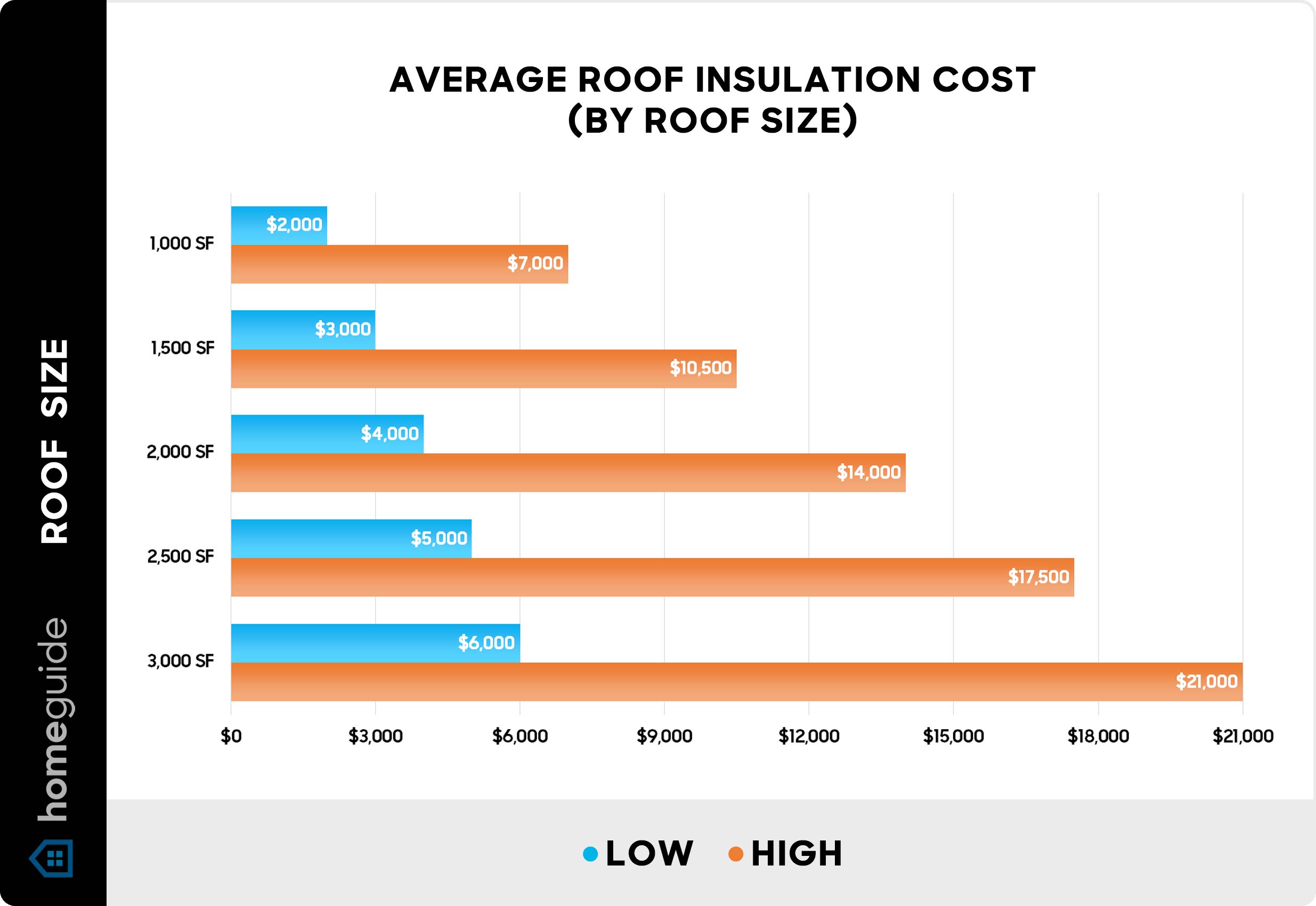
Roof insulation costs $2 to $7+ per square foot, or $2,000 to $7,000+ total on average for a 1,000-square-foot roof. The price of roof insulation depends on the geographic location, insulation material, roof size, and job complexity. Spray foam roof insulation costs on the high end but offers high R-values and optimal air sealing.
| Roof size (square feet) | Average cost installed |
|---|---|
| 1,000 | $2,000 – $7,000+ |
| 1,500 | $3,000 – $10,500+ |
| 2,000 | $4,000 – $14,000+ |
| 2,500 | $5,000 – $17,500+ |
| 3,000 | $6,000 – $21,000+ |
What affects the price of roof insulation?
The total area to be insulated has a major impact on the total roof insulation cost. Larger roofs require more materials and labor, increasing the overall price. However, several other variables influence the total cost of a roof insulation project:
Location: Regional labor costs and climate requirements significantly impact pricing. Colder regions require higher R-values, increasing material costs.
Roof design: Complex roof shapes with dormers or skylights add to installation time and costs.
Local regulations: Building codes vary by region and may mandate specific R-values or materials.
Air sealing: Air sealing an attic costs $350 to $3,000+. Proper air sealing maximizes the insulation's effectiveness and prevents energy loss through gaps and cracks.
Old insulation removal: Removing old insulation costs $1 to $2+ per square foot. Removal becomes necessary when existing insulation is damaged, contaminated, or insufficient.
Repairs: Addressing structural issues or moisture damage before installation adds to project costs. Insulation that sags or falls can mean water damage or pests.
Vented vs. unvented attic: Roof insulation options for an unvented attic include spray foam, rigid foam, and reflective insulation. Batt insulation requires a gap or baffles between the roof deck and the insulation for proper airflow and ventilation.
Labor
Most insulation pros charge $40 to $80+ per hour, and labor costs represent a significant portion of total project expenses. Insulation is a complex and often dangerous job, so professional installation ensures proper coverage and performance.
Insulation material
Material selection significantly affects both the upfront insulation cost and the insulation's long-term performance. Each type offers distinct advantages for different applications and budgets. The table below shows the average cost for various roof insulation materials.
| Insulation material | Average cost (per square foot)* |
Details |
|---|---|---|
| Batt roll insulation cost | $2.00 – $3.75 |
|
| Spray foam insulation cost | $3.00 – $7.00 |
|
| Perlite concrete | $1.40 – $2.30 |
|
| Reflective | $2.00 – $5.00 |
|
| Wood fiberboard | $7.00 – $10.00 |
|
| Rigid foam board (EPS, XPS, or ISO) |
$2.50 – $6.00 |
|
*Including installation
Expanded polystyrene (EPS) is a lightweight, cost-effective rigid foam option with good moisture resistance and moderate R-value.
Extruded polystyrene (XPS) rigid foam board offers superior moisture resistance, making it ideal for humid environments.
Polyisocyanurate (ISO) rigid foam has the highest R-value among rigid boards and is commonly used in commercial roofs.
Roof insulation vs. attic insulation
Roof insulation is applied directly beneath the roof deck, while attic insulation is installed on the attic floor. Attic floor insulation costs less in most cases, but it is less effective if ducts or HVAC are present in the attic air space. Consider roof insulation when you plan to use the attic space for storage or living areas.
| Factor | Roof insulation | Attic insulation |
|---|---|---|
| Average cost | $2 – $7+ per square foot | $1 – $4 per square foot |
| Installation location | Directly under the roof deck | Attic floor |
| Best for | Homes with conditioned attics or vaulted ceilings | Homes where the attic remains unused and properly ventilated |
Roof insulation FAQs
How do you insulate a roof?
Roof insulation installation involves several methods depending on the chosen material. Spray foam insulation requires professional application directly to the underside of roof decking. Rigid foam boards are cut to fit and secured with mechanical fasteners or adhesives.
Batt insulation fits snugly between roof rafters without compression. Ventilation requirements vary based on the insulation type and local building codes. Hire a qualified insulation professional to ensure proper installation, coverage, air sealing, and code compliance.
What is the best roof insulation?
The best roof insulation depends on your specific needs, budget, and climate. Consider factors like moisture resistance, R-value requirements, and long-term durability when selecting materials.
Spray foam offers superior air sealing and the highest R-value per inch but costs more.
Rigid foam boards provide excellent moisture resistance and consistent performance.
Fiberglass batts offer affordability for accessible installations.
A professional consultation can help you determine the optimal solution for your specific situation.
How long does roof insulation last?
The lifespan of roof insulation depends on the type and environmental conditions. Spray foam insulation lasts up to 30 years on the roof deck underside. Fiberglass and rigid foam insulation can last up to 100 years but should be inspected every 15 to 20 years to ensure it still complies with current building codes.
Proper installation and moisture control extend insulation lifespan significantly. Regular inspections help identify potential issues before they compromise performance.
Does roof insulation save money?
Yes, roof insulation can provide substantial energy savings over time. The U.S. Department of Energy estimates that homeowners can save up to 20% on heating and cooling costs (or an average of 10% total) by adding insulation. These savings accumulate over the insulation's lifespan, often offsetting initial installation costs.
What R-value do I need for roof insulation?
R-value requirements depend on your climate zone and local building codes. Colder climates require higher R-values for effective thermal performance. Consult with local building officials or get a home energy audit to determine the specific R-value requirements for your area. Proper R-value selection balances energy savings with installation costs.
Getting estimates for roof insulation
Use the following tips to find a qualified roof insulation contractor near you:
Get at least three detailed estimates from licensed insulation contractors.
Verify each contractor's credentials and insurance coverage.
Look at reviews in Google and HomeGuide.
Request references from recent similar projects.
Compare material specifications, labor costs, and project timelines.
Ensure estimates include all necessary work like air sealing, ventilation, and cleanup.
Questions to ask an insulation contractor
Asking the right questions helps you select qualified contractors and understand project details.
What type of insulation do you recommend for my specific roof and climate?
Are you licensed and insured for insulation work in my area?
How many years of experience do you have with roof insulation?
Can you provide references from recent similar projects?
What warranty do you offer on materials and installation?
Will you handle building permits and inspections?
How will you protect my home during installation?
What is your estimated timeline for project completion?
Do you offer financing options for the project?
How will you ensure proper ventilation and moisture control?
Using our proprietary cost database, in-depth research, and collaboration with industry experts, we deliver accurate, up-to-date pricing and insights you can trust, every time.