
How much does roof flashing repair cost?
How much does roof flashing repair cost?
$200 – $500 average cost to fix flashing around roof vents

Average roof flashing repair cost
Roof flashing repair costs $200 to $500 on average for minor repairs, while a major repair or complete flashing replacement costs $500 to $1,500+. The total cost depends on the type of flashing and its location on the roof, extent of the repairs needed, roof pitch and complexity, and local labor rates.
Most roof repair contractors charge minimum job fees of $250 to $300 or more.
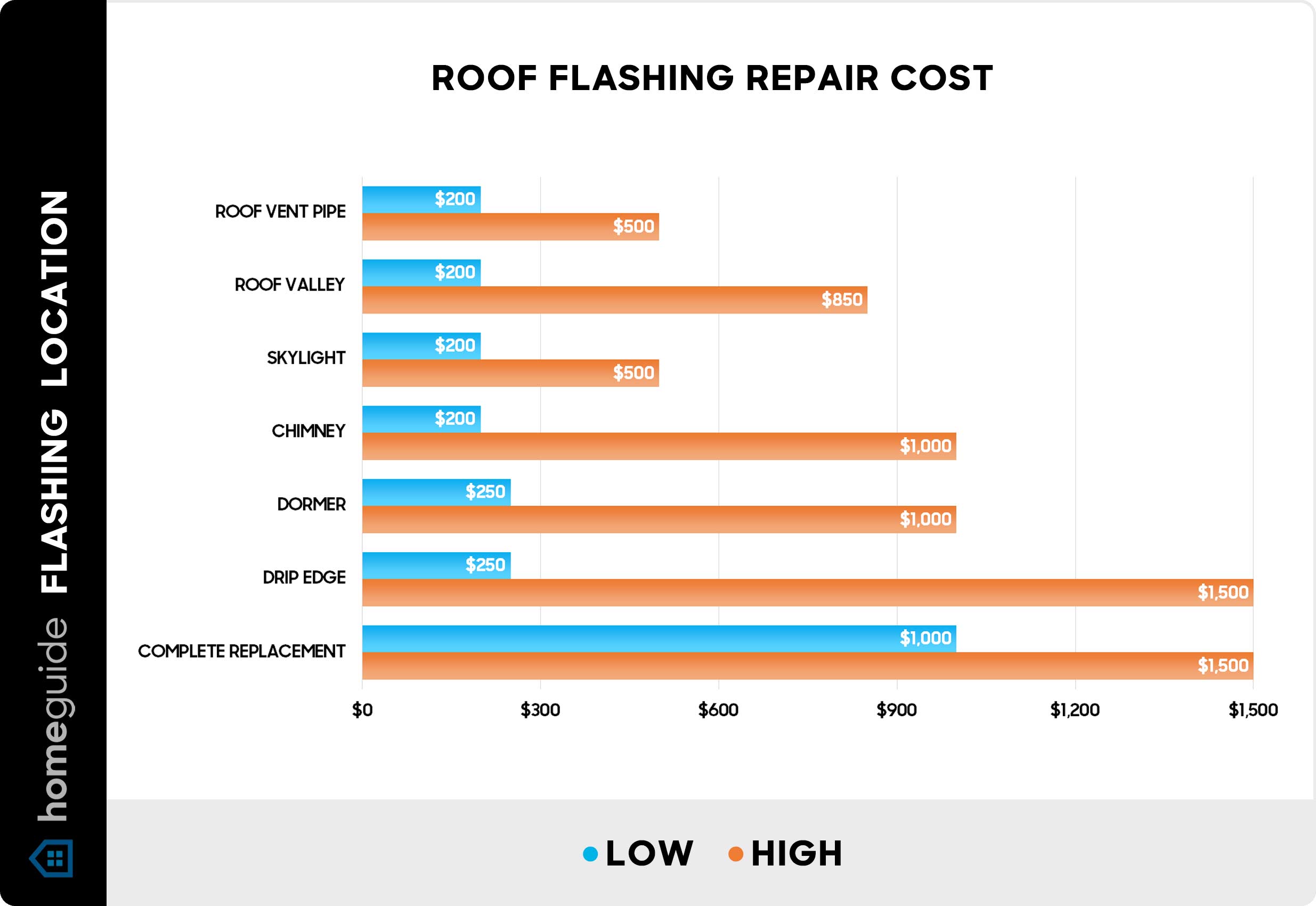
| Flashing location | Average cost* |
|---|---|
| Roof vent pipe | $200 – $500 |
| Roof valley | $200 – $850 |
| Skylight | $200 – $500 |
| Chimney | $200 – $1,000 |
| Dormer | $250 – $1,000 |
| Drip edge | $250 – $1,500 |
| Complete replacement | $1,000 – $1,500+ |
*Minimum roof repair job fees are typically $250 to $300 or more.
What affects the cost to replace flashing on a roof?
Several factors influence the cost to fix or replace roof flashing:
Repair size & extent of damage
Small sections of damaged flashing typically cost less to repair than extensive damage across multiple areas. A single corroded nail hole can often be patched with sealant, while widespread rust or separation requires complete flashing replacement.
The accessibility of the damaged area also matters. Flashing that's easy to reach from a ladder costs less to fix than flashing high on a steep roof that requires scaffolding or special equipment.
Flashing type
Step flashing, valley flashing, and counter flashing each require different installation techniques and labor time. Complex flashing designs with multiple angles or custom fabrication add to the overall cost.
Flashing material
Roof flashing comes in several materials, each with distinct advantages. The right material depends on your budget, roof type, climate, and aesthetic preferences. Quality contractors can recommend the best option for your specific situation.
Aluminum flashing is lightweight, affordable, and resists corrosion. It's the most common choice for residential roofing and works well in most climates.
Galvanized steel flashing offers excellent durability and strength at a moderate price point. The zinc coating protects against rust, though it eventually wears off.
Copper flashing is the premium option that lasts 50+ years and develops an attractive patina. It's often used on high-end homes or with cedar shake roofs.
Lead flashing is extremely malleable and long-lasting, making it ideal for complex roof details. However, environmental concerns have reduced its use in recent years.
PVC or rubber flashing is used primarily for vent pipe boots. These materials remain flexible in temperature extremes and create excellent seals around circular penetrations.
Stainless steel flashing provides maximum corrosion resistance in coastal or harsh environments. It costs more than regular steel but lasts significantly longer.
Roof pitch & complexity
Steeper roofs increase labor costs due to safety concerns and the additional time required to work safely. Roofs with multiple levels, dormers, or intricate designs require more careful work and specialized techniques.
Contractors may need to use safety harnesses, scaffolding, or roof jacks on steep or complex roofs, which adds to the labor expenses.
Roof inspection
A roof inspection costs $100 to $400 on average. Many roof repair companies include an inspection in their repair estimate, but some charge for it separately. When deciding which contractor to hire, ask whether their estimate includes a complete inspection or not.
A thorough inspection helps identify all problem areas, not just the obvious ones. This prevents future surprises and ensures all necessary repairs are addressed in one visit.
Location
Labor rates vary significantly by region. Contractors in major metropolitan areas typically charge more than those in rural communities.
Local building codes and permit requirements also influence costs. Some areas have strict regulations that require licensed contractors and inspections, which can add to the total expense.
Time of year
Roof repairs tend to cost more during peak season (spring and summer) when contractors are busiest. Many companies offer lower rates during fall and winter when demand drops.
Emergency repairs during severe weather or outside normal business hours often come with premium pricing. If your flashing issue isn't urgent, scheduling repairs during the off-season can save money.
Signs you need roof flashing repair
Look for these signs to ensure you address problems with your roof flashing before they become expensive disasters:
Water stains on ceilings or walls near chimneys, skylights, or roof valleys indicate flashing failure. These stains often appear as discolored patches or rings.
Rust spots or visible corrosion on metal flashing mean the material is deteriorating. Once rust begins, the flashing loses its waterproofing ability.
Bent, cracked, or missing flashing pieces are obvious signs of damage. High winds, falling branches, or improper installation can cause these issues.
Loose or separated flashing that has pulled away from the roof or wall allows water to seep underneath. This often happens when sealant deteriorates or fasteners fail.
Mold or mildew growth in your attic, especially near roof penetrations, suggests moisture is entering through damaged flashing.
Visible gaps or holes in flashing material compromise its ability to direct water away from vulnerable areas.
Don't ignore these signs. Small flashing problems quickly escalate into major water damage, rotted wood, and mold growth that costs thousands to repair.
What is flashing on a roof?
Flashing is thin, impermeable material installed at roof joints and transitions to prevent water infiltration. It acts as a waterproof barrier that directs rainwater and snowmelt away from vulnerable areas where two surfaces meet.
Without proper flashing, water can seep into your home at roof valleys, around chimneys, along walls, and at other critical junctions. This moisture causes rot, mold, and structural damage over time.
Where does flashing go on a roof?
Flashing gets installed at numerous locations throughout your roofing system:
Roof valleys where two roof planes meet require valley flashing to channel water downward without allowing it to seep under shingles.
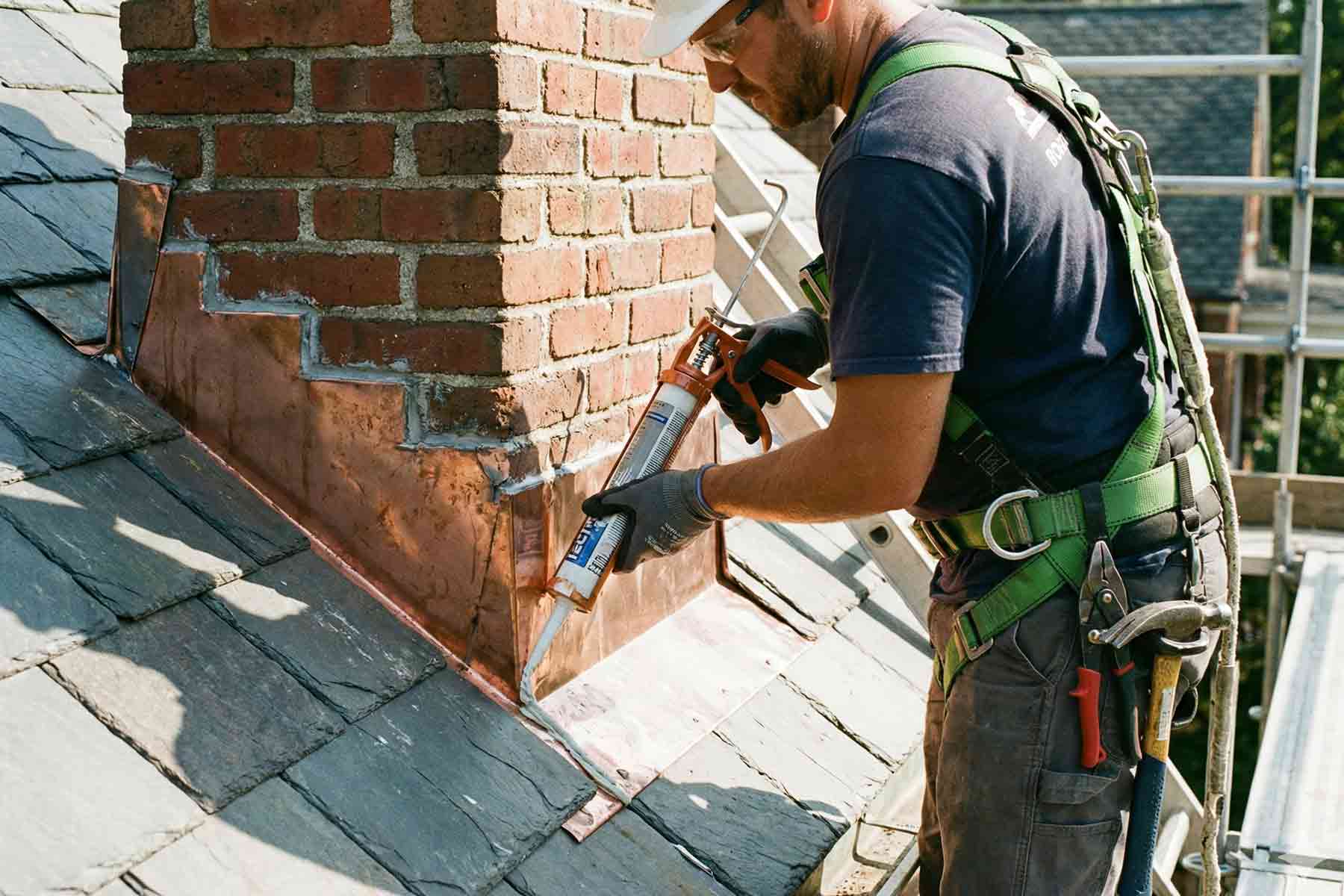
Chimneys need base flashing, step flashing, and counter flashing to create a complete seal around all four sides.
Skylights and roof windows require flashing kits that integrate with the roofing material to keep water out while allowing light in.
Vent pipes that penetrate the roof get special boot-style flashing that seals around the pipe opening.
Dormers where vertical walls meet sloped roofs need step flashing along the sides and additional flashing at the corners.
Roof edges have drip edge flashing that directs water into gutters and protects the roof deck from moisture damage.
Wall intersections where a roof meets a vertical wall require step flashing to bridge the transition and prevent water from running behind siding.
How long does roof flashing last?
The lifespan of roof flashing depends heavily on the material and installation quality. Aluminum flashing typically lasts 20 to 30 years with proper maintenance. Galvanized steel flashing has a similar lifespan before rust becomes problematic. Properly installed copper flashing can last 50 to 100 years, often outliving the roof itself.
Getting quotes for roof flashing repair
Before hiring a roof repair company near you, be sure to:
Get at least three in-person estimates to compare.
Read their reviews on HomeGuide and Google.
Select a company that is licensed and insured.
Ask for a detailed, written estimate and warranty before the work begins.
Be careful with extremely low quotes, as they may indicate low-quality work or lack of experience.
Beware of companies who recommend a full roof replacement when only minor repairs are needed.
Questions to ask roof repair contractors
Ask these questions to help you find a qualified, reputable roof repair professional:
How long have you been doing roof repair?
Are you licensed and insured?
Are you a member of any professional roofing organizations like the NRCA?
Can you provide some local references I can contact?
Can you provide an itemized quote?
Does your quote include all labor, materials, permit fees, cleanup, and debris disposal?
Are there any other potential charges I should be prepared for?
Will you obtain a permit if it's required for this repair?
How long will this repair take?
What does your warranty include?
Using our proprietary cost database, in-depth research, and collaboration with industry experts, we deliver accurate, up-to-date pricing and insights you can trust, every time.