
How much does a pipe fence cost?
How much does a pipe fence cost?
$15 – $40 cost per linear foot (labor + materials)

Average pipe fence cost per foot
A pipe fence costs $15 to $40 per linear foot on average, including materials and installation labor. Pipe fencing prices depend on the terrain and site conditions, size of the area being fenced, fence height, post spacing, and number of gates needed.
Costs fall toward the lower end of the range for properties with level terrain and straightforward installation requirements and at the higher end of the range for challenging sites with rocky soil, steep slopes, or complex layouts.
| Factor | Average cost (per linear foot) |
|---|---|
| Materials | $10 – $20 |
| Labor | $5 – $20 |
| Total cost | $15 – $40 per linear foot |
Pipe fence cost by style
The cost of a pipe fence depends on the style and design complexity. The table below compares the costs of several popular styles.
| Pipe fence style | Average cost (per linear foot)* |
Description |
|---|---|---|
| Standard pipe fence | $1 5– $25 | Single or double horizontal pipe rails; basic posts; galvanized steel |
| Heavy-duty pipe fence | $25 – $35+ | Thicker pipe; closer post spacing; higher posts; steel or treated iron |
| Pipe & cable / Pipe & wire hybrid | $20 – $30+ | Rigid pipe rails (for posts or top rails) paired with wire or cable infill |
| Pipe & mesh / Wire mesh infill | $25 – $40 | Rigid pipe rails (for posts or top rails) paired with wire mesh infill |
| Decorative pipe fence | $30 – $50+ | Decorative touches or ornamental details; specialty finishes; fancy gates |
*Including materials and installation
Pipe fencing is a favorite among ranchers and horse owners because it balances strength, safety, and visibility.
Pipe fencing cost factors
Several factors influence pipe fencing prices:
Area size & fence length
The size of the area you're fencing directly impacts material and installation costs. The larger the area, the more fencing materials and labor needed and the higher the total cost. However, the cost per linear foot often decreases for larger projects because contractors can spread their mobilization cost across more footage.
If you're fencing in a large ranch or farm that needs hundreds or thousands of feet of pipe fencing, you may face added costs for engineering, material staging, and extended schedules.
Terrain and site conditions
Site conditions have a major impact on installation costs. Level terrain with soft, workable soil allows for efficient post installation and keeps labor costs minimal. Rocky soil, hardpan, or areas requiring significant excavation work can increase labor costs substantially.
Properties with steep slopes may need specialized equipment or additional bracing, while sites with poor drainage might require extra preparation work before the fence installation can begin.
Fence height
Each additional foot of height increases fence material and labor costs, as taller posts require deeper holes and more substantial bracing. Standard pipe fences range from 4 to 6 feet in height, with taller fences requiring more materials and potentially deeper post installation.
Horse fencing typically uses 4.5 to 5-foot heights, while perimeter security fencing might reach 6 feet or higher.
Post spacing
The distance between fence posts affects both the structural integrity and cost of your fence. Standard spacing ranges from 8 to 12 feet apart, with closer spacing providing greater strength but increasing material costs.
Properties with high wind exposure or areas where vehicles might impact the fence may benefit from closer post spacing, while protected areas can often use wider spacing to reduce costs.
Gates
Gate installation adds to the fence cost, with prices depending on the number of gates and the width, style, and hardware quality. Simple farm gates add $200 to $500 per opening, while decorative or automated gates can cost $1,000 or more.
Installation labor
Labor costs vary widely depending on the region and contractor experience. Customers in rural areas with lower labor costs may see installation rates at the lower end of the range, while those in urban areas often pay more.
The complexity of the installation also affects labor time. Straightforward installations on level ground are much faster than fencing that requires custom fitting around obstacles or challenging terrain.
Permits
Many municipalities require permits for fence installation, particularly for fences over certain heights or in specific zoning areas. Permit costs range from $50 to $200, but failing to obtain required permits can result in costly fines and potential fence removal requirements.
What is pipe fencing?
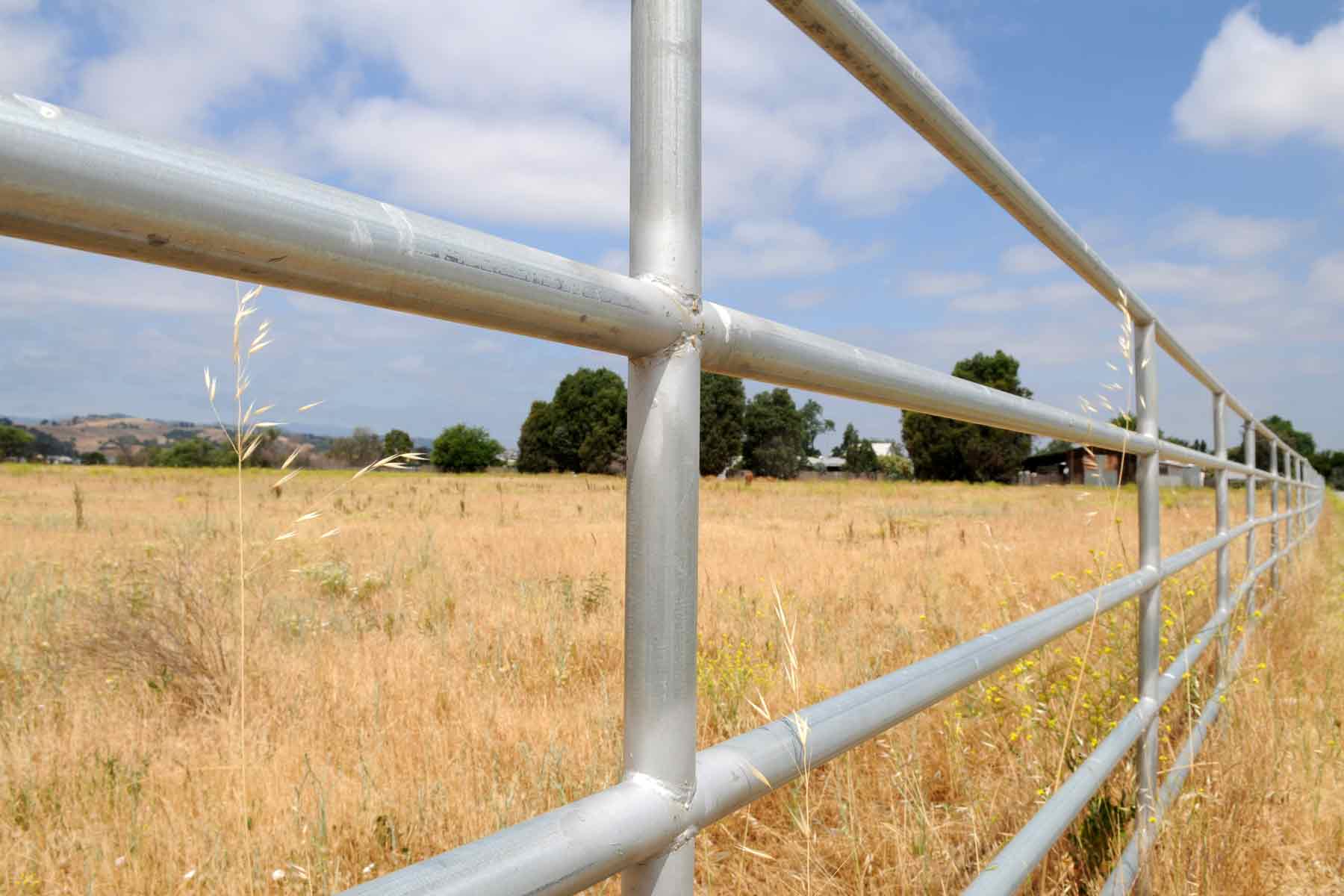
A pipe fence consists of horizontal steel or aluminum pipes (typically 1.5 to 2 inches in diameter) supported by vertical posts, creating a clean, open fence line. Unlike traditional board or split-rail fencing, pipe fencing uses round metal rails that are either welded or attached with brackets to sturdy posts.
Pipe fencing is popular for horse properties because the smooth, rounded pipes reduce injury risk while providing excellent visibility for both animals and property owners.
The galvanized or powder-coated finish helps resist rust and weathering, making pipe fencing a low-maintenance option compared to wood fencing that requires regular painting or staining.
FAQs about pipe fencing
How long does a pipe fence last?
A properly installed and well-maintained pipe fence can last 20 to 30 years or more. The longevity of your fence depends on local climate conditions, maintenance, and the quality of materials used. Galvanized steel pipe fencing offers excellent corrosion resistance, while powder-coated options provide additional protection against rust and weathering.
How far apart should pipe fence posts be?
Pipe fence posts should be spaced 8 to 12 feet apart, depending on the specific application and local conditions. Horse fencing often uses 8- to 10-foot spacing to prevent horses from getting caught between rails, while fencing for cattle or general property boundaries can often accommodate 10- to 12-foot spacing.
How tall should a pipe fence be?
The ideal height for pipe fencing depends on the fence's intended purpose. Horse fencing ranges from 4.5 to 5 feet high to contain horses safely while providing good visibility. Cattle fencing can often be effective at 4 to 4.5 feet, while perimeter security fencing might be 5 to 6 feet or taller.
Local zoning regulations may also dictate maximum fence heights, particularly in residential areas.
Can you paint a pipe fence?
Yes, you can paint a pipe fence, though many come with factory finishes that provide long-lasting protection. If your fence is powder coated, painting over it may void the warranty. Always ask your installer first.
If you choose to paint your fence, proper surface preparation is essential for good adhesion and longevity. Clean the surface thoroughly, remove any rust or old paint, and use a high-quality primer designed for metal surfaces.
Consider the ongoing maintenance requirements when deciding between paint and other coating options.
Getting estimates from fence companies
Follow these steps to help you find the best fence installers near you:
Calculate the total linear feet needed and identify any irregular terrain or obstacles that could affect installation costs.
Look for installers who specialize in pipe fencing and other farm fencing styles.
Read company reviews on HomeGuide and Google.
Get at least 3 estimates to compare pricing and materials.
Ask about warranties and whether the installer will handle utility marking before digging.
Questions to ask a fence installer
Ask these questions to ensure you choose the right contractor for the job:
How many years of experience do you have specifically with pipe fencing?
Can you provide references from recent fence installations?
Are you licensed and insured for fence installation work?
What does your written estimate include, and what extra costs might come up?
Do you handle permits and flag buried utility lines?
How deep will you set the posts and what is your post spacing?
What happens if you encounter rock or other soil issues during installation?
What type of warranty do you provide on materials and labor?
How long will the installation take from start to finish?
Using our proprietary cost database, in-depth research, and collaboration with industry experts, we deliver accurate, up-to-date pricing and insights you can trust, every time.