
How much does a paver walkway cost?
How much does a paver walkway cost?
$15 – $40 average cost per square foot
$3,000 – $8,000 average total cost (200 SF)

Average cost of a paver walkway
A paver walkway costs $15 to $40 per square foot on average with installation, or about $3,000 to $8,000 total for a 40-foot walkway wide enough for two people to comfortably walk side-by-side. The total cost of installing a paver walkway depends on the paver material, walkway size, site prep needed, design complexity, and local labor rates.
| Walkway size | Square footage | Average total cost* |
|---|---|---|
| Primary / front walkway (minimum width) | ||
| 20' x 4' | 80 | $1,200 – $3,200 |
| 30' x 4' | 120 | $1,800 – $4,800 |
| 40' x 4' | 160 | $2,400 – $6,400 |
| 50' x 4' | 200 | $3,000 – $8,000 |
| 70' x 4' | 280 | $4,200 – $11,200 |
| 90' x 4' | 360 | $5,400 – $14,400 |
| Primary / front walkway (comfortable width) | ||
| 20' x 5' | 100 | $1,500 – $4,000 |
| 30' x 5' | 150 | $2,250 – $6,000 |
| 40' x 5' | 200 | $3,000 – $8,000 |
| 50' x 5' | 250 | $3,750 – $10,000 |
| 70' x 5' | 350 | $5,300 – $14,000 |
| 90' x 5' | 450 | $6,800 – $18,000 |
*Including labor and materials
Paver walkway cost by type
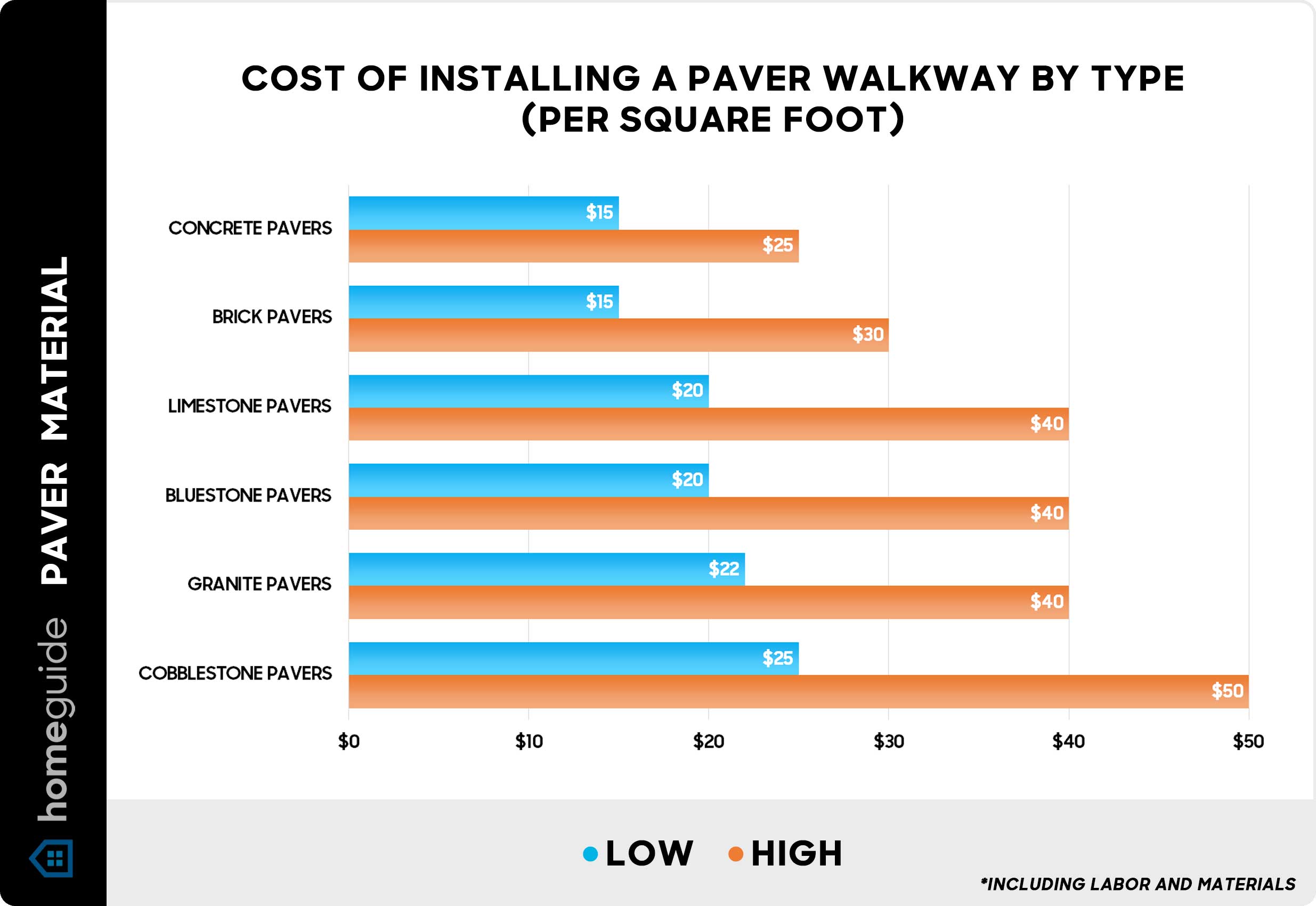
The material you choose for your paver walkway significantly impacts both the initial cost and long-term appearance. Concrete pavers offer the most budget-friendly option with excellent durability, while natural stone pavers like granite and cobblestone cost more but deliver timeless elegance and unique character.
| Paver material | Average cost per square foot* |
|---|---|
| Concrete pavers | $15 – $25 |
| Brick pavers | $15 – $30+ |
| Limestone pavers | $20 – $40 |
| Bluestone pavers | $20 – $40 |
| Granite pavers | $22 – $40 |
| Cobblestone pavers | $25 – $50+ |
*Including labor and materials
Each material has distinct advantages in terms of color options, texture, maintenance needs, and resistance to weather. Consider your home's architectural style, the climate, and your maintenance preferences when selecting pavers.
Paver walkway cost factors
Several factors determine the final cost to install a paver walkway:
Materials
The pavers themselves typically represent 40% to 60% of your total project cost. Premium materials like imported natural stone or custom-colored concrete pavers increase costs substantially.
Beyond the paver stones themselves, you'll also need base materials like gravel and sand, joint sand for filling gaps between pavers, and potentially edge restraints to keep pavers in place.
Site prep
Proper site preparation ensures your walkway remains level and stable for years. Contractors must excavate the area, remove existing walkways or vegetation, grade the site for proper drainage, and compact the soil.
Challenging terrain, poor drainage conditions, rocky soil, or the need to remove tree roots and old concrete all increase preparation costs. Some projects require only minor grading, while others need extensive excavation and soil stabilization.
Design complexity
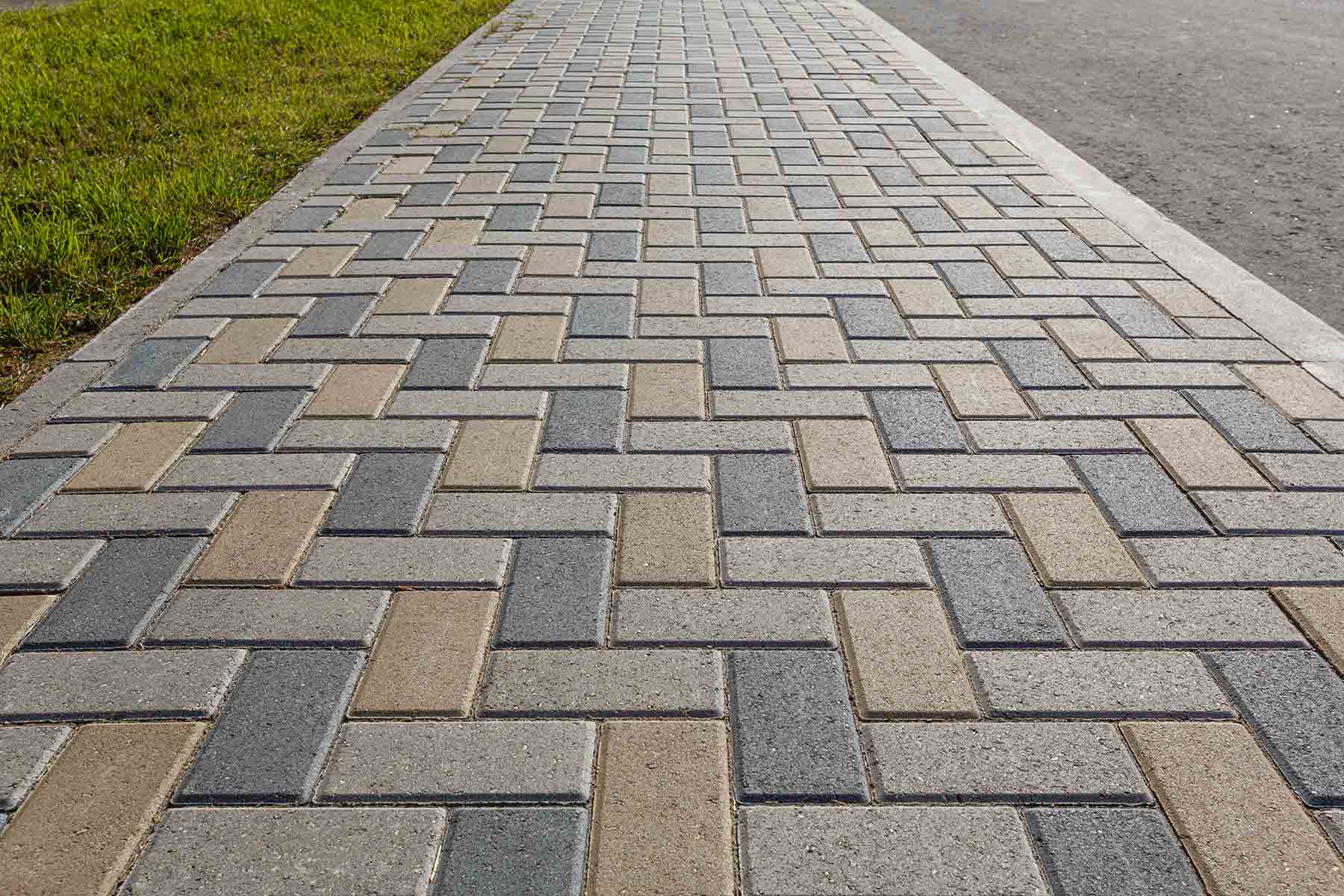
Straight walkways with simple patterns cost less to install than curved paths or intricate designs. Patterns like herringbone, basket weave, or circular designs require more labor and may generate more material waste from cutting pavers.
Adding borders in contrasting colors, creating multi-level walkways, or incorporating curved sections increases both material and labor costs but enhances the visual impact.
Labor
Labor rates vary by region and contractor experience. Skilled installers who specialize in complex patterns charge higher rates. The time required depends on the project size, design complexity, and site conditions. Quality installation requires expertise in proper base preparation, precise leveling, and correct paver placement to prevent future settling or shifting.
Additional costs
Your project may also involve these extra costs:
Permits: Some cities require permits for walkway installation, particularly for projects near property lines, walkways that connect to public sidewalks, or those that affect drainage patterns. Permit costs vary by location but typically range from $50 to $200.
Walkway lighting: Outdoor lighting costs $80 to $300 per fixture for hardwired lights. Basic solar path lights start at $10 to $30 per fixture.
Edging: Decorative walkway edging costs $5 to $18 per linear foot.
Steps: Adding steps to connect your new walkway to a porch or front door increases the total cost of the project. Stone steps cost $300 to $900 per step installed, while concrete steps cost $200 to $500 per step.
Sealing: Professional paver sealing costs $2 to $4 per square foot and can help to preserve the paver color, prevent staining, and reduce weed growth in the joints.
Location
Where you live significantly impacts your project cost. Homeowners in urban areas and regions with higher costs of living typically see higher material and labor prices. Climate also plays a role—areas with freeze-thaw cycles require deeper excavation and more robust base preparation to prevent heaving.
Accessibility
Limited access to your property, such as narrow gates or no vehicle access to the backyard, can increase labor costs as materials must be transported manually.
Paver walkway FAQs
How wide should a paver walkway be?
Front walkways should be at least 4 feet wide to allow two people to walk side-by-side comfortably, though 5 feet provides a more spacious feel and better proportions for most homes. Side yards and backyard paths can be narrower at 2.5 to 3 feet for single-file walking.
Consider the walkway's purpose and traffic volume when determining width. A path to your front door typically gets more use than a backyard path and benefits from extra width. Wider walkways also better accommodate wheelchairs, strollers, and furniture moving.
How long do pavers last?
When properly installed, quality pavers can last 25 to 50 years or more with basic maintenance. Concrete pavers typically last 25 to 35 years, while natural stone pavers like granite and bluestone can last 50+ years. The lifespan depends on the material quality, installation quality, climate conditions, and maintenance practices.
Regular maintenance like cleaning, re-sanding joints, and occasional sealing can maximize your paver walkway's lifespan. Unlike poured concrete that can crack and require complete replacement, individual damaged pavers can be easily replaced without affecting the entire walkway.
Should you seal a paver walkway?
Sealing pavers provides multiple benefits but isn't always necessary. Sealer protects against stains, enhances color vibrancy, prevents weed growth between pavers, and reduces moss and mildew in damp climates. However, unsealed pavers develop a natural patina over time that some homeowners prefer.
If you seal your walkway, plan to reapply sealer every 2 to 5 years depending on the foot traffic and weather exposure. Natural stone pavers benefit most from sealing, while concrete pavers can perform well with or without it. Consider sealing if you live in an area with harsh winters, heavy rainfall, or if your pavers are prone to staining.
Getting estimates for a paver walkway
Follow these tips to help you choose the best paver installer near you:
Compare estimates from at least three different paver professionals.
Ask if they have certifications as an ICPI Residential Paver Technician or from a masonry association.
Read their reviews on HomeGuide and Google.
Confirm the installer is licensed and insured.
Request a detailed estimate, contract, and warranty in writing before work starts.
Questions to ask paver installers
Ask installers these questions before you sign a contract:
How many paver walkways have you installed?
Can I see a portfolio of your past installations?
What types of pavers do you offer?
What are my options for edging?
Do you check for underground utility lines before digging?
What will you use for the base under the pavers?
Will you compact and level the base before installing pavers?
Are you familiar with building codes for walkways in this area?
Will the installation require a permit, and will you obtain it?
Does this bid include all materials, delivery fees, labor, prep work, and cleanup?
How long will the job take?
What does your warranty policy include?
Using our proprietary cost database, in-depth research, and collaboration with industry experts, we deliver accurate, up-to-date pricing and insights you can trust, every time.