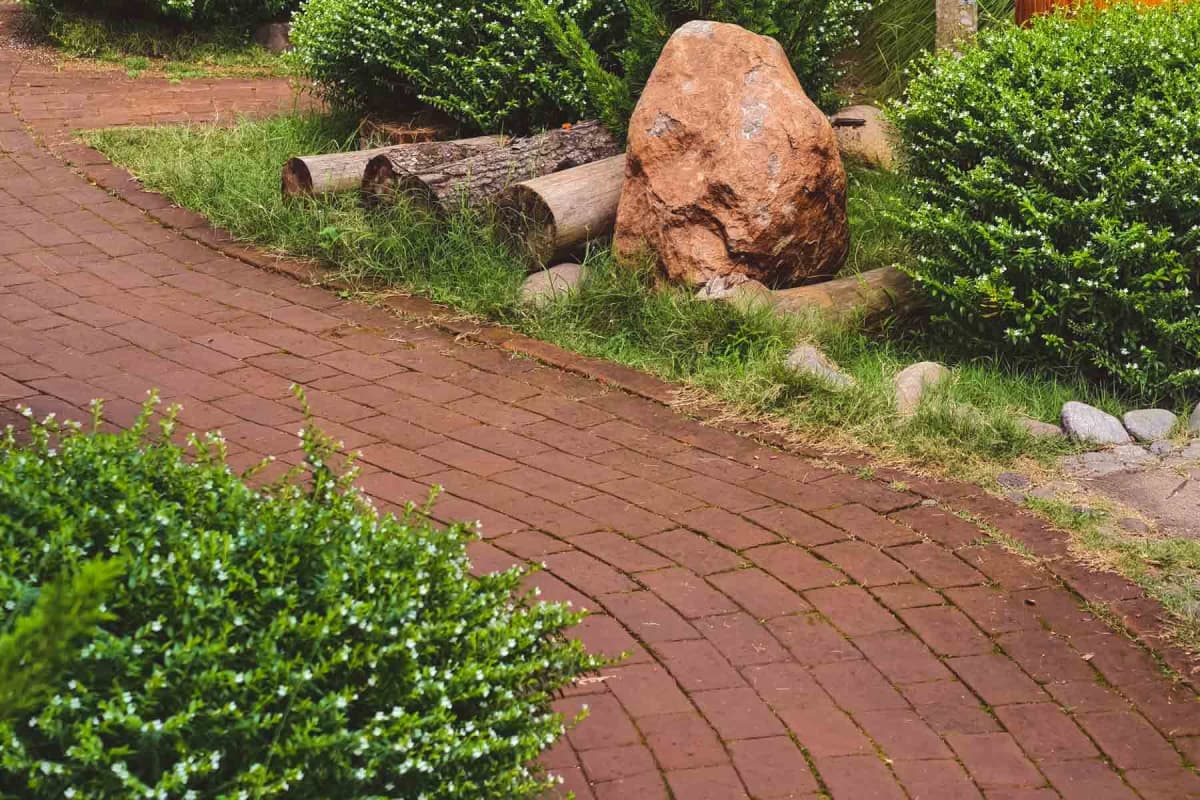
How much does a brick walkway cost?
How much does a brick walkway cost?
$1,500 – $3,000 average total cost (20' x 5' walkway)

Average brick walkway cost
A brick walkway costs $15 to $30+ per square foot or $1,500 to $3,000 total on average for a 20-foot walkway wide enough for two people to walk side-by-side. The total cost to install a brick walkway depends on the location, site conditions, walkway size, brick type, design complexity, and labor rates in your area.
| Walkway size | Square footage | Average total cost |
|---|---|---|
| Primary / front walkway (minimum width) | ||
| 20' x 4' | 80 | $1,200 – $2,400 |
| 35' x 4' | 140 | $2,100 – $4,200 |
| 70' x 4' | 280 | $4,200 – $8,400 |
| 90' x 4' | 360 | $5,400 – $10,800 |
| Primary / front walkway (comfortable width) | ||
| 20' x 5' | 100 | $1,500 – $3,000 |
| 35' x 5' | 175 | $2,600 – $5,300 |
| 70' x 5' | 350 | $5,300 – $10,500 |
| 90' x 5' | 450 | $6,800 – $13,500 |
Brick walkway installation cost factors
Several factors determine the final cost of your brick walkway:
Materials
Brick prices range from $7 to $14+ per square foot for the materials alone, depending on the quality and thickness. Standard red clay and concrete brick pavers tend to fall on the lower end of this range. Decorative pavers in unusual sizes, premium colors, or specialty textures run higher.
Base materials are also essential for long-term durability. Pea gravel for drainage typically costs $45 to $80 per cubic yard, while sand for leveling costs $25 to $60+ per cubic yard. A proper base prevents settling and significantly extends your walkway's lifespan.
Labor
Professional installation typically accounts for at least half of your total project cost. Masons, landscapers, or general contractors charge $50 to $100+ per hour, or about $8 to $16 per square foot for the labor to install a brick walkway. This rate usually covers light site preparation, including minor excavation or grading.
More complex designs requiring intricate patterns, curves, or specialty cuts require additional time and skill, increasing labor costs.
Small projects may incur minimum service fees, making very short paths less cost-effective on a per-foot basis.
Site preparation
The condition of your installation site affects preparation costs. If your area is already level and clear, additional expenses will be minimal. However, many projects require site work before installation can begin.
Leveling and grading costs $0.40 to $2.00 per square foot to ensure proper drainage and a level base.
Removing existing concrete, dirt, or old pavers adds $0.30 to $0.50+ per square foot.
Excavation for deeper base preparation may cost more, especially if extensive digging is required.
Design complexity
Simple, straight rectangular paths offer the most budget-friendly option. Complex patterns like herringbone or basketweave, curves requiring specialty cuts, and features such as steps or borders all increase labor time and material waste. Custom elements like engraved bricks, mosaic designs, or embedded lighting add premium costs to your project.
Maintenance and repairs
Annual maintenance costs for a brick walkway average $100 to $300 for cleaning, resealing, and minor repairs. Address small issues right way to prevent more costly problems down the road. More extensive repairs involving releveling sections or addressing drainage issues can range from $800 to $2,000+.
Geographic cost variations
Your location impacts brick walkway costs in several ways:
Urban areas typically have higher labor rates, with masons charging premium prices for their skilled work. Rural locations may see lower labor costs but potentially higher delivery fees for materials.
Climate also plays a role in installation requirements. Regions with freeze-thaw cycles need extra site preparation and drainage systems to prevent frost heave. Areas with heavy rainfall require careful grading to manage water flow.
Material availability varies by region as well. Some brick types are manufactured locally and cost less, while specialty pavers may need to be shipped long distances, increasing expenses.
Additional costs
Beyond basic installation, you may encounter additional costs depending on local requirements and your preferences for aesthetics or enhanced functionality. Be sure to budget for these potential expenses:
Permits and inspections: Some cities require permits for walkway installation, particularly if the project alters drainage or involves significant grading, with fees ranging from $50 to $200.
Edging and borders: Installing edging materials keeps bricks firmly in place and prevents shifting but adds anywhere from $5 to $25 per linear foot, depending on the material and design.
Lighting: Path lighting improves safety and creates ambiance, with basic solar lights starting at $15 to $30 per fixture and hardwired low-voltage systems costing $50 to $150 per light installed.
Sealing: Applying a protective sealer helps preserve brick color, prevents staining, and reduces weed growth in joints. Professional paver sealing costs $2 to $4 per square foot.
Brick paver walkway cost vs. other materials
Brick pavers are one of many walkway options, each material offering distinct advantages in terms of cost, durability, and maintenance requirements. A poured concrete walkway is the most budget-friendly option. While pavers cost more, they offer more visual appeal and can be repaired without tearing up the entire walkway.
The table below shows the average cost and characteristics of several walkway materials to help you make the best choice for your budget and aesthetic goals.
| Material | Average cost (per square foot) |
Key characteristics |
|---|---|---|
| Clay brick pavers | $15 – $30 | Classic beauty; timeless appeal; individual pavers replaceable |
| Concrete brick pavers | $8 – $15 | Budget-friendly; durable; easy to repair; uniform appearance |
| Granite pavers | $19 – $32 | Extremely durable; chip and crack resistant; lasts 40+ years; low porosity |
| Natural stone pavers | $12 – $50 | Premium aesthetics; unique textures; requires professional installation |
| Permeable pavers | $10 – $30 | Eco-friendly; reduces runoff; allows water drainage; requires maintenance |
| Poured concrete | $6 – $12 | Most economical option; lacks visual appeal; difficult to repair |
| Slate pavers | $15 – $20 | Wide color range; combines natural look with concrete strength |
| Stamped concrete | $8 – $20 | Can mimic brick patterns; cannot replace individual sections |
Brick walkway FAQs
How long does a brick walkway last?
A professionally installed brick walkway lasts 25 to 50+ years with proper maintenance. Individual bricks may crack or chip over time but can be easily replaced. With regular sealing and care, some historic brick walkways have remained functional for over 100 years.
Can I install a brick walkway myself?
Hiring a professional is best for most brick walkway projects. DIY installation may be possible for straightforward designs but requires significant labor and specialized tools. Purchasing all the necessary equipment often costs more than hiring a pro, and improper installation can lead to premature failure.
Do brick walkways need to be sealed?
Sealing brick walkways is optional but highly recommended. A quality sealer protects against stains, reduces weed growth, and helps preserve the color. Professional sealer should be reapplied every 3 to 5 years for optimal protection.
What's the difference between brick pavers and regular bricks?
Brick pavers are specifically manufactured for outdoor hardscaping, with denser composition and lower water absorption. Regular building bricks may crack when exposed to freeze-thaw cycles. Pavers come in various shapes, sizes, and interlocking designs optimized for walkways and patios.
Getting estimates for a brick walkway
Follow these tips to find a qualified brick masonry contractor near you:
Request quotes from at least three local masonry contractors or landscapers specializing in hardscaping.
Check reviews and ratings for customer satisfaction on HomeGuide and Google.
Ask to see examples of completed brick walkway projects.
Request references from past clients.
Verify they have proper licensing and insurance coverage.
Confirm they will obtain necessary permits and handle any required inspections.
Request a detailed written estimate that breaks down material costs, labor, site preparation, and any additional features.
Inquire about warranties on both materials and workmanship.
Questions to ask a masonry contractor
Before hiring a professional for your brick walkway installation, ask these important questions to ensure you're making an informed decision:
How many years of experience do you have installing brick walkways specifically?
What type of base preparation do you recommend for my soil conditions and climate?
Which brick materials do you recommend for my budget and style preferences?
Could you give a detailed project timeline, including weather plans?
What drainage solutions will you implement to prevent water pooling or frost heave?
Do you offer a warranty on your installation work, and if so, what does it cover?
How do you handle unexpected issues like underground utilities or poor soil conditions?
What maintenance will my walkway require, and do you offer ongoing maintenance services?
Can you provide references from recent brick walkway projects in my area?
What is your payment schedule, and what deposit do you require to begin work?
Using our proprietary cost database, in-depth research, and collaboration with industry experts, we deliver accurate, up-to-date pricing and insights you can trust, every time.