How much does a drone roof inspection cost?
How much does a drone roof inspection cost?
$150 – $600 average cost

Drone roof inspection cost
A drone roof inspection costs $150 to $600, with most homeowners paying around $375 for a standard visual inspection. Thermal inspections or 3D mapping with advanced equipment cost more. The final price depends on your location, the roof's size and complexity, the type of inspection you need, and the level of detail in the final report.
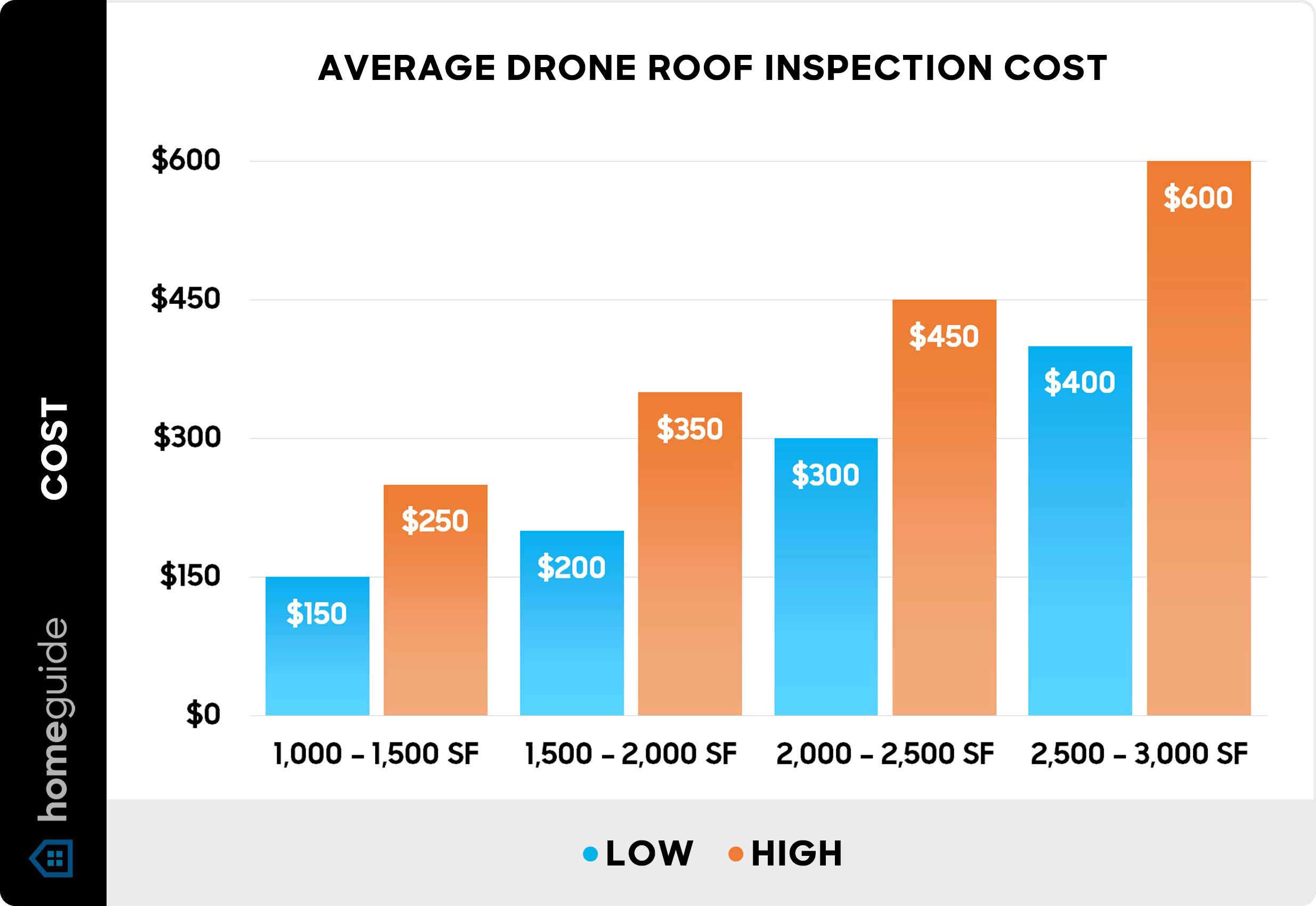
| Home size (square feet) | Average inspection cost |
|---|---|
| 1,000 – 1,500 | $150 – $250 |
| 1,500 – 2,000 | $200 – $350 |
| 2,000 – 2,500 | $300 – $450 |
| 2,500 – 3,000 | $400 – $600 |
Drone roof inspection price by type
The type of technology used during your inspection significantly impacts both the cost and the depth of information you'll receive. Advanced imaging technologies like thermal cameras and LiDAR systems cost more up front but can detect problems invisible to the naked eye, potentially saving you thousands in future repairs by catching issues early.
| Drone inspection type | Average cost |
|---|---|
| Standard / visual inspection | $150 – $400 |
| Thermal / infrared | $400 – $600 |
| LiDAR / 3D mapping | $400 – $800 |
LiDAR, which is short for Light Detection and Ranging, uses laser pulses to generate detailed 3D maps of the land or structure below.
Drone inspection cost factors
Beyond the inspection type, many other factors also influence the final price of a drone roof inspection:
Location
Urban areas with stricter airspace regulations or properties in states with higher commercial drone licensing or registration fees (like Oregon and Minnesota) may see increased costs. Remote locations might incur travel fees, while properties near airports or restricted fly zones require special permits.
Fee structure
Pricing methods vary depending on the inspector. Some inspectors charge a flat rate based on the project, while others charge $100 to $350+ per hour depending on their experience. Many inspectors who charge by the hour quote a higher rate for the first hour, including their travel time, and a slightly lower rate for each additional hour.
Roof material
Common materials like asphalt shingles are typically less expensive to inspect than specialty materials such as slate tiles, wood shakes, or metal roofing. Different materials require specific inspection approaches and expertise.
Job size & complexity
Larger roofs naturally take more time to inspect thoroughly. Complex roof designs with multiple levels, steep pitches, dormers, valleys, or unusual angles require more flight time and careful maneuvering, increasing the overall cost.
While some inspections can be completed by a single pilot, complex jobs or locations with obstacles may require a spotter for safety. Additional personnel increase labor costs but ensure thorough, safe inspections.
Inspection detail & imaging type
Basic visual inspections with photos cost less than comprehensive reports with measurements, 3D models, thermal analysis, and detailed recommendations. Certification reports for insurance or mortgage purposes may include additional fees of $75 to $200.
The type of imagery captured during your inspection affects both the cost and the insights you'll gain:
Photos: High-resolution still images that document specific issues, damage, or areas of concern are perfect for insurance claims and detailed visual records.
Video: Continuous footage provides a comprehensive view of the entire roof, capturing details that might be missed in still photos.
3D models: Advanced photogrammetry creates interactive three-dimensional representations of your roof, allowing for precise measurements and virtual walkthroughs. 3D models are ideal for planning renovations or solar panel installations.
Orthomosaics Stitched-together images create accurate, scaled maps of your roof from a top-down view. These provide precise measurements for material estimates and architectural planning.
Thermal imaging: Infrared cameras detect temperature differences that reveal moisture intrusion, insulation problems, and heat loss—essential for identifying hidden issues before they cause visible damage.
Skills / expertise
Certified drone pilots with extensive experience and specialized training tend to charge higher rates. However, their expertise often results in more accurate assessments and professional reports that satisfy insurance companies and mortgage lenders.
Type of drone equipment
High-end drones equipped with advanced cameras, longer battery life, thermal sensors, or LiDAR technology cost more to purchase and maintain. These premium features result in better data quality but increase service costs.
Services included & package deals
Some companies offer package deals that include multiple services—such as gutter inspections, property surveys, or regular maintenance monitoring—which can reduce the per-inspection cost compared to booking services separately.
Regulations
Licensed drone pilots must obtain FAA Remote Pilot Certificates and register their drones. These regulatory costs, along with required insurance and compliance with local regulations, factor into inspection pricing.
Weather conditions
Inspections conducted in challenging weather conditions carry additional risk to equipment. Some companies charge premium rates for weather-related urgency or use specialized weather-resistant drones that cost more to operate.
Drone inspection vs. traditional roof inspection
Traditional roof inspections cost $75 to $200 on average and require inspectors to physically climb ladders and walk across your roof, which poses significant safety risks. This hands-on method costs less than a drone inspection but can take several hours and may miss hard-to-reach areas or subtle issues. However, a physical inspection can assess material integrity, something a drone cannot.
Drone inspections eliminate fall hazards entirely by keeping inspectors safely on the ground. They're typically faster, capture more comprehensive data, and can access dangerous or impossible-to-reach areas. While the upfront cost may be slightly higher at $150 to $600 for most homes, the thoroughness and safety benefits often make drone inspections the smarter investment for modern homeowners.
Pros and cons of drone roof inspections
The table below breaks down the benefits and potential drawbacks of drone roof inspections to help you determine if it's the right option for your needs and budget.
| Pros | Cons |
|---|---|
|
|
Drone roof inspection applications
Several situations benefit from a drone roof inspection:
Solar panel planning
If you're considering solar panel installation, a drone inspection provides crucial data for planning. LiDAR scans and 3D models cost more but help determine optimal panel placement, calculate roof angles, assess structural capacity, and identify any repairs needed before installation. Many solar companies now require drone surveys before providing installation quotes.
Real estate transactions
Home buyers and sellers both benefit from drone roof inspections during real estate transactions. Sellers can proactively address issues before listing, while buyers gain peace of mind about one of the home's most expensive components. Some real estate agents now include drone inspections as part of their marketing services, highlighting home condition transparency.
Pre-listing inspections cost $200 to $400 but can prevent price negotiations or deal cancellations by addressing roof concerns up front.
Preventive maintenance programs
Some drone inspection companies offer annual or semi-annual monitoring packages at discounted rates. These programs help homeowners catch small problems early—like lifting shingles, developing leaks, or gutter issues—before they require major repairs.
Regular monitoring is especially valuable for older roofs approaching replacement age, allowing you to budget appropriately and maximize remaining lifespan.
Drone roof inspection FAQs
How long does a drone roof inspection take?
Most residential drone roof inspections take 30 to 60 minutes from start to finish. Inspections for simple, smaller roofs with straightforward designs can be completed in as little as 20 minutes, while large or complex properties may require up to 90 minutes.
The inspection timeline includes setup time, the actual flight and data capture, and initial on-site review. Processing the data and preparing a detailed report typically takes an additional 24 to 48 hours, though some companies offer same-day preliminary findings.
Are drone roof inspections worth it?
Drone inspections offer exceptional value by combining safety, thoroughness, and cost-effectiveness. They prevent the risks associated with physical inspections and often detect problems that traditional methods miss. If you're filing an insurance claim, selling your home, or simply want to maintain your property proactively, drone inspections provide data quality that justifies the investment.
Can I do my own drone roof inspection?
While it's technically possible to inspect your own roof with a consumer drone, professional inspections offer significant advantages. Commercial drone pilots must hold FAA Part 107 certification, carry liability insurance, and have experience identifying roof problems.
Professional inspectors know what to look for and how to capture the right angles, and they can provide reports that insurance companies and mortgage lenders will accept. If you're doing a casual check for obvious damage, a personal drone might suffice, but for insurance claims, home sales, or detailed assessments, hiring a professional is best.
Do insurance companies accept drone roof inspections?
Yes, most insurance companies now accept drone roof inspections, and many actually prefer them. Drone documentation provides clear, time-stamped evidence of roof conditions before and after storm events, making claims processing faster and more accurate.
Some insurers even use their own drone inspections to assess properties. However, if you're filing a claim, verify with your insurance company first to ensure they'll accept third-party drone reports. Having a certified pilot and professional report increases acceptance rates significantly.
How often should I have my roof inspected?
Experts recommend having your roof professionally inspected at least once every 2 to 3 years for routine maintenance. However, you should schedule inspections more frequently if your roof is older than 15 years, after major storms, or if you notice signs of damage like missing shingles or water stains.
Many homeowners are now opting for annual inspections as preventive maintenance, catching small issues before they become expensive repairs. Regular inspections can significantly extend your roof's lifespan and maintain your home's value.
Getting estimates for a drone roof inspection
Follow these guidelines to find a qualified drone roof inspection company near you:
Contact at least three licensed drone inspection companies to compare pricing and services.
Provide accurate information about your home's size, roof type, and any specific concerns you have.
Ask whether the quote includes a detailed written report, thermal imaging (if needed), and how quickly you'll receive results.
Verify that the company has proper insurance, holds current FAA Part 107 certification, and has experience with your type of roofing material.
Don't simply choose the lowest price; equipment quality, pilot expertise, and report comprehensiveness vary significantly and affect the value you receive.
Questions to ask a roof inspector
Ask these important questions to ensure you hire the best pro for the job:
Do you have FAA Part 107 certification? What other certifications and licenses do you hold?
What equipment will you use, and is thermal imaging included or available?
What's your experience with my roof type?
How long will the inspection take, and how long until I receive the final report?
What exactly does your inspection report include?
Do you carry liability insurance?
Can you provide references or examples from previous clients?
What happens if weather delays the inspection?
Will my insurance company accept your reports?
Do you offer follow-up or monitoring services?
Using our proprietary cost database, in-depth research, and collaboration with industry experts, we deliver accurate, up-to-date pricing and insights you can trust, every time.