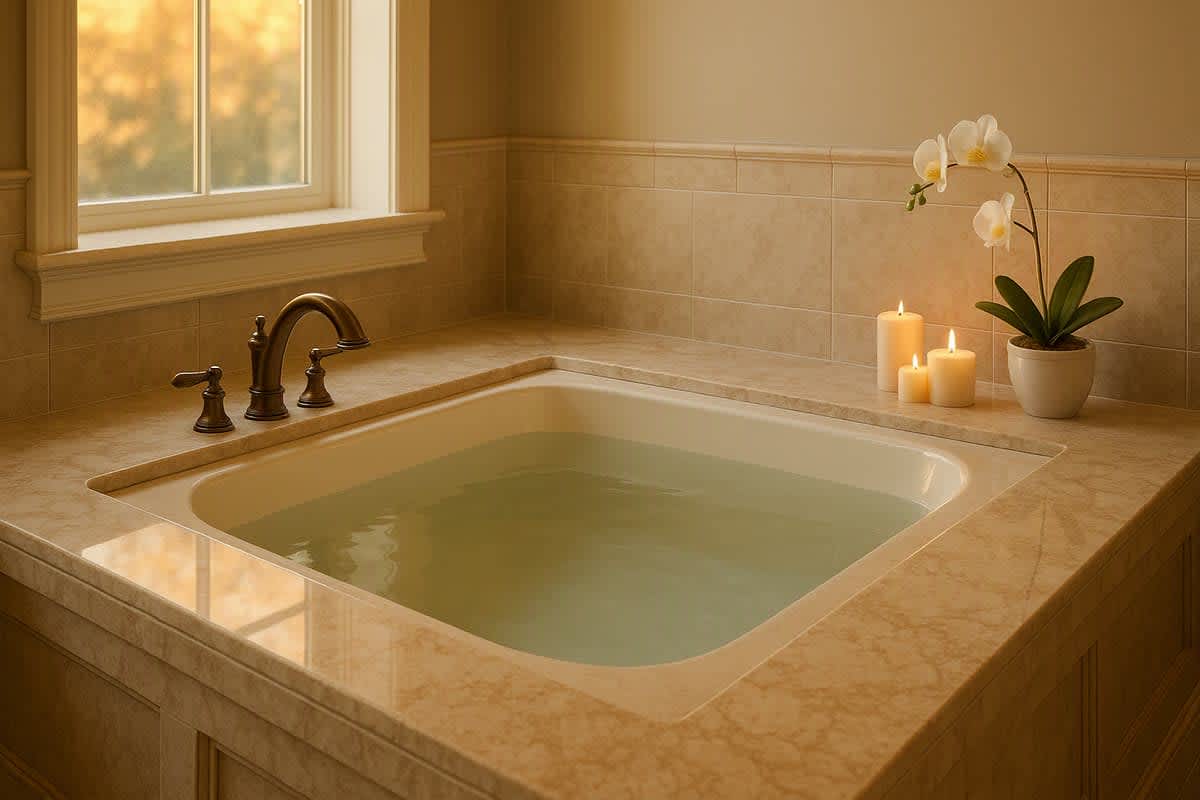
What Is a Roman Tub? Pros, Cons, and Installation Tips
What Is a Roman Tub? Pros, Cons, and Installation Tips
$1,500 – $10,000+ installed (Roman tub)
$500 – $3,000 per drop-in Roman tub
$1,000 – $5,000 per freestanding Roman tub

What Is a Roman Tub?
A Roman tub is a freestanding or built-in bathtub inspired by ancient Roman bathing culture. It is characterized by a wide, deep basin, deck-mounted faucets, and often a sunken or platform-style design. Unlike standard alcove tubs, Roman tubs are designed as a centerpiece of the bathroom, offering a luxurious soaking experience with a spa-like aesthetic. They typically sit on a raised platform or are recessed into the floor, with the faucet mounted on the tub's deck or surrounding ledge rather than on the wall.
| Feature | Roman Tub | Standard Tub |
|---|---|---|
| Faucet placement | Deck-mounted on tub rim or platform | Wall-mounted |
| Typical depth | 18 to 24 inches | 14 to 16 inches |
| Water capacity | 60 to 100+ gallons | 30 to 50 gallons |
| Installation style | Platform, sunken, or freestanding | Alcove or drop-in |
| Average cost (tub + install) | $1,500 to $10,000+ | $400 to $2,500 |
The term "Roman tub" can refer to both the tub itself and the style of faucet used with it. Roman tub faucets are specifically designed to mount through holes drilled into the tub deck, with the spout and handles as separate components spread across the rim. This design creates a clean, elegant look that distinguishes these tubs from typical bathroom fixtures.
Roman tubs draw their name from the elaborate bathing rituals of ancient Rome, where public and private baths served as social gathering spaces. Modern versions capture that same sense of indulgence while incorporating contemporary materials and plumbing technology.
Key Features and Design Elements
Roman tubs stand apart from other bathtub styles through several defining characteristics. Understanding these features helps determine whether this style fits your bathroom layout, lifestyle, and budget.
| Design Element | Description |
|---|---|
| Deck-mounted faucet | Spout and handles mount directly on the tub rim or surrounding platform |
| Wide, open basin | Broader than standard tubs, typically 36 to 42 inches wide |
| Deep soaking depth | 18 to 24 inches of water depth for full-body immersion |
| Platform or surround | Often built into a tiled platform, creating a custom look |
| Step-up or sunken design | May require stepping up onto a platform or stepping down into a recessed basin |
| Separate components | Spout and two handles are individual pieces, often requiring 3 deck holes |
Deck-Mounted Faucets
The most recognizable feature of a Roman tub is its deck-mounted faucet system. Rather than attaching to the wall, the faucet components mount through holes in the tub's rim or the surrounding platform. A typical Roman tub faucet requires three holes: one for the spout and one for each handle. Some configurations include a fourth hole for a hand shower.
Wide, Deep Basin
Roman tubs are designed for deep soaking. The basin is wider and deeper than a standard tub, allowing bathers to submerge more of their body. This deeper basin means higher water capacity, which contributes to the luxurious feel but also increases water usage and the demand on your water heater.
Platform and Surround Design
Many Roman tubs are built into a custom tiled platform or surround. This platform can be constructed from wood framing, concrete board, and waterproof membrane, then finished with tile, stone, or other decorative materials. The tiled surround approach is often significantly less expensive than purchasing a large prefabricated tub, making it a popular choice for homeowners who want a custom look on a moderate budget.
Types of Roman Tubs
Roman tubs come in several configurations, each suited to different bathroom layouts and design preferences. The right type depends on your available space, structural support, and the aesthetic you want to achieve.
| Type | Best For | Average Cost |
|---|---|---|
| Drop-in Roman tub | Custom platform installations | $500 to $3,000 |
| Sunken Roman tub | Ground-floor bathrooms with adequate subfloor depth | $3,000 to $10,000+ |
| Freestanding Roman tub | Large bathrooms with open floor plans | $1,000 to $5,000 |
| Tiled Roman tub (custom-built) | Budget-conscious homeowners wanting a custom look | $1,500 to $6,000 |
| Whirlpool Roman tub | Spa enthusiasts wanting hydrotherapy jets | $2,000 to $8,000+ |
Drop-In Roman Tub
A drop-in Roman tub is a prefabricated basin that sits inside a custom-built platform or surround. The tub rim rests on the platform edge, and the surrounding deck is finished with tile, stone, or solid surface material. This is the most common Roman tub configuration because it balances customization with ease of installation.
Sunken Roman Tub
Sunken Roman tubs are recessed into the floor, creating a step-down bathing experience. This design most closely mimics ancient Roman baths. However, sunken tubs require significant structural work, including reinforced floor framing and specialized drainage. They work best on ground-floor or slab-on-grade installations where there is room beneath the floor for plumbing.
Sunken Roman tubs add significant weight to your floor structure. A full Roman tub can weigh over 800 pounds when filled with water. Always consult a structural engineer before planning a sunken or platform installation, especially on upper floors.
Tiled (Custom-Built) Roman Tub
A fully tiled Roman tub is built entirely from scratch using a waterproof framework, cement board, waterproof membrane, and tile or stone finish. There is no prefabricated basin; the tub itself is the tiled structure. This approach offers maximum customization in terms of size, shape, and depth, and it can be significantly cheaper than purchasing a large prefabricated tub.
However, custom-built tiled tubs require meticulous waterproofing. Any failure in the waterproof membrane can lead to leaks, mold, and structural damage. Hiring an experienced tile contractor who specializes in wet-area construction is essential.
Whirlpool Roman Tub
Whirlpool Roman tubs add hydrotherapy jets to the standard Roman tub design. These tubs require electrical connections for the jet pump, adding to both the installation complexity and cost. Major manufacturers like Jacuzzi offer Roman tub fillers and whirlpool systems designed specifically for this style.
Pros of a Roman Tub
Roman tubs offer several advantages that make them a desirable choice for bathroom renovations, particularly for homeowners focused on aesthetics, relaxation, and custom design.
| Advantage | Details |
|---|---|
| Luxurious aesthetic | Creates a spa-like centerpiece in the bathroom |
| Deep soaking | 18 to 24 inches of depth for full-body immersion |
| Custom sizing | Can be built to any dimension with a tiled surround |
| Cost flexibility | Tiled versions can be cheaper than large prefabricated tubs |
| Increased home value | Master bath upgrades can add 60% to 70% ROI |
| Design versatility | Works with modern, traditional, Mediterranean, and transitional styles |
| Comfortable entry | Platform designs allow sitting on the ledge before stepping in |
Luxury and Relaxation
The primary appeal of a Roman tub is the elevated bathing experience. The deeper water, wider basin, and spa-like setting make it ideal for long, relaxing soaks. For homeowners who view their bathroom as a personal retreat, a Roman tub delivers a level of comfort that standard tubs simply cannot match.
Customization Options
Because Roman tubs are often built into a custom platform, homeowners have nearly unlimited design flexibility. You can choose the exact dimensions, tile materials, surround height, and faucet style. This versatility makes it possible to fit a Roman tub into unusually shaped spaces or to match a specific design vision.
Cost Savings and Home Value
A custom-tiled Roman tub can be much cheaper than purchasing a large freestanding or whirlpool tub. Building a tiled surround with a standard drop-in basin gives you a high-end look at a fraction of the cost. At the same time, a well-designed master bath with a Roman tub can boost your home's resale value, with bathroom renovations typically returning 60% to 70% of the investment.
Cons of a Roman Tub
Despite their appeal, Roman tubs come with notable drawbacks. These disadvantages are important to weigh before committing to an installation, as they can affect your daily routine, utility costs, and long-term maintenance.
| Disadvantage | Details |
|---|---|
| High water usage | 60 to 100+ gallons per fill vs. 30 to 50 for standard tubs |
| Space requirements | Requires a large bathroom footprint, typically 30+ square feet |
| Structural demands | May need reinforced floor framing, especially on upper levels |
| Longer fill time | Can take 15 to 30 minutes to fill depending on water pressure |
| Water heater strain | May deplete a standard 40-gallon water heater before the tub is full |
| Waterproofing risk | Custom-tiled versions require flawless waterproofing to prevent leaks |
| Accessibility challenges | Stepping up onto platforms or down into sunken tubs can be difficult for some users |
| Cleaning difficulty | Large surfaces and grout lines require more maintenance |
Water Usage and Utility Costs
A Roman tub's deep basin requires significantly more water than a standard tub. Filling an 80-gallon Roman tub uses roughly twice the water of a typical bathtub. This increases both your water bill and the energy required to heat that water. Homeowners considering a Roman tub should evaluate whether their water heater can handle the demand; a tankless or high-capacity water heater may be necessary.
Space and Structural Requirements
Roman tubs need a large bathroom footprint. The tub itself, plus the surrounding platform and clearance for entry, can consume 30 to 50 square feet of floor space. On upper floors, the combined weight of the tub, water, and occupant (potentially exceeding 1,000 pounds) may require reinforced floor joists or additional support from below.
Waterproofing Concerns
For custom-tiled Roman tubs, waterproofing is the most critical and potentially risky aspect of the project. The entire tub basin must be covered with a continuous waterproof membrane before tile is applied. Any gaps, seams, or punctures in the membrane can allow water to reach the underlying structure, causing rot, mold, and expensive repairs. This is not a project suited for inexperienced DIYers.
Installation Costs
Roman tub installation costs vary widely depending on the type of tub, materials, and complexity of the project. A basic drop-in Roman tub with a simple tiled platform costs $1,500 to $4,000 installed. High-end custom installations with natural stone, sunken designs, or whirlpool systems can exceed $10,000.
| Cost Component | Average Price Range |
|---|---|
| Drop-in tub (basin only) | $200 to $2,500 |
| Roman tub faucet set | $150 to $800 |
| Platform framing and cement board | $200 to $600 |
| Waterproof membrane | $100 to $300 |
| Tile or stone materials | $300 to $2,000 |
| Plumbing labor | $300 to $1,500 |
| Tile installation labor | $500 to $2,000 |
| Structural reinforcement (if needed) | $500 to $2,500 |
| Total installed cost (typical range) | $1,500 to $10,000+ |
Budget-Friendly Approach
The most cost-effective way to install a Roman tub is to use a standard drop-in acrylic basin combined with a custom-tiled platform. This approach can cost as little as $1,500 to $3,000 for materials and labor, compared to $3,000 to $8,000 for a large freestanding soaking tub. Many homeowners on home improvement forums report choosing the tiled approach specifically because it delivers a high-end look without the premium price tag of a prefabricated luxury tub.
Premium Installations
High-end Roman tub installations featuring natural stone surrounds, sunken designs, whirlpool jets, or custom mosaic tilework can cost $8,000 to $15,000+. These projects typically require a general contractor coordinating multiple trades: a plumber, an electrician (for whirlpool models), a tile setter, and possibly a structural engineer.
Installation Tips
Proper installation is critical for a Roman tub's performance and longevity. Whether you hire a contractor or tackle portions of the project yourself, these tips will help ensure a successful result.
| Installation Step | Key Considerations |
|---|---|
| Planning and layout | Measure space carefully; ensure minimum 30 square feet of floor area |
| Structural assessment | Verify floor can support 800 to 1,000+ pounds when tub is filled |
| Plumbing rough-in | Position drain and supply lines before building platform |
| Platform construction | Use pressure-treated lumber or steel framing with cement board |
| Waterproofing | Apply continuous waterproof membrane (e.g., Schluter Kerdi, RedGard) |
| Tub placement | Set drop-in basin with mortar bed for stability |
| Faucet installation | Drill deck holes precisely; follow manufacturer's template |
| Tile and finish | Use large-format tile or stone to minimize grout lines |
1. Plan Your Layout Carefully
Before purchasing materials, create a detailed plan. Measure the bathroom space, determine the tub's orientation, and decide on the platform height and surround width. Account for access panels so a plumber can reach the drain and plumbing connections for future maintenance. Many homeowners forget access panels, which can make repairs extremely difficult and expensive later.
2. Assess Structural Support
A filled Roman tub with an occupant can weigh over 1,000 pounds. Standard residential floor joists may not support this load without reinforcement. On upper floors, consult a structural engineer to determine whether sistering joists, adding support posts, or using a steel beam is necessary. Ground-floor installations on concrete slabs generally do not require additional structural work.
3. Rough In Plumbing First
Complete all plumbing rough-in work before building the platform. Position the drain, hot and cold supply lines, and overflow connection according to the tub manufacturer's specifications. Ensure the drain has proper slope (minimum 1/4 inch per foot) to prevent standing water in the drain line.
4. Waterproof Thoroughly
Waterproofing is the most important step for tiled Roman tubs. Apply a liquid or sheet membrane to every surface that will contact water, including the tub basin interior (for fully tiled versions), the platform deck, and any surrounding walls within the splash zone. Overlap seams by at least 2 inches and use manufacturer-approved sealant at all corners and transitions.
Use a two-coat application of liquid waterproofing membrane like RedGard or Hydroban, allowing full drying time between coats. For sheet membrane systems like Schluter Kerdi, ensure all seams are sealed with Kerdi-Band and unmodified thin-set mortar. Test the waterproofing with a flood test (fill the basin and let it sit for 24 hours) before applying tile.
5. Set the Tub on a Mortar Bed
For drop-in tubs, place a bed of mortar or expanding foam beneath the basin before setting it into the platform. This eliminates flex and movement, reduces noise when the tub fills, and provides uniform support across the entire bottom surface. Never leave a drop-in tub sitting only on its rim, as this can cause cracking or separation over time.
6. Install Faucets Precisely
Roman tub faucets require precise hole placement. Most manufacturers provide a drilling template. Use a hole saw with the correct diameter and drill from the finished side to prevent chipping on tile or stone surfaces. Ensure the supply lines are accessible from below and that the faucet valve body is properly secured before attaching handles and the spout.
Choosing Roman Tub Faucets
Roman tub faucets are the defining hardware element of this tub style. These deck-mounted faucets come in a wide range of designs, finishes, and configurations from manufacturers like Moen, Delta, Jacuzzi, and Peerless.
| Faucet Feature | Options | Price Range |
|---|---|---|
| Configuration | 3-hole (spout + 2 handles) or 4-hole (+ hand shower) | $150 to $800+ |
| Finish | Chrome, brushed nickel, matte black, oil-rubbed bronze, polished brass | Varies by finish |
| Style | Modern, traditional, transitional | Varies by design |
| Valve type | Ceramic disc (most durable), compression, ball | Included with faucet |
| Flow rate | 6 to 10+ GPM for faster fill times | Higher GPM costs more |
Flow Rate Matters
Because Roman tubs hold significantly more water than standard tubs, choosing a faucet with a higher flow rate can dramatically reduce fill time. A standard tub faucet delivers about 4 to 6 gallons per minute (GPM), while Roman tub fillers can deliver 8 to 10+ GPM. At 8 GPM, filling an 80-gallon tub takes about 10 minutes versus 20 minutes at 4 GPM.
Finish and Style Selection
Match your Roman tub faucet finish to the other fixtures in your bathroom for a cohesive look. Brushed nickel and chrome are the most popular choices due to their durability and versatility. Matte black and oil-rubbed bronze create a dramatic contrast on light-colored tile surrounds, while polished brass adds warmth to traditional and Mediterranean-style bathrooms.
Maintenance and Care
Roman tubs require more maintenance than standard tubs due to their larger surface area, tile surround, and extensive grout lines. Regular upkeep prevents mold, discoloration, and damage to waterproofing.
| Maintenance Task | Frequency |
|---|---|
| Clean tub basin surface | After each use or weekly |
| Wipe down tile surround | Weekly |
| Inspect and clean grout lines | Monthly |
| Reseal grout | Every 1 to 2 years |
| Check caulk joints | Every 6 months |
| Inspect for leaks (access panel) | Every 6 months |
| Clean faucet aerator or spout | Every 3 to 6 months |
| Flush whirlpool jets (if applicable) | Monthly |
Grout and Tile Care
The tile surround on a Roman tub can be a maintenance challenge. Grout absorbs moisture and can develop mold, mildew, or discoloration if not properly sealed. Apply a penetrating grout sealer every 1 to 2 years to protect against moisture infiltration. Using large-format tiles reduces the number of grout lines and simplifies cleaning.
Leak Prevention
Check the caulk joints between the tub and tile surround every six months. Replace cracked or peeling caulk promptly to prevent water from reaching the substrate. If you have an access panel, open it periodically to inspect for drips, moisture stains, or musty odors that could indicate a hidden leak. Undetected water damage can escalate quickly, so catching leaks early is critical.
Roman Tub vs. Other Tub Styles
Understanding how a Roman tub compares to other popular bathtub styles helps clarify whether it is the best fit for your bathroom. Each style offers distinct advantages and trade-offs.
| Feature | Roman Tub | Freestanding Tub | Alcove Tub | Japanese Soaking Tub |
|---|---|---|---|---|
| Depth | 18 to 24 inches | 14 to 20 inches | 14 to 16 inches | 22 to 27 inches |
| Faucet style | Deck-mounted | Freestanding or wall-mounted | Wall-mounted | Wall or deck-mounted |
| Space needed | Large | Large | Small to medium | Small to medium |
| Installed cost | $1,500 to $10,000+ | $1,000 to $8,000 | $400 to $2,500 | $1,500 to $6,000 |
| Customization | High | Low to moderate | Low | Low to moderate |
| Best for | Luxury master baths | Open bathroom layouts | Standard bathrooms | Deep soaking in small spaces |
Roman tubs offer the highest level of customization because the surround can be built to any specification. Freestanding tubs are easier to install but harder to customize. Alcove tubs are the most practical and affordable for everyday use. Japanese soaking tubs provide the deepest soaking experience in a compact footprint but lack the wide ledge and platform aesthetic of a Roman tub.
Frequently Asked Questions
What is the difference between a Roman tub and a garden tub?
A Roman tub features deck-mounted faucets and is often built into a tiled platform, while a garden tub is a large, deep standalone tub (usually oval or round) that may or may not have a surrounding deck. Garden tubs emphasize size and depth, while Roman tubs emphasize the custom surround and deck-mounted hardware. The terms are sometimes used interchangeably, but the faucet style and platform integration are what distinguish a true Roman tub.
Can I install a Roman tub myself?
Experienced DIYers can handle the platform framing and tile work, but the plumbing rough-in and waterproofing should ideally be done by licensed professionals. Waterproofing failures are the most common and costly problem with Roman tub installations. If you choose to DIY the waterproofing, conduct a thorough flood test before tiling and follow the membrane manufacturer's instructions exactly.
Do I need a bigger water heater for a Roman tub?
In most cases, yes. A standard 40-gallon tank water heater will not fully fill a 60- to 100-gallon Roman tub with hot water. Consider upgrading to a 50- to 80-gallon tank or installing a tankless water heater, which provides continuous hot water on demand. The additional cost for a water heater upgrade is typically $800 to $2,500 installed.
Does a Roman tub add resale value?
A well-designed Roman tub in a master bathroom can add resale value, especially in higher-end homes where buyers expect luxury features. However, trends have shifted in some markets toward walk-in showers over large tubs. In mid-range homes, the space consumed by a Roman tub might be better used for a larger shower. Research your local real estate market before making this investment.
How much does a filled Roman tub weigh?
A filled Roman tub typically weighs between 800 and 1,200 pounds, including the tub, water, and occupant. Water weighs approximately 8.34 pounds per gallon, so an 80-gallon tub holds about 667 pounds of water alone. This weight must be considered when planning installations on any floor above ground level.
How long does Roman tub installation take?
A typical Roman tub installation takes 3 to 7 days for a professional crew, depending on the complexity. This timeline includes platform construction (1 to 2 days), plumbing (1 day), waterproofing with cure time (1 to 2 days), tile installation (1 to 2 days), and grouting and finishing (1 day). Custom or sunken installations may take longer.