![How to Become an Exterminator [PRO]](https://res.cloudinary.com/liaison-inc/image/upload/f_auto/q_auto:eco,w_1200:eco,w_1200/v1765802860/content/homeguide/homeguide-how-to-become-an-exterminator-spraying-pesticide-on-residential-lawn.jpg)
How to Become an Exterminator [PRO]
How to Become an Exterminator [PRO]

What does an exterminator do?
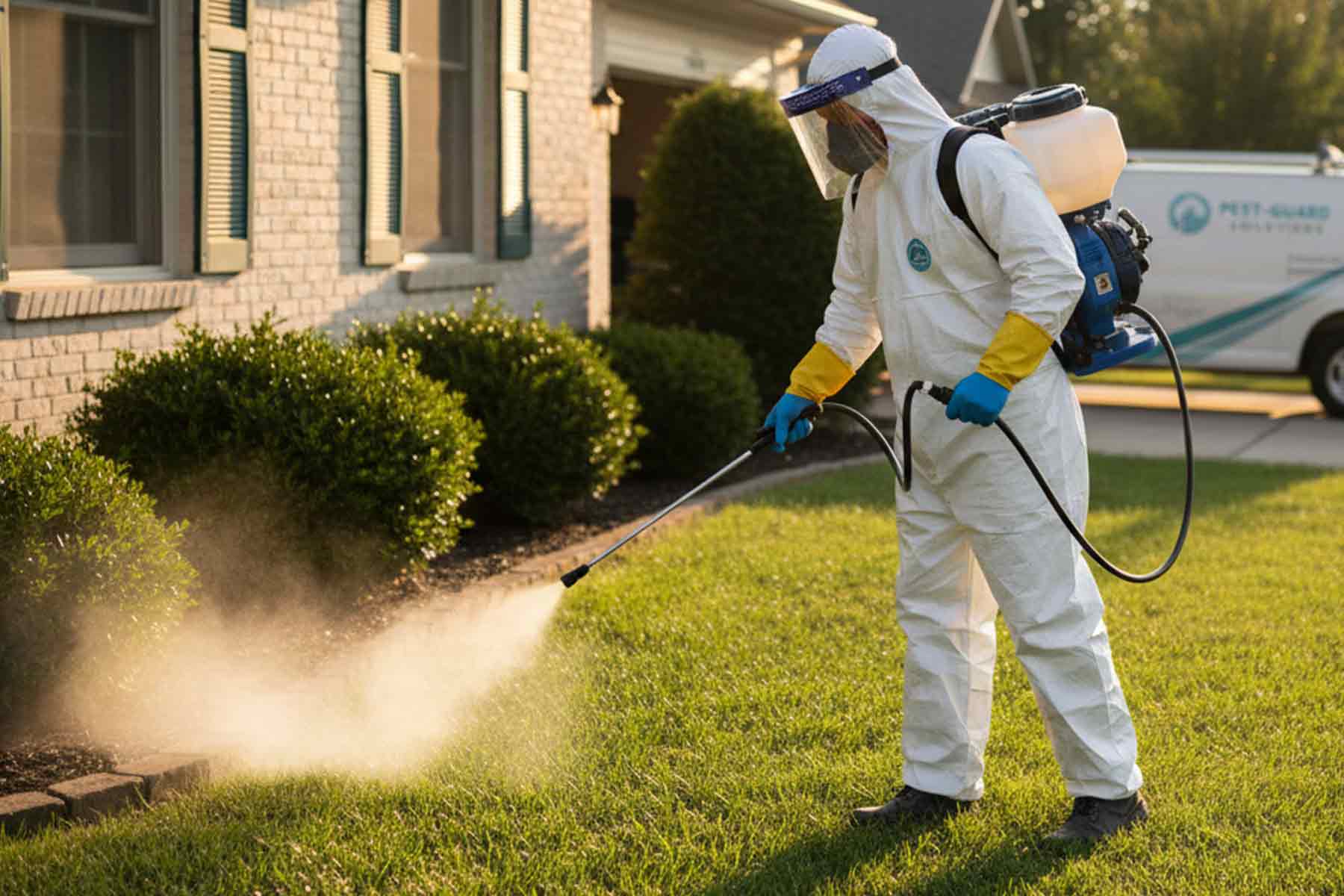
Exterminators, also known as pest control technicians, inspect buildings and outdoor areas for signs of pests like rodents, termites, ants, and roaches.
Your daily tasks will include:
Inspecting crawl spaces, attics, and basements
Identifying pest types and entry points
Mixing and applying chemical solutions or setting traps
Educating homeowners on how to prevent future infestations
Driving a company vehicle to multiple service calls each day
You'll work both indoors and outdoors, crawling into tight spaces and climbing ladders. The job requires physical stamina, attention to detail, and strong customer service skills.
Step 1: Meet the basic requirements
Most states and companies have a standard set of prerequisites you must meet before you can apply for a pest control license. Because you will be entering private homes and handling regulated chemicals, trust and safety are paramount.
Typically, you must:
Be at least 18 years old.
Hold a high school diploma or GED.
Have a valid driver's license with a clean driving record.
Pass a background check and drug screening.
Be physically fit enough to crawl, climb ladders, and carry equipment (often up to 50 lbs.).
Step 2: Complete the required pest control training
Most states mandate between 10 to 40 hours of initial training before you can apply for a pest management license. You can complete this through approved training schools, community colleges, or online courses. Training covers pest biology, proper chemical use, safety procedures, and environmental regulations.
Many pest control companies offer on-the-job training programs. You'll work under a licensed technician, learning practical skills while earning a paycheck. This apprenticeship approach lets you gain experience while meeting your state's training hour requirements.
Step 3: Pass the licensing exam
After completing your training hours, you'll schedule a licensing exam. These tests typically include multiple-choice questions covering pest identification, treatment methods, safety protocols, and state regulations. Exam fees usually range from $50 to $150, depending on your state and license type.
Step 4: Get your pest control license
You cannot work independently without a pest management license. Licensing requirements vary by state, so check with your state's Department of Agriculture or Pest Control Board.
Once you pass the exam, submit your license application and documentation. Most states require:
Proof you've completed the required training hours
Exam results
Proof of insurance
Many states require continuing education to maintain your license. You'll need to complete renewal courses every one to three years to stay current on new techniques, products, and regulations in the pest control industry.
Step 5: Advance your career with specializations
After you have your core license, you can boost your income potential by specializing. General pest control is a great start, but high-demand niches often pay more.
Consider getting certified in:
Termite Control: Requires knowledge of construction and structural integrity
Fumigation: Involves tenting structures for severe infestations
Wildlife Control: removal of raccoons, squirrels, or bats (often requires separate permits)
Bed Bug Heat Treatments: A specialized, high-ticket service
Exterminator salary expectations
Compensation in the pest control field depends heavily on your location, experience, and the specific licenses you hold. Salaries are typically competitive and often include performance bonuses or commissions for selling new services.
According to recent market data:
Entry-level technicians make $32,000 to $40,000 per year.
The average salary in the industry is $40,000 to $52,000 per year.
Experienced technicians, commercial specialists, and sales managers often earn over $60,000 annually.
Successful pest control business owners can make $70,000 to $100,000 or more.
Career advancement opportunities
The pest control field offers clear paths for growth. After gaining experience as a technician, you might become a senior technician handling complex jobs or training new hires. Many technicians move into supervisory roles, managing teams and coordinating service routes.
FAQs about becoming an exterminator
How much do exterminators make?
The average pest control salary in the U.S. ranges from $40,000 to $52,000 per year. Entry-level trainees usually start at around $18 per hour, while experienced commercial technicians can earn over $60,000 annually. Commission on sales can significantly boost this income.
How long does it take to become an exterminator?
You can start working as a pest control technician in as little as a few weeks to three months. Most states require 10 to 40 hours of training before licensing. Some allow you to work under supervision while completing requirements. Full licensing typically takes two to six months from starting training to receiving your license.
Do you need a college degree to become an exterminator?
No, you do not need a college degree to become an exterminator. A high school diploma or GED is the standard educational requirement for pest control work. The job emphasizes hands-on training, licensing exams, and practical experience over formal education.
Some technicians pursue associate degrees in pest management to advance their careers, but it's not mandatory.
Is being an exterminator dangerous?
Being an exterminator can be dangerous if safety protocols aren't followed. You will work with chemicals, climb ladders, and enter tight spaces like crawlways. However, certified technicians are trained extensively in Personal Protective Equipment (PPE) and safety measures to minimize these risks.
What is the difference between an exterminator and a pest control technician?
Historically, "exterminator" implied simply killing bugs with harsh chemicals. "Pest control technician" is the modern term, reflecting a professional who manages pests through "Integrated Pest Management" (IPM), focusing on prevention, inspection, and targeted treatments rather than just spraying.
Using our proprietary cost database, in-depth research, and collaboration with industry experts, we deliver accurate, up-to-date pricing and insights you can trust, every time.