![How to Become a Roofer [PRO]](https://res.cloudinary.com/liaison-inc/image/upload/f_auto/q_auto:eco,w_1200:eco,w_1200/v1765825924/content/homeguide/homeguide-how-to-become-a-roofer-contractor-working-on-residential-asphalt-shingle-roof.jpg)
How to Become a Roofer [PRO]
How to Become a Roofer [PRO]

How to become a roofing contractor
If you enjoy working outdoors, aren't afraid of heights, and want to build a skill that lasts, becoming a roofer might be your perfect next step. Roofing offers a hands-on career with strong earning potential, steady demand, and clear paths for growth.
This complete, step-by-step guide will walk you through exactly how to become a roofer, from entry requirements and training to pay, certifications, and long-term job outlook.
What does a roofer do?
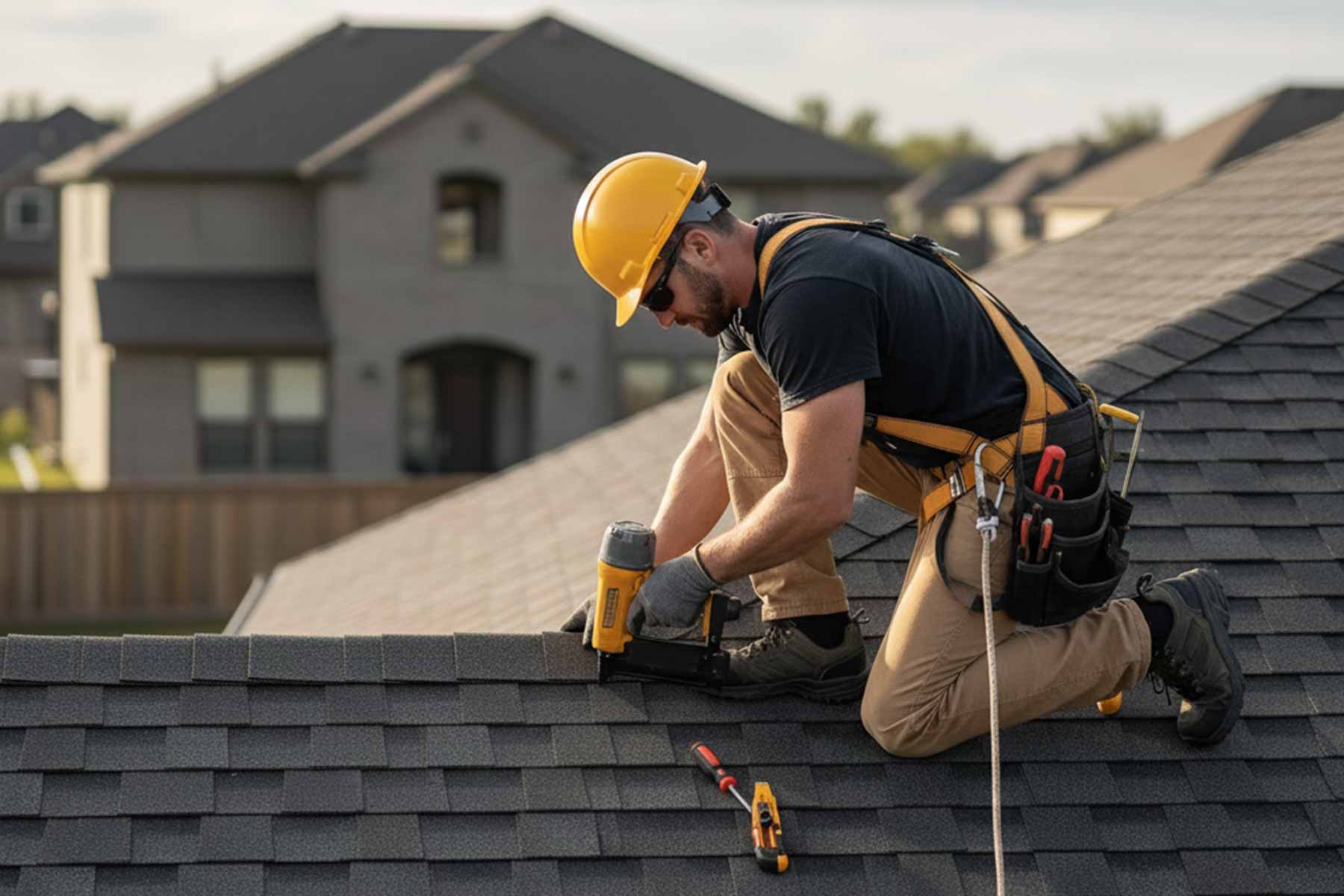
Roofers install, repair, and replace roofing systems on residential, commercial, and industrial buildings. Their work protects homes and businesses from weather, improves energy efficiency, and ensures long-term durability.
Daily tasks often include removing old roofing materials, installing shingles or metal panels, sealing flashing, reading plans, and following safety protocols. Many roofers also inspect roofs to identify leaks, structural issues, or storm damage.
The job requires strong physical fitness and stamina. Expect to spend your days climbing, kneeling, bending, and lifting heavy materials. You must be able to work at high elevations and in different weather.
Step 1: Meet the basic requirements
Most roofing careers start with minimal formal requirements, making it one of the more accessible skilled trades.
At a minimum, you typically need to:
Have a high school diploma or GED. While not always strictly required, most employers prefer candidates who have one.
Be at least 18 years of age.
Have excellent physical fitness and be comfortable working at heights. Safety is paramount, so you need good balance and body control.
Employers also value reliability, basic math skills, and attention to detail.
Step 2: Get roofer training
Roofing is a highly skilled trade. You must master technical knowledge and practical skills through formal training or on-the-job experience. Luckily, you have a couple of great options to launch your career.
Apprenticeship vs. vocational school
Most successful roofers enter the trade through a roofing apprenticeship program or by completing a vocational training course. Both paths lead to a great career, but they offer different experiences.
| Training path | Duration | Key benefit | Learning style |
|---|---|---|---|
| Apprenticeship | 3 to 4 years | Earn income while you learn. | Hands-on, mentored experience. |
| Vocational school | Several weeks to 2 years | Faster entry into the workforce | Structured classroom and shop-based learning |
Apprenticeships are often the most recommended route. They combine structured classroom instruction with extensive, paid, on-the-job training under the guidance of a skilled professional. You earn wages right away, and your pay increases as you gain experience.
Vocational or trade schools offer focused, intensive training in material knowledge, installation techniques, and safety protocols. This option works well if you prefer structured education and want to enter the workforce as quickly as possible.
Build core technical and soft skills
Regardless of your chosen path, you need to develop specific skills to succeed as a professional roofer:
Technical proficiency: Learn how to cut materials accurately and install and repair different roofing systems and materials, including understanding roof pitch, flashing, and ventilation.
Safety awareness: You must know and practice all OSHA safety standards and follow all building codes. This includes proper use of harnesses, ladders, and scaffolding to minimize risk when working at height.
Problem-solving: You will troubleshoot issues like leaks, structural concerns, and challenging installations. The ability to think on your feet is a valuable asset.
Teamwork and communication: Roofers almost always work as a crew. Clear, concise communication and the ability to work effectively with others are crucial for a safe and efficient job site.
Step 3: Gain experience and certification
After initial training, the real work begins. You must apply your knowledge and gain the necessary work experience that leads to greater responsibility and higher pay.
Start with on-the-job training
If you don't enter through a formal apprenticeship, you can still gain experience by applying for an entry-level position as a roofer helper or laborer. This allows you to learn directly from experienced crew members. Start small, accept the "grunt work," and demonstrate a strong work ethic.
As an entry-level worker, you will:
Handle material loading and cleanup.
Assist with tear-offs and preparation.
Learn to correctly use tools and safety equipment.
Listen to your mentors, ask questions, and focus on performing high-quality work. Building trust with your team and establishing a reputation for reliability is key to advancing your roofing career.
Obtain necessary certifications and licensing
Licensing requirements vary widely depending on the state and municipality. Some areas require roofers to hold a state-issued license to work on projects above a certain monetary threshold, while others only require a general contractor's license.
Safety certifications: Completing OSHA's 10-hour or 30-hour training is essential and often required for employment. This proves your commitment to workplace safety.
Material certifications: Many roofing material manufacturers offer specialized training and certifications. These credentials set you apart and qualify you to install specific, often higher-value, products.
Licensing: Research the specific regulations in your region. Licensing usually involves meeting experience criteria, carrying liability insurance, and passing a comprehensive licensing exam on trade practices, building codes, and safety standards.
Some employers and apprenticeship programs provide free OSHA training. Ask about this benefit before paying out of pocket for certification.
Step 4: Advance your roofing career
Your journey doesn't end once you become a qualified roofer. The trades offer excellent opportunities for professional growth and specialization.
Specialize your skills
Specializing in certain materials or project types significantly increases your value and earning potential. Consider training in high-demand niches:
Commercial roofing: Working on large-scale flat roofs using materials like EPDM, TPO, or PVC
Metal roofing: Installing custom, high-end standing seam or metal tile systems
Green/Solar roofing: Integrating solar panels or living roof systems
Move into a leadership role
With years of experience, a strong track record, and perhaps additional certifications, you can advance into leadership positions.
Foreman or Crew Leader: You manage the job site, supervise the crew, and coordinate materials and schedules. This role requires exceptional communication and problem-solving skills.
Estimator or Project Manager: You handle the business side, including calculating bids, managing client relations, and overseeing projects from start to finish.
Start Your Own Business: Many experienced roofers choose to start their own roofing company, gaining complete control over their schedule, pricing, and earning potential.
Always check local regulations before starting work independently.
Create a free profile on HomeGuide to quickly connect with homeowners searching for roofing services in your area.
Roofer salary and job outlook
Roofing offers competitive pay without the need for a college degree. The Bureau of Labor Statistics (BLS) reports that roofers earn a median annual wage of $51,000. The top 10% of earners make more than $80,800. Income varies based on location, specialization, overtime, and whether you work for a company or run your own business.
| Experience level | Average annual pay |
|---|---|
| Entry-level roofer | $35,000 – $45,000 |
| Experienced roofer | $50,000 – $65,000 |
| Master roofer or contractor | $70,000+ |
Employment of roofers is projected to grow 6% over the next decade, which is faster than the average for all occupations. Job demand for roofers remains steady due to ongoing construction, aging buildings, and storm-related repairs. Areas with frequent extreme weather often see higher demand and wages.
Pros and cons of becoming a roofer
Roofing can be rewarding, but it's important to understand both sides before committing.
Advantages include:
Strong job security
Paid training
Physical activity
Clear advancement paths
Challenges include:
Physically demanding work
Exposure to weather
Strict safety requirements
FAQs about becoming a roofer
How much do roofers make?
Roofers earn a median salary of $51,000 per year according to the Bureau of Labor Statistics. Entry-level roofers typically earn $35,000 to $45,000 annually, while experienced roofers make $50,000 to $70,000+. The top 10% of roofers earn over $80,800 per year.
How long does it take to become a roofer?
You can start working as a roofer helper or laborer in as little as a few weeks. Becoming a fully qualified, experienced journey worker typically takes 2 to 4 years. A formal apprenticeship program generally lasts about 3 to 4 years, combining paid work with classroom instruction.
Do roofers need a license?
Some states and cities require roofers or roofing contractors to be licensed, while others do not. Requirements often apply once you begin contracting independently. Always check your state and local regulations.
Do you need a college degree to become a roofer?
No, you don't need a college degree to become a roofer. Most roofers enter the trade with a high school diploma or GED and complete either a 3 to 4 year apprenticeship program or vocational training.
Is roofing a good career?
Yes. Roofing offers steady demand, competitive wages, and opportunities for advancement without student debt. Many roofers build long-term careers or successful businesses.
Is roofing dangerous?
Roofing involves significant physical demands and risks, primarily from falls. However, when you follow strict safety protocols and complete OSHA safety training, you can mitigate these risks. Professional companies prioritize safety and provide necessary training and personal protective equipment.
Using our proprietary cost database, in-depth research, and collaboration with industry experts, we deliver accurate, up-to-date pricing and insights you can trust, every time.