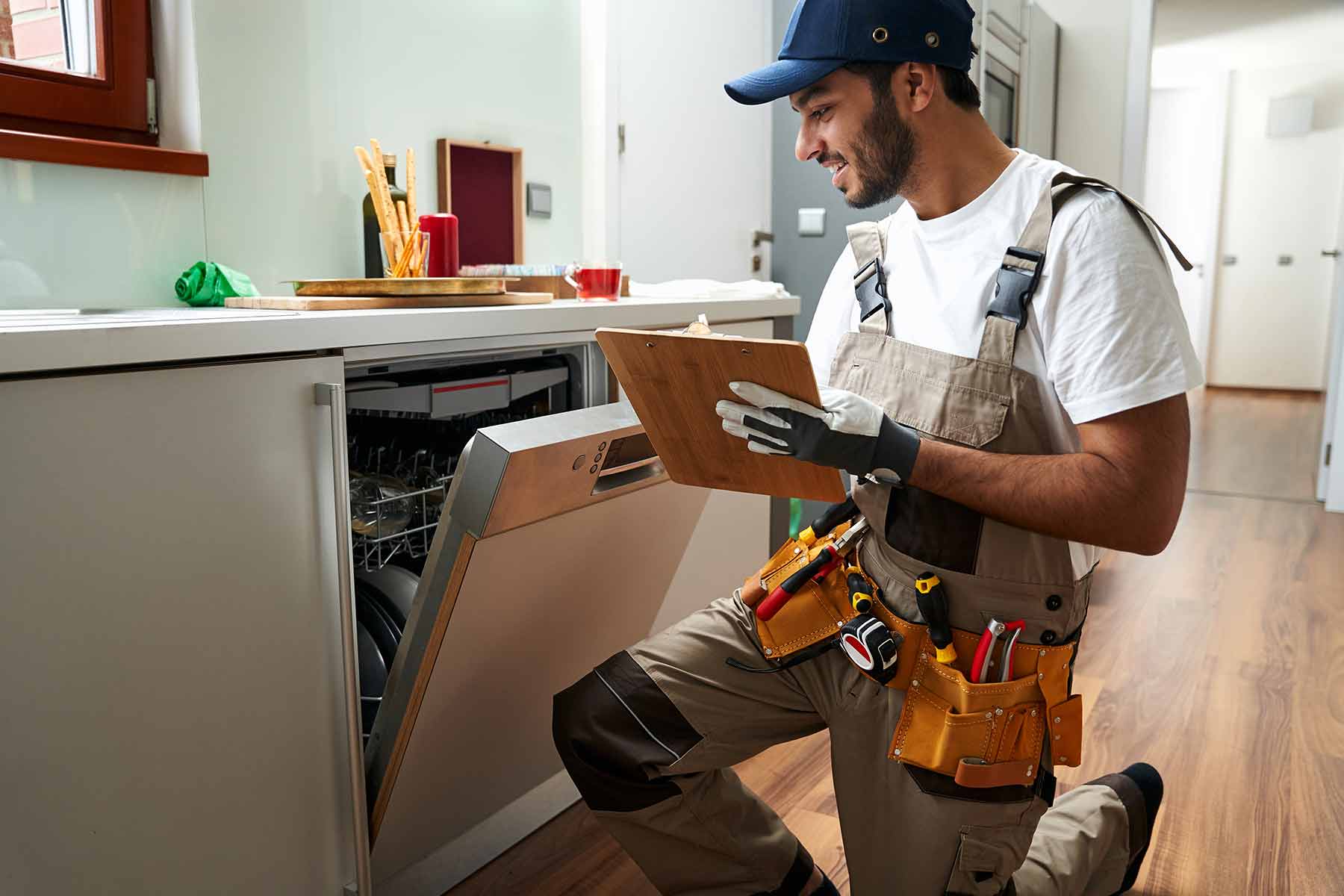
![How To Become a Handyman: A Complete Guide [PRO]](https://res.cloudinary.com/liaison-inc/image/upload/f_auto/q_auto:eco,w_1200:eco,w_1200/v1763366319/content/homeguide/homeguide-how-to-become-a-handyman-handyman-performing-dishwasher-inspection.jpg)
How To Become a Handyman: A Complete Guide [PRO]
How To Become a Handyman: A Complete Guide [PRO]

How to become a handyman
Do you love fixing things, enjoy working with your hands, and like the idea of being your own boss? If you're the person everyone calls when their faucet leaks or a picture needs hanging, learning how to become a handyman could be the perfect career move for you. This job offers incredible variety and puts you in control of your schedule.
This guide will walk you through the essential steps, from building your skills to understanding the complex world of handyman licensing and insurance, so you can start your new career with confidence.
What is a handyman?
A handyman or handywoman is a skilled, versatile professional who performs a wide variety of minor home repairs and maintenance tasks. They are often called "jack-of-all-trades" because they can handle many different types of jobs, from basic plumbing and electrical fixes to carpentry and painting.
What does a handyman do?
A handyman's-day-to-day work is incredibly varied. Common jobs include:
Assembling furniture
Patching drywall
Painting interior rooms
Installing shelves or curtain rods
Fixing a leaky faucet or running toilet
Replacing a light fixture or ceiling fan
Cleaning gutters
Repairing a broken fence or deck board
Step 1: Build your skills & experience
Before you can market yourself as a handyman, you need a solid foundation of skills. A handyman is a jack-of-all-trades, so versatility is your greatest asset.
Build your core skills
You don't need to be a master-level plumber and a master electrician, but you do need to be competent and safe in several key areas. Focus on mastering the basics of the most requested jobs:
Basic carpentry: Installing shelves, replacing trim and baseboards, repairing deck boards, and assembling furniture
Basic plumbing: Fixing leaky faucets, replacing showerheads, clearing simple drain clogs, and installing new toilet flappers
Basic electrical: Replacing light fixtures, installing ceiling fans, and changing light switches or outlets (where legally permitted)
Painting: Interior and exterior painting, staining, and touch-ups
Drywall repair: Patching holes, fixing cracks, and preparing surfaces for paint
Gain hands-on handyman experience
How do you get handyman experience if you're just starting? Start by working on projects in your own home. Offer to help friends and family with their home repairs for a low cost or just for the cost of materials. This builds your confidence and helps you learn to estimate time and costs.
Take before-and-after photos of all your work to use in your online portfolio and social media. Professionals who share photos typically get far more clients than those who don't.
You can also gain valuable experience by volunteering for organizations like Habitat for Humanity or seeking an entry-level job. Working as a maintenance technician for an apartment complex or assisting a seasoned general contractor will expose you to a wide variety of problems and solutions.
Step 2: Find the right handyman training
While you can be self-taught, formal handyman training can give you a competitive edge. It builds your skills, teaches you safety codes, and shows clients you're a serious professional.
Formal handyman courses and trade school
Many community colleges and vocational schools offer handyman courses or certificate programs. These programs bundle classes in the core trades, teaching you the fundamentals of home repair, carpentry, plumbing, and electrical work. This structured learning is excellent for understanding building codes and best practices.
Apprenticeships and informal training
One of the best methods is to learn from a pro. Consider an apprenticeship or a job as a helper for an experienced handyman or contractor. This on-the-job handyman experience is invaluable, teaching you not just repair skills but also how to estimate jobs, manage clients, and run the business side of things.
You can also find many high-quality tutorials and courses online.
Step 3: Research licensing requirements in your state
There is no single, national handyman license. Licensing requirements are set at the state, county, or even city level, and they vary dramatically.
Most regulations are based on two factors: the type of work and the cost of the job. Many states have a "handyman exemption," which allows you to perform work under a certain dollar amount without a license. For example, in California, you can do jobs under $500 without a contractor's license. In other states, that limit might be $1,000 or $3,000.
However, this exemption usually doesn't apply to specialized trades. Major plumbing, electrical, or HVAC work almost always requires a specific license, regardless of the job's cost. Never perform work that requires a permit (like moving electrical wiring or re-routing plumbing) unless you hold the proper license.
What can a handyman do without a license?
In most areas, you can perform a wide range of "odd jobs" without a license if you stay under the state's cost threshold. These tasks are typically minor repairs and maintenance that don't involve structural changes or require permits.
The table below provides general examples, but remember to always check your local regulations.
| Task | Typically requires a license? | Notes |
|---|---|---|
| Assembling furniture | No | This is considered a basic assembly task. |
| Painting an interior room | No | This is typically allowed if the job cost is below your state's limit. |
| Patching a small hole in drywall | No | This is a common maintenance and repair task. |
| Cleaning gutters | No | This is considered general maintenance. |
| Replacing a leaky faucet (like-for-like) | No | In most places, this is a simple repair. |
| Replacing a light fixture or switch | Depends on state/city | Some areas require a licensed electrician for any electrical work. |
| Building a new deck | Yes | This is a structural project that typically requires a permit and a contractor's license. |
| Re-routing plumbing pipes | Yes | This requires a plumbing permit and a licensed plumber. |
| Installing a new electrical circuit | Yes | This requires an electrical permit and a licensed electrician. |
Step 4: Invest in tools and equipment
Start by investing in a set of quality, professional-grade tools. You don't need everything at once, but you should have a solid collection of hand tools, power tools (like a cordless drill and circular saw), and safety gear. Add specialty items as specific jobs require them.
A dependable vehicle is crucial since you'll transport tools and materials daily. Consider whether a van or truck better suits your needs. Proper tool storage keeps equipment organized and protects your investment.
Safety equipment isn't optional. Hard hats, safety glasses, work gloves, and appropriate footwear prevent injuries. Hearing protection and dust masks protect your long-term health.
Step 5: Set up your handyman business
Once you have the skills and understand the local regulations, you're ready to start a business.
Choose your business structure
Decide whether you'll operate as a sole proprietor, LLC, or corporation. Sole proprietorship is simplest but offers no personal liability protection. An LLC separates your personal assets from business debts and lawsuits while remaining relatively easy to manage.
Register your business name with your state if you're using anything other than your personal name. Check that your desired name isn't already taken and consider trademark implications.
Get insurance
Even more important is insurance. Before you set foot on a client's property, you must have general liability insurance. This protects you (and your client) if you accidentally cause property damage or an injury. Many clients will—and should—ask for proof of insurance before hiring you.
Workers' compensation becomes necessary when you hire employees. This insurance covers medical costs and lost wages if someone gets hurt on the job.
Step 6: Define your services and set your pricing
Decide what services you'll offer. Will you specialize in "odd jobs and small repairs," or will you focus on being a "painting and drywall expert"? A clear service list makes it easier to market yourself.
Research handyman prices in your area charge to set your rates. Most handymen charge by the hour (with a 1- or 2-hour minimum) or provide a flat-rate bid for a specific project. Build in costs for travel time, fuel, tool maintenance, insurance, and taxes. Many new handymen forget these overhead expenses and end up losing money on jobs.
Don't underprice yourself to win business. Cheap rates attract problem clients and make it hard to cover expenses. Price for your skill level, reliability, and the value you provide.
Step 7: Get handyman clients
Once your business is set up, you'll need to market your services to gain new clients:
Build a website: Create a simple website showcasing your services, experience, and contact information. Include those before-and-after photos from early jobs. Good photography makes your work tangible for potential clients.
Claim your Google Business Profile: Create your profile and encourage satisfied customers to leave reviews.
Use social media: Social media marketing works well for visual businesses. Post project photos on Facebook and Instagram. Join local community groups where homeowners ask for recommendations.
Explore print advertising: Don't underestimate old-school marketing. Business cards, door hangers, and local newspaper ads still generate leads in many areas.
Network: Partner with real estate agents, property managers, and home inspectors who regularly need reliable handymen.
Join HomeGuide
Create a free profile on HomeGuide to connect with customers near you. Thousands of customers search our marketplace every day for local pros. When a customer near you searches for a handyman, you'll receive the details instantly and can message them, send a quote, or confirm a booking right from your dashboard.
Take advantage of our free all-in-one booking and business management platform built to help you run and grow your business.
FAQs about becoming a handyman
How much does a handyman make?
Your income depends on your location, experience, and services. According to data from across the U.S., the national average hourly rate for a handyman is $60 to $70 per hour. Rates can range from as low as $45 per hour for simpler jobs to over $120 per hour for skilled tasks or in high-cost-of-living areas.
Is handyman a good career?
Being a handyman can be an excellent career if you enjoy physical work, problem-solving, and interacting with people. It offers a lot of flexibility, especially if you run your own business. The demand for reliable, skilled handymen is consistently high, as many homeowners need help with tasks that are too small for a large contracting firm.
How long does it take to become a handyman?
You can start offering basic handyman services within a few months if you have some existing skills. Developing a comprehensive skill set typically takes one to three years of consistent learning and practice.
Formal handyman training programs run anywhere from a few weeks to several months. However, most handymen continue expanding their knowledge throughout their careers as they encounter new challenges and technologies.
What's the difference between a handyman and a general contractor?
General contractors manage large construction and renovation projects, often supervising subcontractors and pulling building permits. They need more extensive licensing and carry higher insurance coverage.
Handymen focus on smaller repair and maintenance jobs that one person can complete, usually without permits. The difference usually comes down to project size, complexity, and local regulations.
Does a handyman need a license?
Whether or not you need a license depends on your location (state and city) and the scope and value of the work. There is no single national handyman license. Most states allow you to perform "odd jobs" or minor repairs under a certain dollar amount without a license.
However, major work in specialized trades like electrical, plumbing, or HVAC almost always requires a specific contractor's license. Always check with your state's contractor board.
Using our proprietary cost database, in-depth research, and collaboration with industry experts, we deliver accurate, up-to-date pricing and insights you can trust, every time.