![How To Become a Home Builder [PRO]](https://res.cloudinary.com/liaison-inc/image/upload/f_auto/q_auto:eco,w_1200:eco,w_1200/v1765226120/content/homeguide/homeguide-how-to-become-a-home-builder-overseeing-new-house-construction.jpg)
How To Become a Home Builder [PRO]
How To Become a Home Builder [PRO]

What do home builders do?
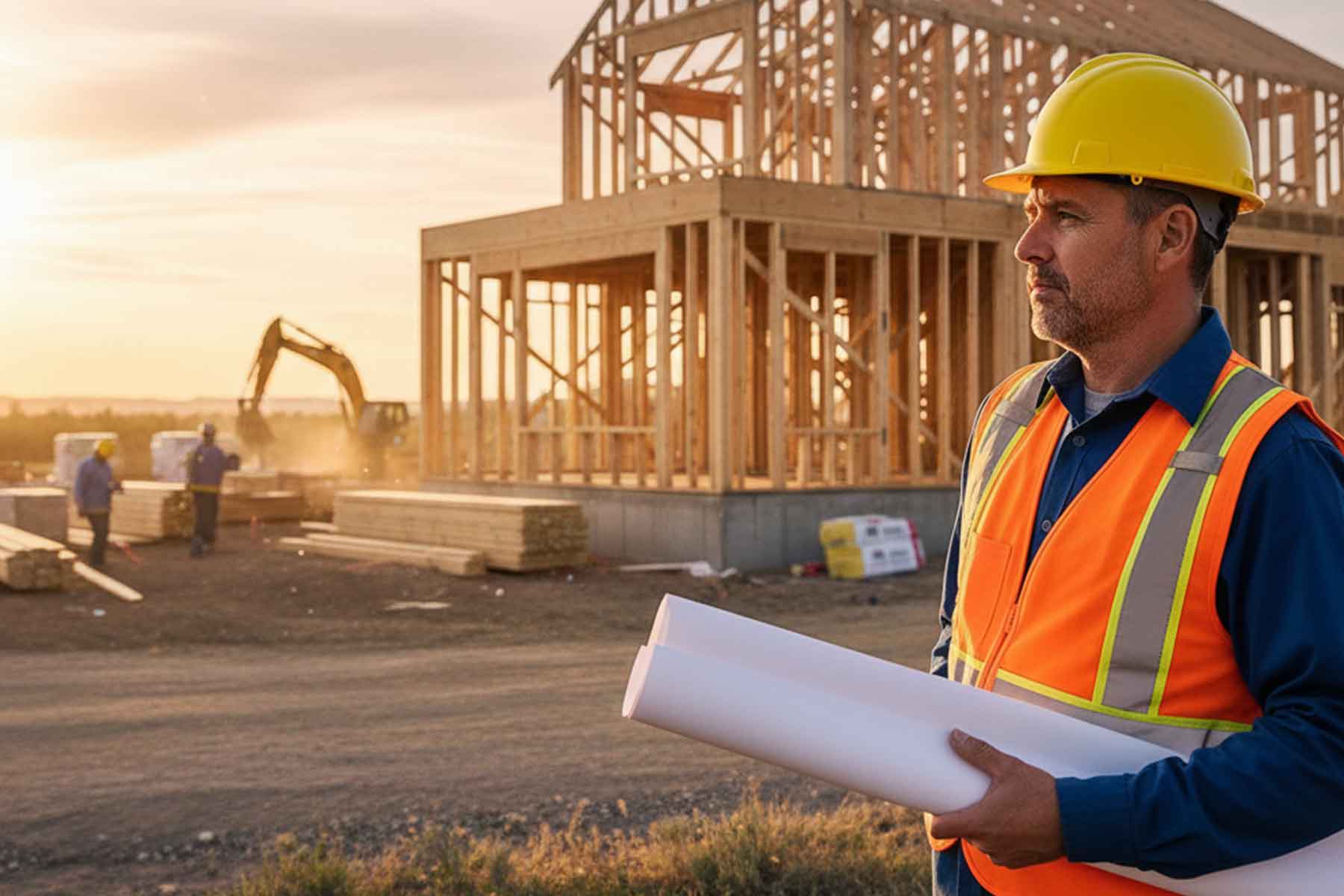
Home builders oversee everything from site preparation and foundation work to framing, electrical, plumbing, and final finishes. They manage projects, coordinate teams, read blueprints, ensure code compliance, and keep clients happy.
Some builders specialize in custom homes, working closely with clients to bring their dream homes to life. Others focus on spec homes or developments, building multiple properties for sale. You might also work as a general contractor, managing subcontractors and ensuring projects stay on schedule and within budget.
The role requires a unique blend of technical skills, business acumen, and people management. You'll need to understand construction methods, local building codes, project management, and customer service, all while keeping a close eye on costs and timelines.
Step 1: Gain the right education
While you don't legally need a college degree to pursue a career in construction, becoming a licensed building contractor or a successful business owner often requires formal education.
Many aspiring builders earn a bachelor’s degree in construction management, civil engineering, or construction science. These programs teach you the business side of the industry, including cost estimating, project scheduling, and contract law.
If a four-year degree isn't in your plans, consider an associate degree or a certificate program from a trade school. These programs are shorter and focus intensely on practical skills like blueprint reading, building codes, and materials science.
Step 2: Get hands-on experience
Education alone won't make you a builder. You need real-world experience on job sites. Most states require several years of documented construction experience before you can obtain a contractor's license.
Ways to gain experience:
Entry-level jobs: Start by working for established home builders or general contractors. Entry-level positions might include construction laborer, carpenter's assistant, or apprentice roles. These jobs teach you how construction sites operate, how to use tools safely, and how different building phases connect.
Apprenticeships: Join an apprenticeship program for carpentry, masonry, or framing. This allows you to earn while you learn under seasoned professionals.
Internships: If you are in a degree program, use your summers to intern with a local home building company.
As you gain experience, take on more responsibility. Learn to read and interpret blueprints, understand building codes, coordinate with subcontractors, and manage project timelines. Pay attention to how experienced builders solve problems, handle inspections, and keep projects moving forward.
Keep detailed records of your work, including projects completed, skills learned, and supervisor contact information.
Step 3: Get a contractor's license
Most states require general contractors to hold a valid license before they can legally build homes. Licensing requirements vary significantly by state and locality, so research the specific rules where you plan to work.
Common licensing requirements include:
Pass an exam: Most states require you to pass a trade exam and a business/law exam.
Proof of experience: You may need to prove you've obtained 2 to 4 years of journeyman-level experience.
Proof of financial solvency: Some states require you to prove you have the capital to fund projects.
Insurance
Before you can pull permits or sign contracts, you'll need proper insurance coverage. General liability insurance protects you from property damage and injury claims. Workers' compensation insurance covers your employees if they're injured on the job. Many states also require surety bonds, which protect clients if you fail to complete projects.
Step 4: Earn professional certifications
Industry-recognized certifications are optional but help you stand out in the industry. The National Association of Home Builders (NAHB) offers several credentials that can boost your credibility:
Certified Graduate Builder (CGB): specific for experienced builders
Graduate Master Builder (GMB): for veteran builders with over 10 years of experience
Certified Aging-in-Place Specialist (CAPS): helpful for builders focusing on accessible homes
Step 5: Build your network and reputation
Success in home building depends heavily on relationships. Start networking early by joining local builder associations, attending industry events, and connecting with other construction professionals.
The National Association of Home Builders (NAHB) and local Home Builders Associations offer networking opportunities and help you stay current on building trends, code changes, and best business practices.
Develop relationships with reliable subcontractors, real estate agents, architects, material suppliers, and lenders. Your network becomes your most valuable asset when you're ready to start your own building company.
Build a reputation for quality work, honest communication, and meeting deadlines. Word-of-mouth referrals are crucial in the home building industry. Satisfied clients and happy subcontractors become your best marketing tools.
Step 6: Consider specialization options
As you gain experience, think about specializing in a particular type of home construction or building method. Specialization can set you apart from competitors and allow you to charge higher rates.
Custom home builders work directly with clients to create one-of-a-kind residences. This path requires excellent communication skills, attention to detail, and the ability to manage client expectations. Production builders focus on efficiency, building multiple similar homes in developments or subdivisions.
Other specialization options include remodeling and renovation, green or sustainable building, luxury homes, affordable housing, or specific construction methods like timber framing or modular construction. Choose a specialization that aligns with your interests and local market demand.
Step 7: Start your own home building business
Once you've gained sufficient experience and obtained your license, you might be ready to start your own building company. This step requires more than construction knowledge; you need business skills too.
Follow these steps:
Create a solid business plan that outlines your target market, competitive advantages, financial projections, and marketing strategy.
Decide on your business structure (sole proprietorship, LLC, corporation) and register your business with appropriate state and local agencies.
Set up proper accounting systems to track income, expenses, and project costs. Consider hiring an accountant familiar with construction businesses to help with taxes, payroll, and financial planning.
Create a website with a portfolio of your work. If you are just starting, this might include projects you managed for a previous employer (with permission) or smaller renovation jobs you have completed on your own.
Create an account on HomeGuide to connect with clients searching for home builders near you. Our free all-in-one business management software can help you streamline your invoicing, client communications, and more.
Start small and grow strategically. Many successful builders begin with smaller projects or renovations before taking on full home construction. This approach allows you to build your reputation, refine your processes, and establish financial stability before tackling larger, more complex projects.
Startup costs
Starting a home building business requires significant capital. You'll need funds for licensing and insurance, tools and equipment, office setup, marketing materials, and working capital to cover costs before clients pay.
Initial startup costs typically range from $10,000 to $50,000 or more, depending on your location and business model. Many new builders start by working with investors, securing small business loans, or partnering with established builders to reduce initial capital requirements.
Budget for ongoing expenses including insurance premiums, license renewals, continuing education, marketing, vehicle maintenance, and software subscriptions. Maintain a cash reserve to cover slow periods and unexpected expenses.
Essential skills for home builders
Success in this field requires a diverse skill set to manage the complexities of a build. The table below shows some of the most common skills you'll need.
| Skill category | Specific skills needed |
|---|---|
| Technical | Blueprint reading; understanding building codes; knowledge of materials (HVAC; plumbing; electrical) |
| Business | Cost estimation; contract negotiation; accounting; supply chain management |
| Soft Skills | Communication with clients; problem-solving; time management; leadership |
FAQs about becoming a builder
How much do home builders make?
Home builder incomes vary widely based on experience, location, and business model. Your income potential increases significantly as you gain experience, build your reputation, and take on larger or more complex projects. Entry-level managers may start at around $55,000, while successful business owners can earn $100,000 to $250,000 or more.
How long does it take to become a builder?
The timeline to become a fully licensed home builder typically ranges from 4 to 7 years. This includes two to four years of education or training, plus the required construction experience (usually three to five years) needed to qualify for a contractor's license.
Some people enter the field faster through intensive apprenticeship programs, while others take longer if they pursue a bachelor's degree or work part-time while gaining experience.
What degree do you need to become a builder?
You don't technically need a college degree to become a builder, but education helps. Many successful home builders have an associate degree in construction technology, building science, or construction management from a community college or technical school.
Some pursue bachelor's degrees in construction management, civil engineering, or architecture, which can accelerate career advancement. However, you can also become a licensed builder through apprenticeship programs, trade schools, and on-the-job training combined with verified work experience.
What is the difference between a home builder and a general contractor?
The terms "home builder" and "general contractor" are often used interchangeably, but there are subtle differences:
A home builder specifically focuses on constructing new residential properties, from the ground up.
A general contractor has a broader scope and may work on commercial projects, renovations, additions, or new construction across various property types.
Both roles involve managing subcontractors, pulling permits, and overseeing projects, but home builders typically specialize in the residential new construction market. Many professionals hold general contractor licenses that allow them to work on any type of construction project.
Using our proprietary cost database, in-depth research, and collaboration with industry experts, we deliver accurate, up-to-date pricing and insights you can trust, every time.