
How much does a gravel driveway cost?
How much does a gravel driveway cost?
$4 – $10 average cost per square foot (labor + materials)

Average gravel driveway cost
A gravel driveway costs $4 to $10 per square foot on average for materials and installation, or about $4,000 to $10,000 for a 100-foot-long, 10-foot-wide driveway. Gravel driveway prices depend on the driveway size, gravel type and depth, site preparation needed, labor rates, and your location.
| Driveway size (square feet) | Average total cost* |
|---|---|
| 500 | $2,000 – $5,000 |
| 800 | $3,200 – $8,000 |
| 1,000 | $4,000 – $10,000 |
| 1,200 | $4,800 – $12,000 |
| 1,500 | $6,000 – $15,000 |
| 1,800 | $7,200 – $18,000 |
| 2,000 | $8,000 – $20,000 |
| 2,500 | $10,000 – $25,000 |
*Including labor and materials
What affects gravel driveway prices?
Several factors influence the total cost to install a gravel driveway:
Driveway size
The driveway length and width have the biggest impact on the total cost. Larger driveways require more gravel, more labor hours, and potentially more site preparation work.
Most residential driveways range from 400 to 2,000 square feet. A standard two-car driveway measures approximately 20 feet wide by 20 feet long, totaling 400 square feet.
Type of gravel
The type of gravel you choose significantly impacts both cost and functionality. Different gravel types offer varying levels of stability, drainage, and aesthetic appeal. Popular options include crushed stone for stability, pea gravel for aesthetics, and crusher run for a solid base layer.
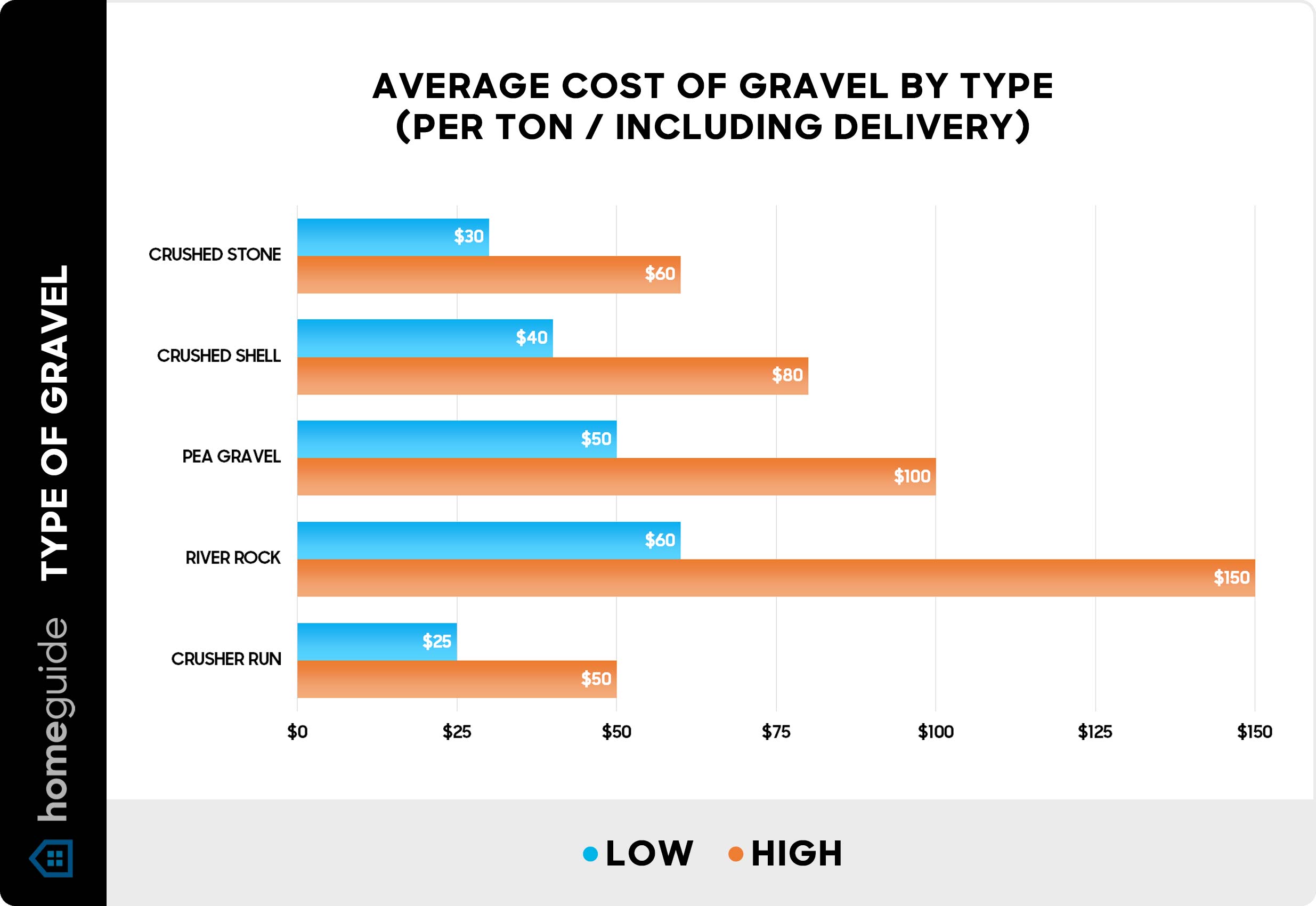
| Type of gravel | Average cost per ton* |
|---|---|
| Crushed stone | $30 – $60 |
| Crushed shell | $40 – $80 |
| Pea gravel | $50 – $100 |
| River rock | $60 – $150 |
| Crusher run | $25 – $50 |
*Including delivery
Crushed stone is the most popular option for driveways and consists of angular pieces of rock crushed to uniform size. It's excellent for stability and compaction, making it ideal for the top layer of driveways.
Crushed shell made from recycled oyster and clam shells is popular in coastal areas. It provides good drainage and a distinctive white or cream appearance.
Pea gravel is made up of small, smooth, rounded stones about the size of peas. It's best suited for landscaping and walkways rather than driveways as the rounded stones can shift and spread easily under tires.
River rock features larger, smooth stones naturally tumbled by water. It is attractive but less stable for driveways and works better for landscaping accents or drainage areas.
Crusher run is a mixture of crushed stone, sand, and stone dust. This material compacts extremely well and is commonly used as a base layer beneath other gravel types.
One ton of gravel covers approximately 60 to 80 square feet at a 4-inch depth, depending on the gravel type. For a standard 1,000-square-foot driveway (100 feet long by 10 feet wide), you'll need about 13 to 17 tons of gravel.
Gravel depth
The minimum recommended depth for a gravel driveway is 5 to 6 inches, installed in layers. Proper depth ensures stability and prevents the gravel from shifting under vehicle weight. Most installations use a 3- to 4-inch base layer of crusher run or crushed stone, topped with 2 to 3 inches of your chosen decorative gravel.
Deeper gravel layers cost more due to increased material needs but provide better longevity and performance. Driveways that must support trucks or RVs should be at least 8 to 12 inches deep.
Additional materials
Beyond gravel, your driveway may require additional materials for optimal performance and longevity:
Landscape fabric or geotextile: This permeable fabric layer is placed between the soil and the gravel base. It's a crucial component that prevents weeds from growing through and stops the gravel from sinking into the subsoil.
Edging or borders: Installing a border made of stone, brick, metal, or timber is essential for keeping the gravel contained and preventing it from spreading into your lawn. Driveway edging or curbing costs $5 to $18 per linear foot.
Base stabilization grid: Honeycomb-style grids reinforce gravel and can prevent ruts from forming, extending the driveway's lifespan.
Site preparation
Proper site preparation is essential for a durable, long-lasting gravel driveway. This phase includes clearing vegetation, removing debris, and grading to creating a level, stable foundation.
Grading costs $1 to $3 per square foot and ensures proper water drainage. Poor grading causes puddles, erosion, and premature gravel displacement.
Sites with significant slopes may require re-sloping or terracing work. Challenging terrain increases labor costs by 20% to 50%.
Drainage
Effective drainage protects your driveway and property foundation. Gravel naturally drains well, but proper planning prevents water pooling and erosion. Installing culverts or drains costs $500 to $2,000 depending on your property's needs. These systems channel water safely away from the driveway and structures.
Labor costs
Professional installation labor typically accounts for about 50% of your total project cost. Experienced contractors ensure proper grading, gravel compaction, and drainage. Hourly rates for driveway installation range from $30 to $100 per hour per worker. Most projects require 2 to 3 workers and take 1 to 3 days to complete.
Location
Your geographic location affects gravel driveway costs in multiple ways. Urban areas typically have higher labor costs than rural regions. However, rural properties may face higher delivery fees due to their distance from material suppliers.
Your local climate also influences the material selection and site preparation requirements. Cold regions need deeper gravel bases to prevent frost heave, while wet climates require enhanced drainage systems.
How much gravel do I need for my driveway?
To calculate how much gravel you need for your driveway, you first need to determine the total volume of your driveway in cubic feet.
Length (feet) x Width (feet) = Total Square Feet
Depth (inches) ÷ 12 = Depth in Feet
Total Square Feet x Depth in Feet = Total Cubic Feet
From there, you can use these simple rules of thumb, assuming a standard 4-inch depth:
1 ton of gravel covers about 60 square feet.
1 cubic yard of gravel covers about 75 to 80 square feet.
Calculation example:
For a 10-foot-wide by 100-foot-long driveway (1,000 square feet) at a 4-inch depth:
1,000 square feet ÷ 60 square feet per ton = 16.7 tons of gravel
For a 10-foot-wide by 100-foot-long driveway (1,000 square feet) at an 8-inch depth:
1,000 square feet ÷ 30 square feet per ton = 33.4 tons of gravel
When ordering gravel for a driveway, always order 10% to 15% extra material to account for compaction, spillage, and settling.
Gravel driveway FAQs
What is the best gravel for a driveway?
The best gravel for driveways is crushed stone paired with a base layer of crusher run. These angular materials interlock when compacted, creating a stable surface that resists shifting.
Avoid smooth, rounded stones like pea gravel or river rock as your primary driveway surface. These materials don't compact well and shift easily under vehicle weight, creating ruts and uneven areas.
What size gravel is best for a driveway?
For the top layer of a gravel driveway, 3/4-inch to 1-inch crushed stone is ideal. This size provides good traction, compacts adequately, and looks attractive. The base layer should have smaller, mixed-size aggregate like crusher run. The variety of sizes from dust to 1-inch stones creates maximum compaction and stability.
Avoid gravel larger than 2 inches for driveways. Oversized stones make driving uncomfortable, don't compact properly, and easily scatter outside the driveway boundaries.
How deep should a gravel driveway be?
A gravel driveway should be at least 5 to 6 inches deep, including the base layer and top layer. This depth provides adequate support for passenger vehicles without excessive material costs. Driveways supporting heavy vehicles like trucks or RVs should be 8 to 12 inches deep.

Getting quotes from gravel driveway installers
Follow these tips to help you find the best gravel driveway contractors near you:
Get estimates from at least three installers to compare prices and materials.
Read reviews of gravel driveway companies on HomeGuide and Google.
Review their portfolio of past work.
Confirm the company you select is licensed and insured.
Request a detailed contract and warranty in writing before the project begins.
Questions to ask gravel driveway contractors
Ask installers these questions to ensure you hire the right pro for the job:
How many gravel driveways have you installed?
Can I see a portfolio of your previous projects?
Are you licensed and insured?
Who is the project manager, and will you use subcontractors?
Does your estimate include site prep and grading?
What other costs might come up during the project?
Will this project require permits, and will you obtain them?
What does your warranty policy include?
Using our proprietary cost database, in-depth research, and collaboration with industry experts, we deliver accurate, up-to-date pricing and insights you can trust, every time.