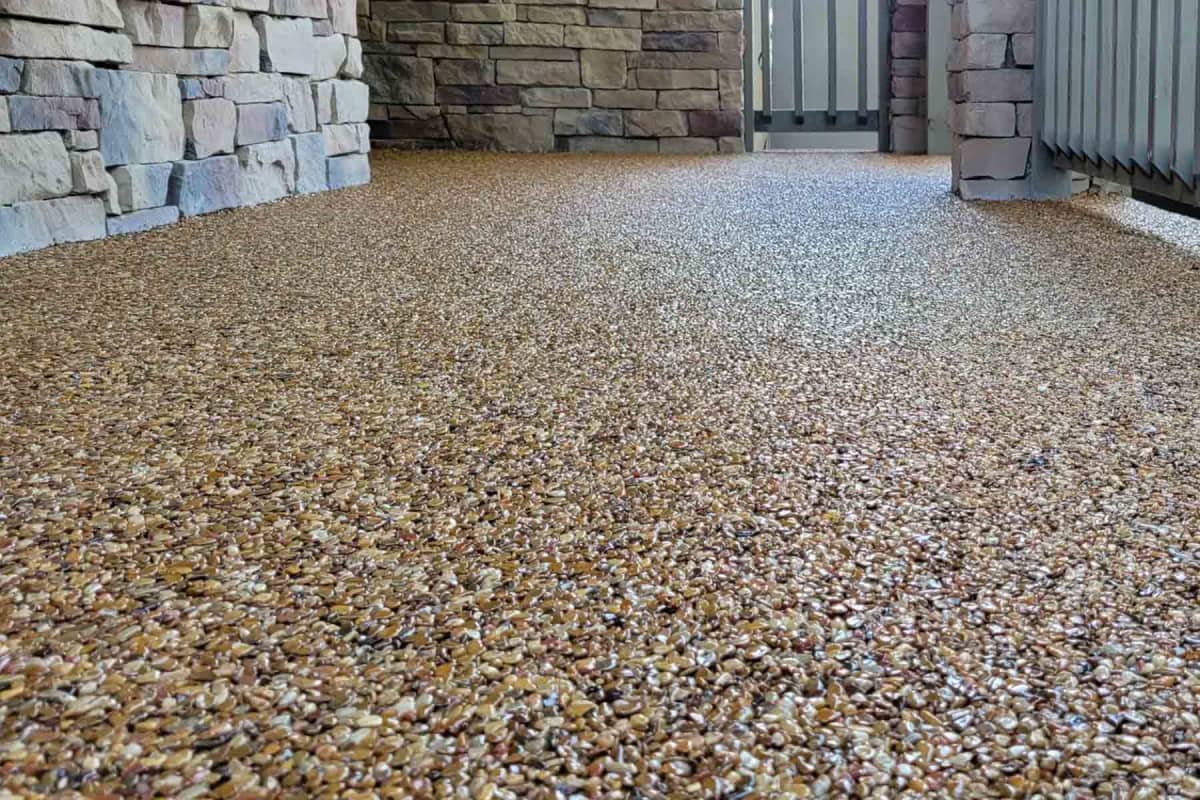
How much does an epoxy pebble patio cost?
How much does an epoxy pebble patio cost?
$6 – $15 cost per square foot installed
$1,200 – $4,500 average total cost

Average epoxy pebble patio cost
An epoxy pebble patio costs $6 to $15 per square foot installed on average, with most homeowners paying $1,200 to $4,500 for a complete patio project. This durable outdoor flooring solution combines natural stone pebbles with epoxy resin to create an attractive, weather-resistant surface that transforms ordinary concrete patios into stunning outdoor spaces.
| Patio size | Square feet | Average cost |
|---|---|---|
| Small patio | 100 – 150 | $600 – $2,300 |
| Medium patio | 200 – 300 | $1,200 – $4,500 |
| Large patio | 400 – 500 | $2,400 – $7,500 |
| Extra-large patio | 600+ | $3,600 – $10,500 |
What is epoxy pebble patio flooring?
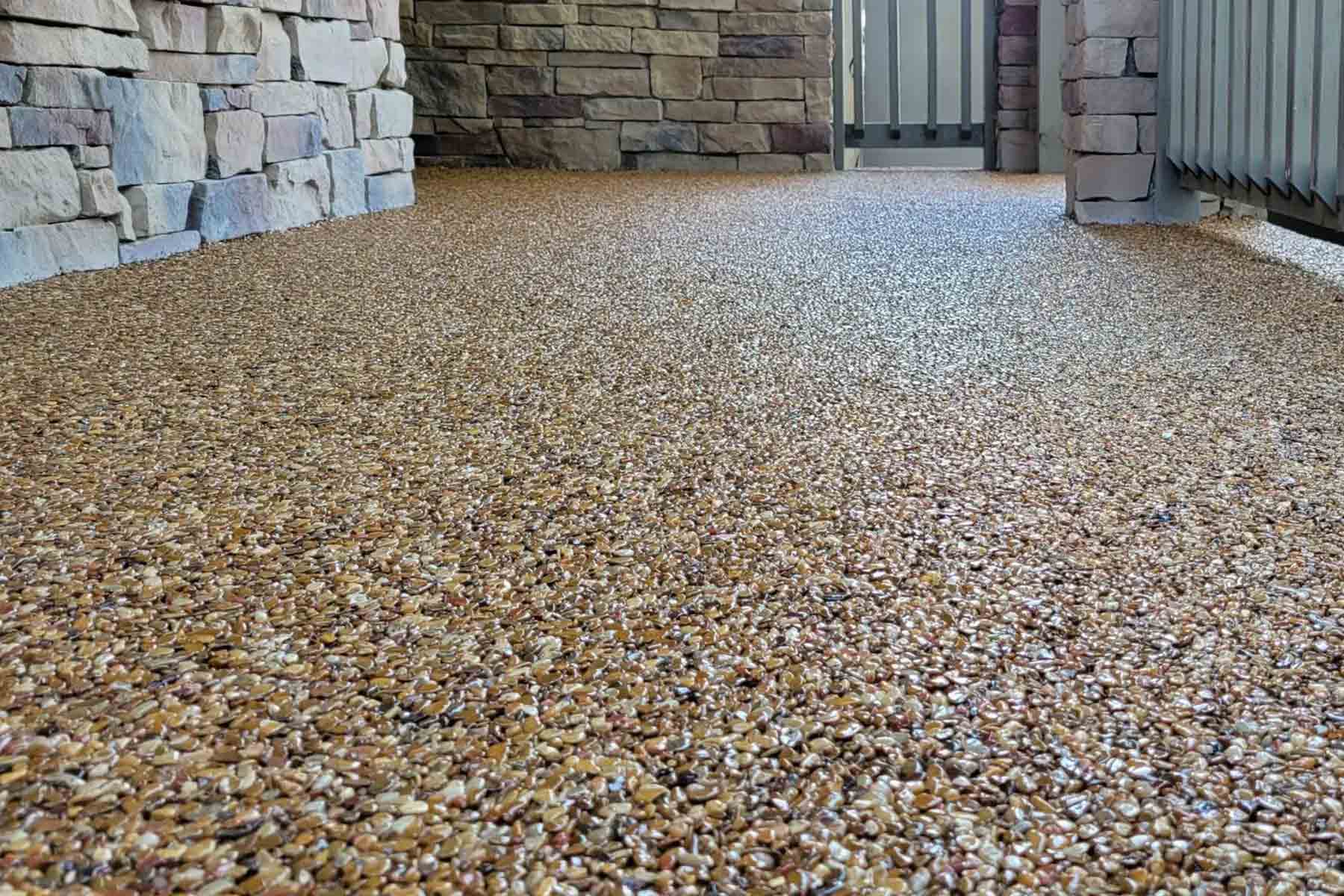
Epoxy pebble flooring combines small natural stone pebbles with specially formulated epoxy resin to create a textured, decorative surface. The pebbles, typically ranging from 1/8 inch to 3/8 inch in size, are mixed with epoxy and applied over existing concrete patios, creating a durable, slip-resistant coating that mimics the appearance of natural stone pathways.
This outdoor flooring system offers excellent durability, weather resistance, and visual appeal while providing better traction than standard smooth epoxy surfaces. The natural texture of embedded pebbles makes it particularly suitable for pool decks, walkways, and patio areas where slip resistance is important.
Epoxy pebble patio cost factors
Several factors influence pebble epoxy outdoor patio costs:
Brand: Popular brand systems like Nature Stone cost $8 to $20 per square foot installed, while generic pebble epoxy options offer similar performance at the lower end of the price range. The wide cost variation reflects differences in stone quality, epoxy formulation, and installation complexity.
Decorative upgrades: Custom colors, metallic tints, and patterns require additional labor time and specialized materials.
Protective coatings: UV-protective topcoats help prevent yellowing and extend surface life, adding $1 to $3 per square foot. These coatings are particularly important for light-colored pebble systems and areas receiving direct sunlight exposure.
Weather: Temperature and humidity conditions affect installation timing and success. Ideal application occurs between 60°F to 85°F with humidity below 85%. Weather delays may increase project costs and extend timelines.
Materials
Pebble epoxy systems cost $60 to $100+ per gallon. Each gallon covers 80 to 200 square feet, depending on the application thickness and pebble density. Premium stone selections, such as river rocks or specialty aggregates, increase material costs significantly.
Smaller pebbles in the 1/8 to 3/8 inch range provide better bonding and coverage than larger stones.
Labor and installation
Most epoxy flooring contractors charge $50 to $150 per hour and typically send two professionals to complete the job efficiently. Simple patio applications over well-prepared concrete cost less than projects requiring extensive surface preparation, crack repairs, or custom design work. Weather conditions also impact scheduling and may increase costs if delays occur.
Surface preparation requirements
Proper surface preparation significantly impacts total project costs. Basic cleaning and power washing add $0.35 to $0.77+ per square foot. Concrete repairs for cracks, chips, or damage cost $25 to $250 depending on the severity.
New concrete surfaces must cure for at least 30 days before epoxy application. Existing surfaces may require acid etching, grinding, or shot blasting to ensure proper adhesion, adding $1 to $3 per square foot to preparation costs.
Location
Labor and material costs vary significantly by location. Installation rates are typically higher in urban areas due to increased overhead and demand. Regional availability of specialty pebbles and aggregates also affects material pricing.
Patios in northern climates may require additional freeze-thaw resistant formulations, increasing material costs. In areas with extreme temperature fluctuations, patios may also need enhanced UV protection and may require more frequent maintenance.
Maintenance and longevity
Properly installed epoxy pebble patios last 10 to 20 years with minimal maintenance. Regular cleaning with warm water and mild detergents keeps surfaces looking fresh. Avoid soap-based or harsh chemical cleaners that can deteriorate the epoxy coating.
Minor repairs for loose pebbles or small chips can be addressed with epoxy repair kits available at home improvement stores. Major damage may require professional patching or partial resurfacing, typically costing $3 to $8 per square foot for affected areas.
Pebble epoxy patio cost vs. other patio flooring
The following table shows a comparison of pebble epoxy flooring and other outdoor flooring options to help you make the best choice for your budget and performance needs.
| Flooring type | Average cost per square foot | Lifespan (years) | Slip resistance | Aesthetic appeal | Freeze-thaw resistance |
|---|---|---|---|---|---|
| Epoxy pebble patio | $6 – $15 | 10 – 20 | Excellent | High | Excellent |
| Standard concrete sealing | $1 – $3 | 2 – 5 | Poor when wet | Basic | Good |
| Stamped concrete cost | $8 – $30 | 10 – 15 | Moderate | High | Good |
| Polished concrete cost | $3 – $15 | 15 – 20 | Poor when wet | Moderate | Good |
| Traditional tile cost | $12 – $50 | 10 – 25 | Variable | High | Poor to moderate |
Epoxy pebble patio FAQs
How long does epoxy pebble patio installation take?
Most epoxy pebble patio installations take 2 to 6 days, depending on the size and complexity. This includes surface preparation time, epoxy application, and full curing. Weather conditions can extend the timeline if delays occur.
How long do epoxy pebble patios last?
Professionally installed epoxy pebble patios last 10 to 20 years with proper maintenance. The lifespan depends on traffic levels, weather exposure, and maintenance quality. UV-protective topcoats help extend surface life in sunny climates.
Is epoxy pebble patio flooring slippery when wet?
Epoxy pebble patios provide better slip resistance than smooth epoxy surfaces due to the textured pebble surface. However, all surfaces can become slippery when wet. Adding non-slip additives during installation further improves traction.
Can I install epoxy pebble patio myself?
DIY installation is possible but challenging. You'll need specialized tools, proper safety equipment, and ideal weather conditions. Most homeowners achieve better results with professional installation, especially for larger projects or premium systems.
How to find the best epoxy flooring contractor near you
Follow these guidelines when searching for qualified epoxy flooring contractors near you who specialize in decorative concrete and pebble epoxy applications:
Compare detailed written estimates from at least three contractors.
Check online reviews on multiple platforms, including HomeGuide and Google.
Confirm their experience with outdoor epoxy applications.
Request references from recent pebble epoxy projects.
Evaluate portfolio examples of similar patio projects.
Verify each contractor's licensing, insurance, and bonding status.
Ask about warranty coverage for materials and workmanship.
Questions to ask an epoxy flooring contractor
Ask these questions to help you evaluate contractor expertise and ensure your project meets expectations and quality standards:
How many years of experience do you have with pebble epoxy installations?
What type of epoxy system do you recommend for my patio's conditions?
How do you handle surface preparation and concrete repairs?
What warranty do you provide on materials and workmanship?
How do weather conditions affect installation scheduling and pricing?
Can you provide references from recent pebble patio projects?
What maintenance recommendations do you have for long-term performance?
How do you ensure proper adhesion and prevent future failures?
What happens if weather delays occur during my project?
Do you carry general liability and workers' compensation insurance?
Using our proprietary cost database, in-depth research, and collaboration with industry experts, we deliver accurate, up-to-date pricing and insights you can trust, every time.