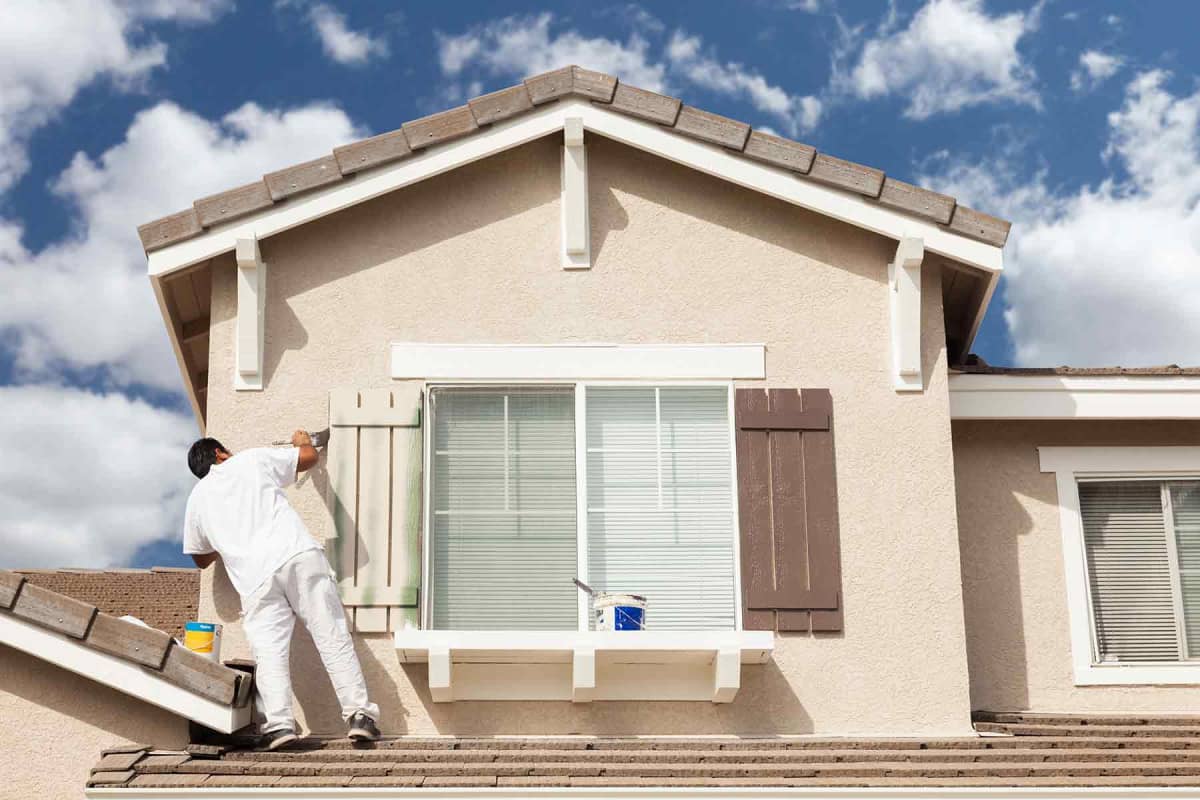
How much does it cost to paint shutters?
How much does it cost to paint shutters?
$100 – $200 average cost per set of shutters
$400 – $1,200 average total cost

Average cost to paint shutters
The average cost to paint shutters is $100 to $200 per set or about $400 to $1,200 total, including labor, materials, and surface preparation. Exterior shutter painting costs depend on the number and type of shutters, amount of prep work needed, number of stories, accessibility, and local labor rates.
Most painters charge minimum job fees of $300 to $400 or more.
| Number of shutters | Average cost* |
|---|---|
| 1 set | $100 – $200 |
| 2 sets | $200 – $400 |
| 3 sets | $300 – $600 |
| 4 sets | $400 – $800 |
| 5 sets | $500 – $1,000 |
| 6 sets | $600 – $1,200 |
*Most painters charge minimum job fees of $300 to $400 or more.
Shutter painting cost factors
Several factors affect how much it costs to paint shutters:
Number of shutters
The more shutters you have, the higher your total cost will be. However, painting multiple sets often provides better value per shutter since painters can work more efficiently and you'll benefit from bulk pricing.
Shutter size
The total surface area being painted directly impacts both material and labor costs. Larger shutters require more paint and labor time. Standard window shutters are typically 12 to 18 inches wide, while full-height shutters on French doors or large windows can be significantly bigger.
Oversized shutters may need special equipment, additional prep work, or two people to safely remove and reinstall, increasing costs.
Shutter type and material
The shutter style and material both significantly influence the difficulty of the job:
Style: Flat-panel or shaker-style shutters are faster to paint. Louvered (slatted) shutters take much longer because the painter must ensure paint reaches inside every slat without dripping. This often forces painters to use brushes instead of rollers or sprayers, significantly slowing down the process to ensure full coverage.
Material: Wood shutters often require more prep, such as sanding and filling cracks, compared to vinyl or plastic. However, vinyl requires specialized cleaning and specific paints to ensure adhesion. Plastic shutters often need thorough cleaning and primer designed for synthetic materials.
Paint
Exterior paint costs $30 to $80 per gallon, depending on the type, brand, and quality. High-quality paints cost more up front but offer better coverage, durability, and color retention. Exterior paint formulations contain additives to protect the shutter surface from weather, UV exposure, and mildew.
One gallon of paint covers approximately 300 to 400 square feet with one coat or 150 to 200 square feet with two coats.
The paint type must match your shutter material. Acrylic latex works well for most applications, while specialized formulations exist for vinyl, metal, or previously painted shutters.
Prep work
Proper preparation is essential for a long-lasting finish. This stage includes thorough cleaning to remove dirt and mildew, sanding away peeling paint or rough spots, filling any holes or cracks with filler, and applying a primer. Extensive prep work may be required to strip multiple layers of old paint.
If the shutters have functional hardware, such as metal hinges or "shutter dogs" (the metal pieces that hold the shutter open), these must be removed or carefully taped off. Rust on old hardware must be treated or the metal replaced entirely to prevent rust streaks from ruining the new paint job.
Spray vs. roller or brush painting
The painting method significantly affects both cost and timeline for your shutter project.
Spray painting may cost slightly more but provides a smoother finish. Spraying also creates more even coverage in grooves and detailed areas of louvered shutters. However, it may require multiple thin coats for proper coverage.
Brush or roller application typically costs less and works well in tight spaces or near landscaping but may take longer, especially on detailed shutters. But, the brush strokes or roller texture may create an uneven finish.
Most professional painters choose the method based on the shutter style, location, and weather conditions.
Number of stories
Shutter painting costs are higher for multi-story homes due to safety requirements and equipment needs. First-floor shutters are easily accessible with standard ladders. Second-story work may require extension ladders, scaffolding, or specialized equipment for safe access.
Height restrictions also slow down the painting process. Painters work more cautiously at elevation and must frequently climb up and down to refill paint trays or adjust ladder placement.
Accessibility
Easy access generally results in lower labor costs. If the shutters are difficult to access due to landscaping obstacles like large bushes and trees, architectural features, or uneven ground, the crew will need extra time to set up safety equipment and ladders.
Labor cost to paint shutters
Labor makes up most of the cost to paint shutters. Painters charge $25 to $75+ per hour for labor alone, depending on the project complexity, the painter's experience level, and your location. If you're having your whole house painted at the same time, exterior painting costs $1.50 to $5.00 per square foot on average.
Some handypersons also offer shutter painting services. Handyperson prices range from $50 to $80 per hour.
Removing shutters vs. painting in place
Most painters recommend removal for the best results, especially when shutters haven't been painted in several years or show signs of wear behind mounting points. However, the decision to remove shutters or paint them in place affects both the labor needed and the cost.
Painting in place saves on the labor cost of removal and reinstallation but requires meticulous masking to protect the siding and windows.
Removing the shutters for painting allows for a higher quality finish (often using a spray booth) and ensures no paint gets on the house. However, this adds labor time for removal and re-hanging.
FAQs about painting shutters
Can you paint vinyl shutters?
Yes, you can paint vinyl shutters with the right preparation and paint selection. Vinyl shutters require thorough cleaning and a high-quality primer designed for vinyl surfaces. Avoid painting dark colors over light vinyl, as the dark pigment can absorb heat and cause the shutter to warp.
What color should I paint my shutters?
Choose shutter colors that complement your home's exterior palette and architectural style:
Classic combinations:
White or cream shutters with neutral siding colors
Dark green or black shutters with traditional colonial homes
Navy blue or charcoal with white or light gray exteriors
Modern trends:
Matching shutters to front door color for cohesive look
Contrasting colors that highlight architectural details
Earth tones for natural, organic aesthetics
Consider your neighborhood's character, your home's permanent features (like brick or stone), and local climate when selecting colors. Test paint swatches in different lighting conditions before making final decisions.
Is it better to paint or replace shutters?
If your shutters are structurally sound, painting is usually the better option. Painting is significantly more affordable than buying and installing new custom shutters. However, if the wood is rotted, the vinyl is cracked, or the frames are warped, replacement is the smarter long-term investment.
What is the best time of year to paint shutters?
To ensure the paint cures properly, schedule your shutter painting project during dry, mild weather. Ideally, temperatures should be between 50°F and 85°F. Confirm there is no rain in the forecast for at least 24 to 48 hours.
Avoid painting in direct, harsh sunlight or on days with high humidity, as this can cause the paint to blister or dry unevenly.
Getting estimates from exterior painters
Follow these tips to ensure you hire the best exterior painters near you:
Get estimates from at least three painters to compare prices and services.
Read reviews of local painters on Google and HomeGuide.
Ensure each estimate details the labor, materials, prep work, number of coats, project timeline, and specific paint brands.
Confirm the painters are licensed and insured.
Beware of bids that are significantly lower than others, which may signal inexperience or shortcuts.
Questions to ask exterior painting contractors
When evaluating painters for the job, ask these questions:
How many years of exterior painting experience do you have?
Can you provide references from recent projects?
Are you licensed and insured?
How do you handle the paint color selection?
What brand and type of paint do you recommend for my shutters, and why?
How do you prepare the shutters before painting?
How do you ensure a smooth, even finish on all surfaces?
What steps do you take to protect landscaping, siding, and windows during the project?
Can you provide a detailed written estimate, including labor, materials, and any other costs?
Do you offer a warranty or guarantee on your work, and what does it cover?
How long do you expect the project to take from start to finish?
Will you clean up thoroughly after the job is complete?
What safety measures do you follow, especially when working at heights?
What payment schedule do you require?
Using our proprietary cost database, in-depth research, and collaboration with industry experts, we deliver accurate, up-to-date pricing and insights you can trust, every time.