
How much does composite fencing cost?
How much does composite fencing cost?
$8,000 – $30,000 average total cost

Average composite fencing cost
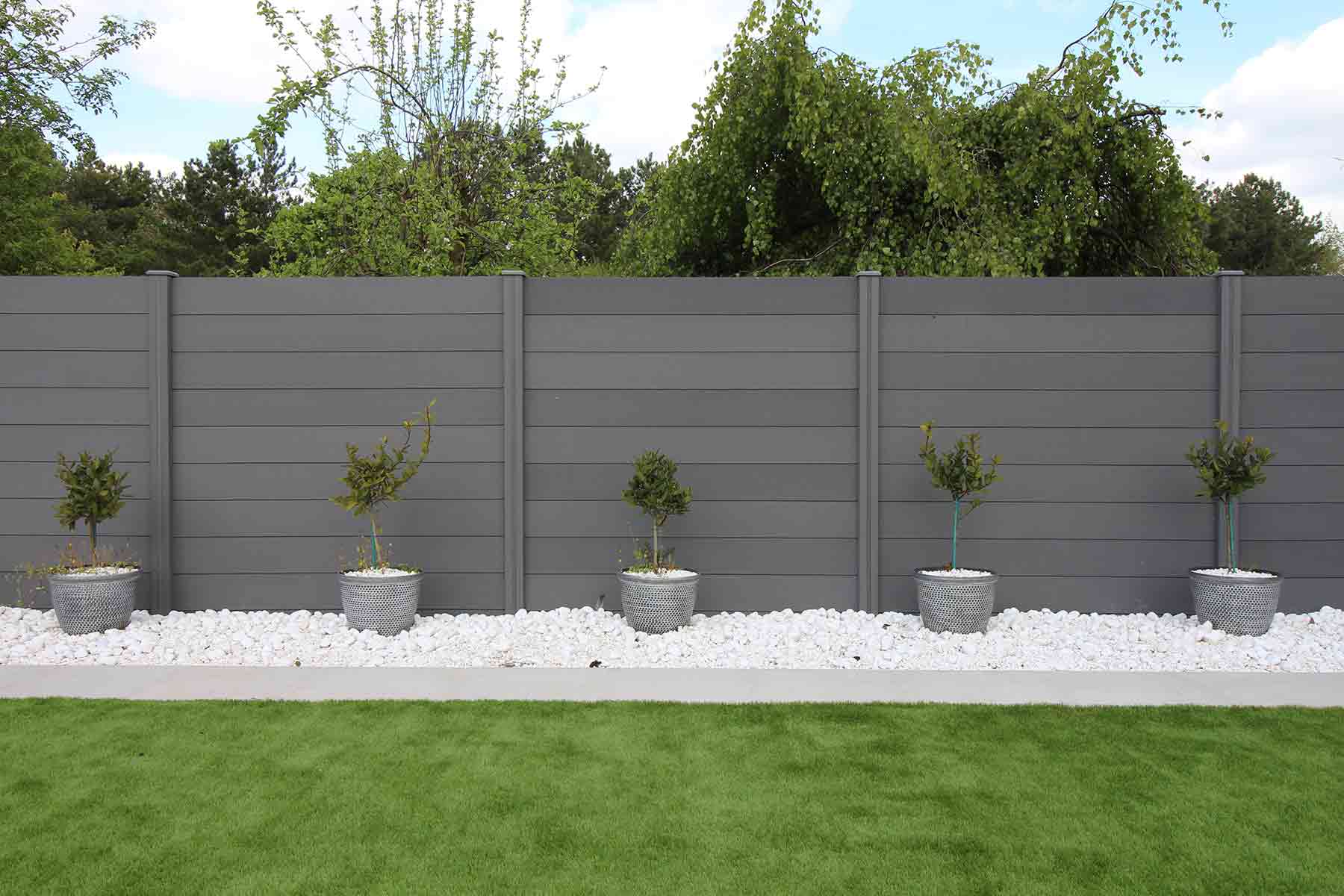
Composite fencing costs $50 to $100+ per linear foot with installation, or $8,000 to $30,000 total on average for a complete project. Composite fence prices depend on the location, fence height, style, and material quality. This eco-friendly wood alternative combines recycled materials with exceptional durability, making it an increasingly popular low-maintenance outdoor solution.
| Project size (linear feet) |
Fence type & height | Average total cost |
|---|---|---|
| 50 | Picket fence (3 – 4 feet) | $2,500 – $3,500 |
| 100 | Standard privacy (6 feet) | $7,500 – $9,500 |
| 150 | Standard privacy (6 feet) | $11,250 – $14,250 |
| 200 | Tall privacy (7 feet) | $17,000 – $20,000 |
| 200 | Premium decorative (8 feet) | $18,000 – $22,000 |
| 250 | Tall privacy (7 feet) | $21,250 – $25,000 |
| 300 | Standard privacy (6 feet) | $22,500 – $28,500 |
| 300 | Premium decorative (8 feet) | $27,000 – $33,000 |
| 400 | Premium decorative (8 feet) | $36,000 – $44,000 |
Composite fence cost per foot by style
The height and style of composite fencing you choose significantly impacts your overall investment, with each option offering distinct advantages. Your choice depends on your privacy needs, aesthetic preferences, and budget constraints. The table below shows the average cost for several composite fence styles.
| Fence type | Height | Average cost (per linear foot) |
Average total cost (150 feet) |
|---|---|---|---|
| Picket fence | 3 – 4 feet | $50 – $70 | $7,500 – $10,500 |
| Standard privacy fence | 5 – 6 feet | $75 – $95 | $11,250 – $14,250 |
| Tall privacy fence | 6.5 – 7 feet | $85 – $100 | $12,750 – $15,000 |
| Premium decorative fence | 6 – 8 feet | $90 – $110 | $13,500 – $16,500 |
| Mixed-material fence | 6 feet | $95 – $120 | $14,250 – $18,000 |
Picket fence
Picket fences provide a classic look while maintaining relative affordability within the composite category. Standing 3 to 4 feet tall, these fences work well for front yards or garden borders where you want to define space without blocking views. The open design uses less material, keeping costs lower at $50 to $70 per linear foot with installation.
Standard privacy fence
Composite privacy fencing costs $75 to $95 per linear foot installed, with the higher end reflecting premium materials or complex installations. Privacy fences are the most popular choice for backyards, offering complete visual screening at 5 to 6 feet tall. These solid panel fences create private outdoor living spaces and reduce noise from neighbors.
Premium or tall fence
Premium composite options include decorative panels with ornate designs, lattice tops, or extra-tall configurations reaching 6.5 to 8 feet in height. These specialty fences cost $90 to $100+ per linear foot installed and combine enhanced aesthetics with maximum privacy.
Composite fence installation cost factors
Beyond the fence length and style you select, several other factors influence the final cost:
Material quality and brand
Composite fencing costs $35 to $70+ per linear foot for the materials alone, depending on the quality and composition. Budget-friendly options use less recycled content and may lack advanced UV protection, while premium brands like Trex, Fiberon, and TimberTech incorporate higher percentages of recycled materials with enhanced fade resistance and longer warranties.
Labor and installation costs
Professional installation labor costs $15 to $30+ per linear foot for a composite fence, though complex projects on sloped terrain or requiring significant groundwork can push costs toward the higher end or beyond. Contractors may quote hourly rates of $50 to $100+ per hour instead, with most projects taking 2 to 4 days to complete, depending on project size.
Site preparation and removal
Removing an existing fence adds $5 to $8 per linear foot to your project cost. Properties requiring significant clearing of vegetation, leveling of uneven terrain, or breaking up concrete where old posts existed incur additional charges. Some contractors include basic site prep in their quotes, while others bill separately for extensive groundwork.
Gates and access points
Composite gates range from $400 to $1,000 each for standard walk-through models, with larger drive-through gates costing $1,500 to $2,500 or more. Gates require additional hardware, hinges, and more complex installation.
Decorative features and add-ons
Decorative panels with cutout designs can add $10 to $20+ per linear foot beyond standard pricing. Lattice tops, post caps, and mixed-material designs that incorporate aluminum or other accents create visual interest but further increase costs.
Location
Geographic location significantly impacts composite fence installation costs. Materials cost roughly the same nationwide, but labor rates vary substantially by region. Labor costs are higher in urban areas with higher costs of living, while rural areas often offer more competitive pricing.
Permits
Local building codes and permit requirements also influence total costs. Some cities require permits that cost $50 to $200, while others have more stringent regulations increasing the expense.
Many cities require a current property boundary survey before approving a fence permit. A property survey costs $500 to $1,000+ depending on the size and terrain.
Composite fencing vs. other materials
While composite carries the highest upfront cost, the long lifespan and minimal maintenance required may make it a better investment than other fence materials. The following table compares the cost, durability, and upkeep requirements for popular fencing options.
| Material | Cost per linear foot | Lifespan (years) |
Key considerations |
|---|---|---|---|
| Composite | $50 – $100+ | 25 – 30 | Highest upfront cost but lowest maintenance; eco-friendly with recycled materials; minimal maintenance |
| Wood fence | $20 – $50 | 10 – 15 | Lower initial cost but total 20-year ownership often exceeds composite due to maintenance and replacement |
| Vinyl fence | $30 – $60 | 20 – 30 | Can crack in extreme cold, blow over in high winds; lacks natural wood appearance; minimal maintenance |
| Chain link fence | $10 – $40 | 20 – 30 | Most budget-friendly but no privacy or aesthetic appeal; functional purposes only; low maintenance except for rust monitoring |
Composite fencing FAQs
What is composite fencing?
Composite fencing is made from recycled wood fibers and plastic, creating a durable alternative to wood. This eco-friendly material combines wood's natural appearance with plastic's weather resistance, resulting in fences that resist rot, insects, and fading while requiring no painting or staining throughout their long lifespan.
How long does composite fencing last?
Composite fencing lasts 25 to 30 years on average with proper installation and minimal maintenance, though premium products can exceed 30 years. The recycled plastic and wood fiber composition resists rot, insects, and weathering that degrades other materials.
Many manufacturers back their products with 20-year warranties, reflecting confidence in long-term durability.
Does composite fencing fade?
Composite fencing experiences initial fading during the first six months after installation as natural wood oils called tannins bleed out. After this initial period, high-quality composite materials with UV-resistant coatings resist further fading for many years.
Lighter colors typically show less noticeable fading than darker shades.
Premium composite brands incorporate advanced colorfast technology to minimize long-term color changes.
What maintenance does composite fencing require?
Composite fencing requires minimal maintenance compared to other materials. Clean your fence twice per year using warm soapy water and a soft-bristle brush to remove dirt and prevent mold growth. For stubborn stains, a pressure washer can be used carefully with a fan attachment, keeping the nozzle at a safe distance to avoid surface damage.
Never use harsh chemicals, bleach, or sanders on composite materials. No painting, staining, or sealing is ever necessary, which is where composite fencing provides the greatest long-term value and convenience.
Getting estimates for composite fencing
When searching for composite fence installation companies near you, remember to:
Get at least three detailed written estimates specifying materials, labor, timeline, and warranty coverage.
Check reviews on HomeGuide and Google to identify contractors with strong reputations and customer satisfaction records.
Confirm the contractor has specific experience with composite materials.
Request references and photos from recent composite fence installations.
Verify they have proper licensing and insurance, including general liability and workers' compensation coverage.
Ask about warranty coverage for both materials and installation work.
Questions to ask a fence contractor
Ask the following questions to evaluate contractors and avoid potential problems during your project:
What brands of composite fencing do you typically install, and which would you recommend for my specific needs and budget?
Can you provide a detailed written estimate breaking down material costs, labor charges, and any additional fees?
How long will the installation take, and what factors might extend the timeline?
What permits are required for my project, and will you handle obtaining them?
Do you offer warranties on both materials and installation workmanship, and what do they cover?
How do you handle site preparation, old fence removal, and disposal of materials?
What happens if we encounter unexpected issues during installation, such as underground utilities or difficult soil conditions?
Can you provide proof of current licensing and insurance?
What payment schedule do you require, and what forms of payment do you accept?
Using our proprietary cost database, in-depth research, and collaboration with industry experts, we deliver accurate, up-to-date pricing and insights you can trust, every time.