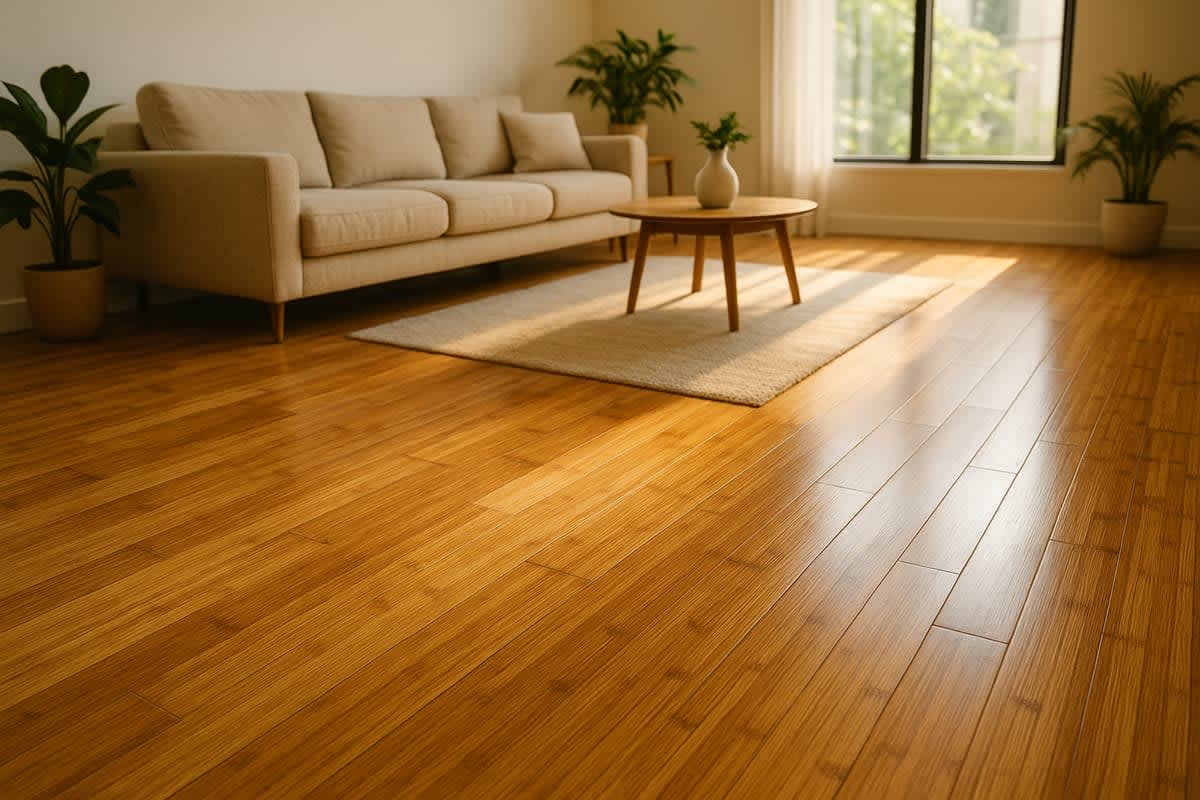
Bamboo flooring pros and cons
Bamboo flooring pros and cons
$2 – $8 per square foot (materials)
$5 – $15 per square foot (installed)

Average bamboo flooring costs and key facts
Bamboo flooring offers a compelling blend of sustainability, durability, and natural beauty that has made it one of the most popular alternatives to traditional hardwood. It typically costs $2 to $8 per square foot for materials alone, making it competitive with many hardwood options. However, like any flooring material, bamboo comes with trade-offs that every homeowner should understand before committing.
Bamboo is technically a grass, not a wood, yet it performs remarkably similar to hardwood flooring in residential and commercial settings. It grows to maturity in just five to seven years compared to the decades required for hardwood trees, giving it a significant environmental advantage. The material is harvested, sliced or shredded, and then compressed with adhesives to form solid planks suitable for flooring.
| Factor | Details |
|---|---|
| Material cost | $2 – $8 per square foot |
| Installed cost | $5 – $15 per square foot |
| Lifespan | 20 – 25+ years |
| Hardness (strand-woven) | 3,000+ on Janka scale |
| Eco-friendly | Yes, rapidly renewable |
| Refinishing | Can be sanded and refinished |
| Best for | Living rooms, bedrooms, offices, hallways |
Whether bamboo flooring is right for your home depends on factors like the specific type you choose, your local climate, the room where it will be installed, and your long-term expectations. Below is a thorough breakdown of every advantage and disadvantage to help you make a confident decision.
Types of bamboo flooring
Not all bamboo flooring is created equal. The manufacturing process significantly affects the material's hardness, appearance, and performance. Understanding the three main types will help you evaluate the pros and cons more accurately.
| Type | Janka hardness rating | Typical cost per sq ft |
|---|---|---|
| Horizontal bamboo | 1,180 | $2 – $4 |
| Vertical bamboo | 1,380 | $2 – $5 |
| Strand-woven bamboo | 3,000 – 5,000+ | $4 – $8 |
Horizontal bamboo
Horizontal bamboo is made by laying flat strips of bamboo side by side and bonding them with adhesive. This method showcases the natural "knuckle" pattern of bamboo nodes, giving the floor a distinctive, recognizable look. It is the softest of the three types, with a Janka hardness rating around 1,180, which is comparable to domestic walnut.
Vertical bamboo
Vertical bamboo is produced by turning those same bamboo strips on their sides and pressing them together edge to edge. This creates a more uniform, linear grain pattern with fewer visible nodes. With a Janka rating of approximately 1,380, vertical bamboo is slightly harder than horizontal and offers a more contemporary aesthetic.
Strand-woven bamboo
Strand-woven bamboo is the premium option. Bamboo fibers are shredded, mixed with resin, and compressed under extreme heat and pressure. The result is an incredibly dense plank with a Janka hardness rating of 3,000 to 5,000+, making it harder than most traditional hardwoods, including hickory and Brazilian cherry. This type handles high-traffic areas and resists dents and scratches far better than the other two.
If durability is your top priority, strand-woven bamboo is the clear winner. It costs more upfront but offers significantly better scratch and dent resistance, making it ideal for homes with pets, children, or heavy foot traffic.
Pros of bamboo flooring
Bamboo flooring has earned its popularity for good reason. From environmental sustainability to impressive hardness, it delivers several meaningful advantages over both traditional hardwood and other flooring alternatives.
| Advantage | Key detail |
|---|---|
| Eco-friendly | Reaches maturity in 5 – 7 years vs. 20 – 60 years for hardwood |
| Exceptional hardness | Strand-woven rates 3,000+ on Janka scale |
| Affordable | Materials cost $2 – $8 per square foot |
| Stylish appearance | Available in natural, carbonized, and stained finishes |
| Refinishable | Can be sanded and refinished multiple times |
| Easy maintenance | Regular sweeping and occasional damp mopping |
| Long lifespan | 20 – 25+ years with proper care |
Sustainability and eco-friendliness
Bamboo is one of the most sustainable flooring materials available. As a grass, it regenerates from its root system after harvesting without needing to be replanted. A bamboo plant reaches full maturity in just five to seven years, while oak, maple, and other hardwood trees require 20 to 60 years or longer to reach harvestable size.
Bamboo also absorbs more carbon dioxide and produces more oxygen per acre than most tree species, making it a net positive for air quality during its growing phase. For homeowners who prioritize reducing their environmental footprint, bamboo flooring is a strong choice.
Impressive hardness and durability
Strand-woven bamboo is harder than nearly every domestic and most exotic hardwood species. Its Janka hardness rating of 3,000 or higher surpasses red oak (1,290), hard maple (1,450), and even Brazilian cherry (2,350). This makes strand-woven bamboo highly resistant to dents, scratches, and general wear.
Even horizontal and vertical bamboo varieties are comparable to many mid-range hardwoods in terms of hardness. With a quality finish and proper maintenance, bamboo floors can last 20 to 25 years or more.
Competitive pricing
Bamboo flooring is generally more affordable than solid hardwood. Material costs range from $2 to $8 per square foot, while comparable hardwoods like oak and maple typically run $4 to $12 per square foot. When professional installation is included, total bamboo flooring costs average $5 to $15 per square foot.
| Flooring material | Material cost per sq ft |
|---|---|
| Bamboo (all types) | $2 – $8 |
| Oak hardwood | $4 – $10 |
| Maple hardwood | $5 – $12 |
| Engineered hardwood | $3 – $10 |
| Luxury vinyl plank | $2 – $7 |
Attractive, versatile appearance
Bamboo flooring has a clean, modern aesthetic that complements a wide range of interior styles, from contemporary minimalist to transitional and even rustic designs. It is available in several color tones: natural (a light honey blonde), carbonized (a warm caramel created through a heat treatment process), and various stained finishes that can mimic traditional hardwood species.
The grain patterns differ depending on whether you choose horizontal, vertical, or strand-woven construction, giving you additional design flexibility.
Can be refinished
Like solid hardwood, solid bamboo flooring can be sanded and refinished to remove scratches, stains, and surface wear. Depending on the thickness of the planks, bamboo floors can typically be refinished two to four times over their lifespan. This extends the floor's useful life and allows you to refresh its appearance without a full replacement.
Easy day-to-day maintenance
Bamboo floors are low-maintenance. Regular sweeping or vacuuming with a soft-bristle attachment removes dust and debris. Periodic damp mopping with a microfiber mop and a pH-neutral cleaner keeps the surface looking fresh. Unlike carpet, bamboo does not trap allergens, pet dander, or dust mites, making it a healthier choice for allergy sufferers.
Cons of bamboo flooring
Despite its many benefits, bamboo flooring has notable drawbacks. Understanding these limitations before purchasing will help you avoid surprises and determine whether bamboo is the right fit for your specific needs.
| Disadvantage | Key detail |
|---|---|
| Moisture sensitivity | Can swell, warp, or cup in humid environments |
| Scratch vulnerability (non-strand) | Horizontal and vertical types scratch easily |
| VOC emissions | Some adhesives contain formaldehyde |
| Quality inconsistency | Varies widely between manufacturers |
| Limited color options | Fewer natural tones than hardwood |
| Not waterproof | Unsuitable for bathrooms and laundry rooms |
| Potential for fading | UV exposure can cause discoloration over time |
Vulnerability to moisture and humidity
Bamboo flooring is susceptible to moisture damage. Exposure to excess water or sustained high humidity can cause planks to swell, warp, buckle, or cup. This makes bamboo a poor choice for bathrooms, laundry rooms, basements, and other moisture-prone areas unless the space has excellent moisture control.
In climates with extreme seasonal humidity swings, bamboo planks can expand and contract, leading to gaps between boards or cupping over time. Homeowners in these regions should maintain indoor humidity levels between 30% and 50% for optimal performance.
Scratch susceptibility in lower grades
While strand-woven bamboo is exceptionally hard, horizontal and vertical bamboo varieties are more prone to scratching. Pet claws, high heels, heavy furniture, and dragged objects can all leave marks on softer bamboo surfaces. Without felt pads on furniture legs and regular care, these floors can show wear relatively quickly.
Even strand-woven bamboo is not completely scratch-proof. Deep gouges from sharp or heavy objects can still damage the surface, though it performs significantly better under everyday stress.
VOC emissions and formaldehyde concerns
Because bamboo flooring is manufactured using adhesives and resins to bind the fibers or strips together, some products contain volatile organic compounds (VOCs), including formaldehyde. Low-quality bamboo flooring from unregulated manufacturers is more likely to have higher formaldehyde levels, which can affect indoor air quality and pose health risks over time.
Look for bamboo flooring that meets CARB Phase II (California Air Resources Board) or E1 emission standards for formaldehyde. Products with FloorScore, GreenGuard, or FSC certification offer additional assurance of low chemical emissions and responsible sourcing.
Inconsistent quality across manufacturers
The bamboo flooring market varies dramatically in quality. Since most bamboo is sourced from China and Southeast Asia, manufacturing standards, harvesting practices, and adhesive formulations differ widely between brands. Cheap bamboo flooring may be harvested before the plant reaches full maturity (resulting in softer, weaker planks), use excessive formaldehyde-based adhesives, or have poor finish quality.
This inconsistency makes it critical to research brands, read reviews, and request product certifications before purchasing. Paying slightly more for a reputable manufacturer usually pays off in performance and longevity.
Limited natural color range
Bamboo's natural color palette is narrower than hardwood's. Without staining, bamboo is available in two primary tones: natural (light blonde) and carbonized (amber/caramel). While staining expands the options, some bamboo does not accept stain as uniformly as hardwood species due to its fiber structure.
Carbonization, the heat treatment process used to darken bamboo, also softens the material by roughly 20% to 30%. If you prefer a darker floor, be aware that carbonized bamboo sacrifices some of its hardness.
UV fading and discoloration
Prolonged exposure to direct sunlight can cause bamboo flooring to fade or change color over time. This is especially noticeable in rooms with large windows or sliding glass doors. Natural bamboo tends to darken with UV exposure, while carbonized bamboo may lighten or develop an uneven tone.
Using UV-blocking window treatments, area rugs, and rotating furniture periodically helps minimize uneven fading.
Environmental concerns with sourcing and shipping
While bamboo itself is a highly renewable resource, the environmental picture is more nuanced. Most bamboo flooring is manufactured overseas, meaning it carries a significant carbon footprint from international shipping. Some bamboo plantations have replaced native forests or used pesticides and fertilizers, undermining the sustainability argument.
Choosing bamboo products with FSC (Forest Stewardship Council) certification helps ensure the material comes from responsibly managed sources.
Bamboo flooring vs. hardwood flooring
Bamboo and hardwood are frequently compared because they share a similar look and feel. However, they differ in several important ways that influence which material is the better choice for your home.
| Feature | Bamboo flooring | Hardwood flooring |
|---|---|---|
| Material cost per sq ft | $2 – $8 | $4 – $12 |
| Hardness (Janka) | 1,180 – 5,000+ | 1,010 – 2,350 |
| Sustainability | Highly renewable (5 – 7 year cycle) | Slower to renew (20 – 60+ years) |
| Moisture resistance | Moderate; sensitive to humidity | Moderate; varies by species |
| Refinishing potential | 2 – 4 times | 4 – 7+ times |
| Lifespan | 20 – 25 years | 30 – 100+ years |
| Color/style variety | Limited natural tones | Extensive species and stain options |
| Resale value | Moderate | High |
Hardwood flooring typically lasts longer and can be refinished more times, giving it a potential lifespan of 50 to 100+ years for species like oak and maple. Hardwood also tends to add more resale value to a home because it is widely recognized and preferred by buyers.
Bamboo wins on sustainability and upfront affordability. Strand-woven bamboo also surpasses most hardwoods in surface hardness. For homeowners who want a durable, eco-conscious floor at a lower price point, bamboo is a strong contender. For those prioritizing long-term value and design flexibility, hardwood may be worth the extra investment.
Where to install bamboo flooring
Bamboo flooring performs best in dry, temperature-controlled environments. Choosing the right placement maximizes its lifespan, while installing it in the wrong location can lead to premature damage.
| Room | Suitability |
|---|---|
| Living rooms | Excellent |
| Bedrooms | Excellent |
| Home offices | Excellent |
| Hallways | Good (use strand-woven for high traffic) |
| Kitchens | Good (with proper spill cleanup) |
| Dining rooms | Good (use furniture pads) |
| Bathrooms | Not recommended |
| Laundry rooms | Not recommended |
| Basements | Not recommended (unless fully moisture-controlled) |
Living rooms, bedrooms, and home offices are ideal locations for bamboo. These spaces typically have stable humidity and temperature, and they benefit from bamboo's warm, natural aesthetic. Kitchens can work if spills are wiped up promptly, though kitchens with heavy water use near sinks may pose a risk over time.
Avoid installing bamboo in bathrooms, laundry rooms, or below-grade basements without a dedicated dehumidification system. Standing water and persistent moisture will damage bamboo floors regardless of the type or brand. If you're selecting flooring for a bathroom, consider exploring the best flooring options for bathrooms instead.
Installation methods and costs
Bamboo flooring can be installed using several methods, and the right approach depends on your subfloor type, budget, and DIY comfort level. Total installed costs typically range from $5 to $15 per square foot, including materials and labor.
| Installation method | Best for | Estimated labor cost per sq ft |
|---|---|---|
| Nail-down | Plywood or wood subfloors | $3 – $5 |
| Glue-down | Concrete subfloors | $4 – $6 |
| Floating (click-lock) | DIY projects, various subfloors | $2 – $4 |
Nail-down installation
Nail-down (or staple-down) is the traditional method, ideal for plywood or OSB subfloors. Planks are secured with a pneumatic flooring nailer. This creates a very stable floor with minimal movement and is the preferred method for solid bamboo planks.
Glue-down installation
Glue-down installation uses flooring adhesive to bond planks directly to the subfloor. This method works well on concrete slabs and provides excellent stability. It is typically the most expensive installation option due to adhesive costs and labor time.
Floating floor installation
Floating installation uses click-lock engineered bamboo planks that snap together over an underlayment. The floor is not attached to the subfloor, making it the easiest method for DIYers and the most forgiving on uneven surfaces. This is also the simplest option to remove if you decide to replace the flooring later.
Before installing bamboo flooring, allow the planks to acclimate in the room where they will be installed for at least 72 hours. This lets the material adjust to the local temperature and humidity, reducing the risk of expansion, contraction, and gapping after installation.
Maintenance tips for bamboo floors
Proper care extends the life of bamboo flooring and keeps it looking its best. The good news is that bamboo requires minimal upkeep compared to many other flooring materials.
| Maintenance task | Frequency |
|---|---|
| Sweep or vacuum (soft bristle) | Daily to every few days |
| Damp mop with pH-neutral cleaner | Weekly or as needed |
| Wipe up spills immediately | As they occur |
| Apply felt pads to furniture legs | At installation; replace as needed |
| Use area rugs in high-traffic zones | Ongoing |
| Trim pet nails | Regularly |
| Professional refinishing | Every 7 – 10 years as needed |
- Do not use steam mops, wet mops, or excessive water on bamboo floors.
- Do not use abrasive cleaners, ammonia, or wax-based products.
- Do place doormats at entryways to catch dirt and grit that can scratch the surface.
- Do maintain indoor humidity between 30% and 50% using a humidifier or dehumidifier as needed.
- Do rearrange rugs and furniture periodically to promote even exposure to light and prevent uneven fading.
How to choose quality bamboo flooring
The gap between high-quality and low-quality bamboo flooring is significant. Choosing wisely means evaluating several factors before making a purchase.
| Quality indicator | What to look for |
|---|---|
| Harvest age | Bamboo harvested at 5 – 7 years of maturity |
| Strand-woven construction | Higher density and Janka rating |
| Low VOC certification | CARB Phase II, FloorScore, or GreenGuard |
| FSC certification | Responsibly sourced bamboo |
| Plank thickness | At least 14mm for solid bamboo |
| Warranty | 20 – 25 year structural warranty preferred |
| Finish quality | Multiple coats of aluminum oxide finish |
Start by verifying the bamboo was harvested at full maturity, typically five to seven years old. Bamboo harvested too early produces softer, weaker planks. Look for planks with a minimum thickness of 14mm for solid bamboo, which allows for future refinishing.
Certifications matter. CARB Phase II compliance, FloorScore certification, and GreenGuard labels indicate the product meets strict VOC emission limits. FSC certification confirms the bamboo was responsibly sourced from sustainably managed forests or plantations.
A robust warranty is another indicator of quality. Reputable manufacturers typically offer 20- to 25-year structural warranties. Short warranties or vague warranty terms are red flags.
Frequently asked questions
Is bamboo flooring waterproof?
No. Bamboo flooring is water-resistant to a degree, but it is not waterproof. Standing water, prolonged moisture exposure, and high humidity can cause warping, swelling, and mold growth. It should not be installed in bathrooms, laundry rooms, or below-grade basements without proper moisture barriers and climate control.
How long does bamboo flooring last?
High-quality bamboo flooring lasts 20 to 25 years or more with proper care and maintenance. Strand-woven bamboo tends to last the longest due to its superior density and hardness. Low-quality bamboo may show significant wear within 5 to 10 years.
Is bamboo flooring good for pets?
Strand-woven bamboo is a reasonable choice for homes with pets because of its high scratch resistance. Horizontal and vertical bamboo types are more prone to scratching from pet claws. Keeping pet nails trimmed and placing rugs in areas where pets frequently walk or play helps protect the surface. For more pet-friendly options, see our guide to the best flooring for dogs.
Does bamboo flooring increase home value?
Bamboo flooring can modestly increase home value, especially when it replaces carpet or worn-out flooring. However, it does not add as much resale value as traditional hardwood species like oak or maple, which remain the preferred choice among most homebuyers.
Can bamboo flooring be installed over radiant heat?
Yes, many engineered bamboo flooring products are compatible with radiant heating systems. However, you must check the manufacturer's specifications, as not all bamboo products are rated for radiant heat. The heating system should not raise the floor surface temperature above 80°F (27°C) to prevent drying and cracking.
Is bamboo flooring really eco-friendly?
Bamboo is one of the most renewable flooring materials, growing to maturity in five to seven years. However, the eco-friendliness depends on sourcing, manufacturing practices, adhesive types, and the carbon footprint of shipping from overseas. Choosing FSC-certified, low-VOC bamboo maximizes the environmental benefits.