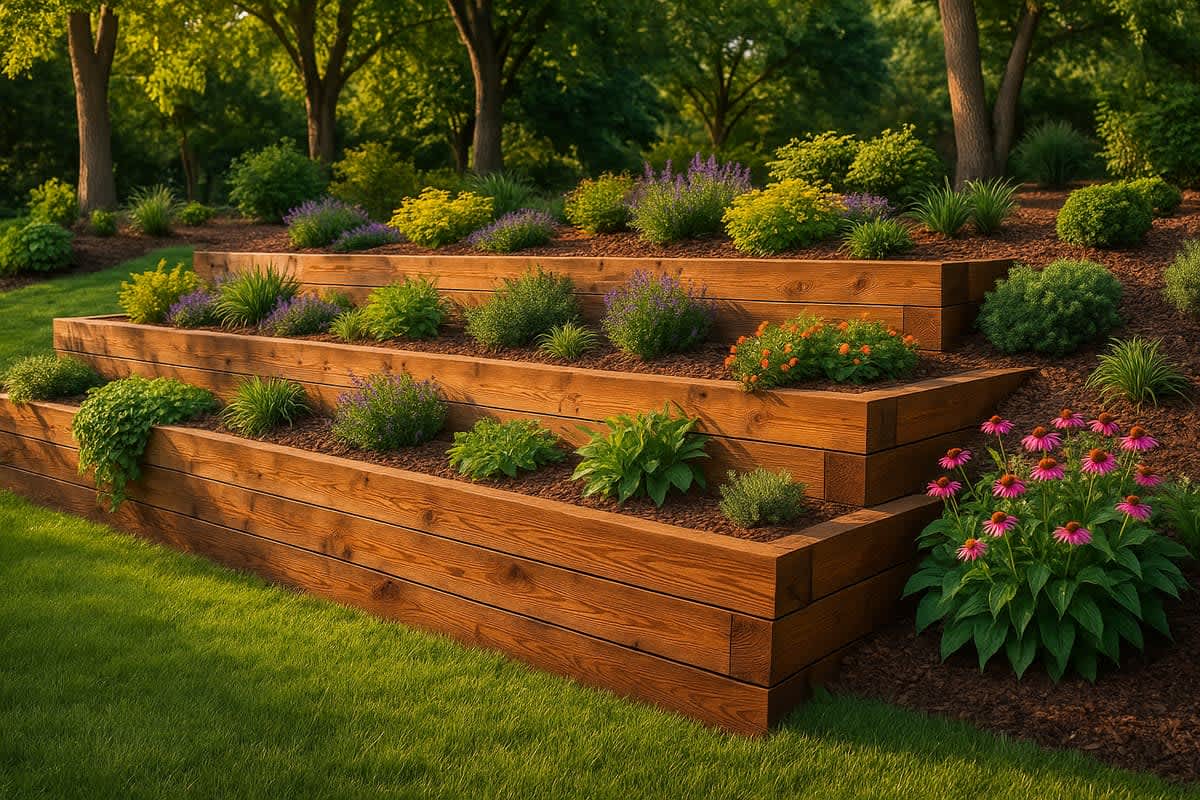
How much does a wood or timber retaining wall cost?
How much does a wood or timber retaining wall cost?
$15 – $40 per square foot
$1,125 – $3,000 average total cost
$15 – $30 per square foot (railroad ties)

Average Wood and Timber Retaining Wall Cost
A wood or timber retaining wall costs $15 to $40 per square foot installed, making it one of the most affordable retaining wall options available. For a typical wall measuring 25 linear feet and 3 feet tall (75 square feet), homeowners pay $1,125 to $3,000 total. Railroad tie retaining walls fall on the lower end at $15 to $30 per square foot, while pressure-treated landscape timbers cost $20 to $40 per square foot depending on the wood species and wall complexity.
| Wall type | Cost per square foot | Total cost (75 sq ft wall) |
|---|---|---|
| Railroad tie retaining wall | $15 - $30 | $1,125 - $2,250 |
| Pressure-treated timber wall | $20 - $35 | $1,500 - $2,625 |
| Cedar or redwood timber wall | $25 - $40 | $1,875 - $3,000 |
| Landscape timber wall (basic) | $15 - $25 | $1,125 - $1,875 |
Timber and wood retaining walls are popular for residential landscapes because they blend naturally with outdoor spaces and cost significantly less than stone, concrete, or block alternatives. They work best for walls under 4 feet tall and in areas with moderate soil pressure.
Your final cost depends on wall height, the type of wood or timber used, site preparation needs, drainage requirements, and local labor rates. Taller walls, difficult terrain, and premium wood species push costs toward the higher end of the range.
Cost by wall size
Wall size is the biggest factor in your total project cost. Larger walls require more materials, more labor hours, and often more extensive drainage and reinforcement systems. Most contractors price timber retaining walls by the square foot or linear foot, with costs increasing per square foot as height goes up due to added structural demands.
| Wall size (linear ft x height) | Square footage | Estimated installed cost |
|---|---|---|
| 10 ft x 2 ft | 20 sq ft | $400 - $800 |
| 25 ft x 2 ft | 50 sq ft | $1,000 - $2,000 |
| 25 ft x 3 ft | 75 sq ft | $1,500 - $3,000 |
| 50 ft x 3 ft | 150 sq ft | $3,000 - $6,000 |
| 25 ft x 4 ft | 100 sq ft | $2,500 - $4,500 |
| 50 ft x 4 ft | 200 sq ft | $5,000 - $9,000 |
| 100 ft x 3 ft | 300 sq ft | $6,000 - $12,000 |
Walls under 3 feet tall are straightforward projects that most experienced landscapers can build without engineering. Once a timber wall exceeds 4 feet, most municipalities require a building permit and a structural engineer's design, adding $200 to $1,500 or more to the project.
Most local building codes require a permit for retaining walls taller than 4 feet (measured from the base of the footing to the top of the wall). Some jurisdictions set that threshold at 3 feet. Check with your local building department before starting any retaining wall project to avoid fines or forced removal.
Material costs for timber and railroad tie walls
Materials for a timber retaining wall typically account for 40% to 50% of the total project cost. The type of wood you choose affects both the upfront price and the wall's expected lifespan. Railroad ties are the most affordable option, while naturally rot-resistant species like cedar and redwood cost more but last longer.
| Material | Cost per linear foot (timber only) | Average lifespan |
|---|---|---|
| Used railroad ties (6x8) | $10 - $25 | 15 - 20 years |
| New railroad ties (6x8) | $20 - $40 | 20 - 30 years |
| Pressure-treated pine (6x6) | $8 - $18 | 15 - 20 years |
| Pressure-treated Douglas fir (6x6) | $12 - $22 | 20 - 25 years |
| Cedar timbers (6x6) | $15 - $30 | 15 - 25 years |
| Redwood timbers (6x6) | $20 - $35 | 20 - 30 years |
| Landscape timbers (3x5 or 4x6) | $4 - $10 | 10 - 15 years |
Railroad ties
Railroad ties (also called railway sleepers) are large, heavy timbers measuring approximately 6 inches by 8 inches by 8.5 feet. Used railroad ties cost $10 to $25 each, while new ties run $20 to $40 each. Their size and weight make them excellent for retaining walls because fewer pieces are needed to reach the desired height.
However, used railroad ties are treated with creosote, a tar-based preservative that can leach chemicals into the surrounding soil. This makes them a poor choice near vegetable gardens, water features, or areas where children and pets play frequently. Some states and municipalities restrict or prohibit creosote-treated wood in residential landscaping.
Pressure-treated timber
Pressure-treated lumber is the most common choice for timber retaining walls. Standard 6x6 posts cost $8 to $22 per linear foot depending on the wood species and treatment level. Look for timbers rated for ground contact (UC4A or higher) to ensure they resist rot and insect damage when buried in soil.
Modern pressure-treated wood uses copper-based preservatives (ACQ or CA-B) rather than the older CCA (chromated copper arsenate) treatment, making it safer for residential use. These timbers provide a good balance of affordability, durability, and appearance.
Cedar and redwood
Cedar and redwood are naturally resistant to rot, insects, and moisture, which makes them attractive for retaining walls without heavy chemical treatment. Cedar timbers cost $15 to $30 per linear foot, and redwood costs $20 to $35 per linear foot. Both species weather to a silver-gray patina over time, which some homeowners prefer.
Additional material costs
Beyond the timbers themselves, several other materials are essential for a properly built wall. The following table breaks down common supplementary materials and their estimated costs.
| Material | Purpose | Estimated cost |
|---|---|---|
| Rebar or galvanized spikes | Connects timber courses together | $50 - $200 |
| Deadman anchors (T-backs) | Ties wall into the hillside | $50 - $150 |
| Landscape filter fabric | Prevents soil from clogging drainage | $30 - $100 |
| Drainage gravel (per ton) | Backfill for water management | $25 - $60 |
| Perforated drain pipe (per foot) | Channels water away from wall | $1 - $3 |
| Construction adhesive | Additional bonding between courses | $5 - $15 per tube |
Labor costs
Labor accounts for 50% to 60% of total timber retaining wall costs. Professional installation ensures the wall is structurally sound, properly drained, and built to last. Most contractors charge $10 to $25 per square foot for labor, or $50 to $75 per hour per crew member.
| Labor component | Cost range |
|---|---|
| Labor per square foot of wall face | $10 - $25 |
| Hourly rate per worker | $50 - $75 |
| Excavation and grading | $500 - $2,500 |
| Installation of a 75 sq ft wall (labor only) | $750 - $1,875 |
A simple, straight wall on flat ground takes less time than a curved or terraced wall on a steep slope. Difficult access (tight spaces, no equipment access, steep grades) increases labor hours and costs. Walls requiring excavation of rocky soil or removal of existing structures also add to the labor bill.
Building a small timber retaining wall (under 2 feet tall) is a feasible DIY project for handy homeowners. This can reduce total costs by 40% to 60%. However, walls taller than 3 feet or those supporting significant soil loads should be left to professionals to ensure safety and longevity.
Cost factors that affect your project
Several variables influence the final cost of a timber retaining wall beyond just size and material choice. Understanding these factors helps you budget accurately and avoid surprises during the project.
| Cost factor | Impact on cost |
|---|---|
| Wall height (over 4 ft) | Adds 20% - 50% per additional foot |
| Steep or uneven terrain | Adds $500 - $3,000 |
| Drainage system installation | Adds $200 - $1,500 |
| Permits and engineering | Adds $200 - $1,500 |
| Demolition and removal of old wall | Adds $500 - $2,500 |
| Soil type (clay, rock, sandy) | Adds $0 - $1,500 |
| Geographic location | Varies by 10% - 30% |
Wall height
Height is the most significant cost driver after total wall area. Each additional foot of height requires more timber, longer rebar or spikes, deeper footings, and more extensive drainage. Walls over 4 feet often need deadman anchors extending 4 to 6 feet back into the hillside, which adds both materials and labor.
Site preparation and terrain
Building on a steep slope, in poorly drained soil, or in an area with limited equipment access increases costs substantially. Excavation for the base trench may require a mini excavator ($200 to $500 per day to rent), and hauling away excess soil adds to disposal costs.
Clay-heavy soil retains water and exerts more pressure against the wall, requiring more robust drainage solutions. Sandy or well-draining soil is easier and cheaper to work with.
Drainage
Proper drainage is essential for any retaining wall's longevity. Without it, water pressure (hydrostatic pressure) builds up behind the wall and causes premature failure. A drainage system typically includes gravel backfill, perforated drain pipe at the base, filter fabric, and weep holes through the wall face. This adds $200 to $1,500 to the project depending on wall length.
Water is the number one reason retaining walls fail. Timber walls are especially susceptible because moisture accelerates wood rot and increases soil pressure. Investing in proper drainage during installation can double the lifespan of your wall and prevent costly repairs or rebuilds down the road.
Permits and engineering
Building permits for retaining walls cost $100 to $500 in most areas. If your wall exceeds the local height threshold (typically 4 feet), you may also need stamped engineering plans from a structural engineer, which cost $200 to $1,000 or more. Some homeowners associations (HOAs) have additional requirements and approval processes.
Wood vs. other retaining wall materials
Timber retaining walls are among the most affordable options, but they have a shorter lifespan than stone, concrete, or block walls. Comparing costs and longevity across materials helps you decide whether wood is the right choice for your property.
| Wall material | Cost per square foot (installed) | Average lifespan |
|---|---|---|
| Landscape timber | $15 - $25 | 10 - 15 years |
| Railroad ties | $15 - $30 | 15 - 30 years |
| Pressure-treated timber (6x6) | $20 - $35 | 15 - 25 years |
| Concrete block (CMU) | $20 - $45 | 50+ years |
| Interlocking concrete block | $25 - $55 | 50+ years |
| Poured concrete | $30 - $60 | 50+ years |
| Natural stone | $35 - $75 | 75+ years |
| Boulder | $25 - $55 | 75+ years |
Timber walls offer the lowest upfront cost and a natural appearance that works well in garden settings, wooded lots, and casual landscapes. They are also easier and faster to install than masonry alternatives, which reduces labor costs.
The tradeoff is durability. Even pressure-treated timber will eventually rot, warp, or shift over time. If you need a wall that will last 50 years or more with minimal maintenance, concrete block or poured concrete is a better long-term investment despite the higher initial cost.
DIY vs. professional installation
A DIY timber retaining wall under 3 feet tall can save 40% to 60% on labor costs. Materials for a 75-square-foot wall cost $500 to $1,500, compared to $1,500 to $3,000 for full professional installation. However, DIY is only practical for short, straight walls in accessible locations with stable soil.
| Approach | Cost for 75 sq ft wall | Best for |
|---|---|---|
| DIY installation | $500 - $1,500 | Walls under 3 ft, flat terrain, experienced homeowners |
| Professional installation | $1,500 - $3,000 | Walls over 3 ft, slopes, structural applications |
When to DIY
- The wall is under 2 to 3 feet tall
- You have experience with landscaping and basic construction
- The site is relatively flat with good drainage
- The wall is decorative or supports minimal soil pressure
- No permit is required in your area
When to hire a professional
- The wall exceeds 3 to 4 feet in height
- The wall retains a slope near a structure, driveway, or walkway
- Soil conditions are poor (heavy clay, high water table)
- A building permit and engineered design are required
- The terrain is steep or has limited access
A failing retaining wall can collapse suddenly, releasing tons of soil. Improperly built walls taller than 3 feet pose a serious risk to property and personal safety. When in doubt, hire a qualified contractor with retaining wall experience and verify they carry liability insurance.
Maintenance and lifespan
Timber retaining walls require more maintenance than stone or concrete alternatives, but regular care extends their useful life significantly. Expect to spend $100 to $500 per year on maintenance depending on the wall's size, age, and exposure to moisture.
| Maintenance task | Frequency | Estimated cost |
|---|---|---|
| Inspection for rot, insect damage, shifting | Annually | Free (DIY) |
| Apply wood preservative or sealant | Every 2 - 3 years | $50 - $200 |
| Clear drainage system | Annually | $50 - $150 |
| Replace rotted or damaged timbers | As needed | $200 - $1,000 |
| Regrade soil behind wall | As needed | $100 - $500 |
Pressure-treated timber walls typically last 15 to 25 years with proper drainage and maintenance. Railroad tie walls can last 20 to 30 years because of their dense, heavily treated wood. Untreated or poorly drained walls may fail in as few as 7 to 10 years.
Signs that your timber retaining wall needs repair or replacement include visible wood rot, leaning or bulging, gaps between timbers, soil erosion behind the wall, and water seeping through the face rather than draining at the base.
Pros and cons of timber retaining walls
Understanding the advantages and limitations of wood retaining walls helps you decide if this material is right for your project.
| Pros | Cons |
|---|---|
| Lower upfront cost than stone or concrete | Shorter lifespan (10 - 30 years) |
| Natural, warm appearance | Susceptible to rot, insects, and moisture damage |
| Easier and faster to install | Not suitable for walls over 4 to 6 feet |
| DIY-friendly for short walls | Requires ongoing maintenance |
| Blends with garden and woodland landscapes | Railroad ties may contain harmful chemicals |
| Lighter weight, requires less equipment | Can warp, shift, or crack over time |
How to save money on a timber retaining wall
There are several practical ways to reduce the cost of your timber retaining wall without sacrificing structural integrity.
- Use pressure-treated pine instead of cedar or redwood. It costs 30% to 50% less and lasts nearly as long when properly maintained.
- Build shorter walls. A terraced design using two 2-foot walls instead of one 4-foot wall eliminates the need for engineering and permits, and reduces structural demands.
- Source used railroad ties carefully. Used ties cost 50% to 60% less than new ones, though you should inspect them for excessive rot or crumbling.
- Do your own excavation and site prep. Even if you hire a pro for the wall itself, handling the digging and gravel placement can save $500 to $1,500.
- Get multiple quotes. Pricing varies significantly between contractors. Obtain at least three written estimates and compare scope of work, materials specified, and drainage details.
- Build during the off-season. Late fall and winter are slower periods for landscapers in many regions, so you may find lower prices and faster scheduling.
Frequently asked questions
How long does a timber retaining wall last?
A well-built timber retaining wall lasts 15 to 25 years with pressure-treated wood and 20 to 30 years with railroad ties. Proper drainage, quality materials, and regular maintenance are the biggest factors in extending the wall's lifespan. Walls without adequate drainage may fail in under 10 years.
Are railroad ties safe for retaining walls?
New railroad ties and modern pressure-treated timbers are generally considered safe for residential retaining walls. Used railroad ties contain creosote, which can leach into surrounding soil. Avoid placing creosote-treated ties near edible gardens, water sources, or areas frequented by children and pets. Some municipalities prohibit their residential use entirely.
Do I need a permit for a timber retaining wall?
Most jurisdictions require a permit for retaining walls taller than 4 feet, measured from the base of the footing to the top of the wall. Some areas set the threshold at 3 feet, and walls near property lines, septic systems, or public rights-of-way may face additional requirements. Always check with your local building department before construction begins.
Can I build a timber retaining wall myself?
Yes, for walls under 2 to 3 feet tall on relatively flat ground. A basic DIY timber retaining wall requires standard tools (shovel, level, drill, hand tamper) and can be completed in a weekend. Walls over 3 feet tall should be built by a professional due to the structural complexity, drainage requirements, and potential permit needs.
How much does it cost to replace a timber retaining wall?
Replacing an existing timber retaining wall costs $20 to $50 per square foot, which includes demolition and disposal of the old wall ($500 to $2,500) plus the cost of new construction. If you're upgrading from timber to concrete block or stone, expect to pay $30 to $75 per square foot for the replacement wall.