
How much does pool coping cost?
How much does pool coping cost?
$40 – $80 average cost per linear foot

Average pool coping cost
Pool coping costs $40 to $80 per linear foot on average, depending on the material you select, the pool size and shape, the coping style, and local labor rates. Costs fall on the higher end of the range for natural stone coping and on the lower end for concrete coping. Replacing existing pool coping costs more than installing new coping.
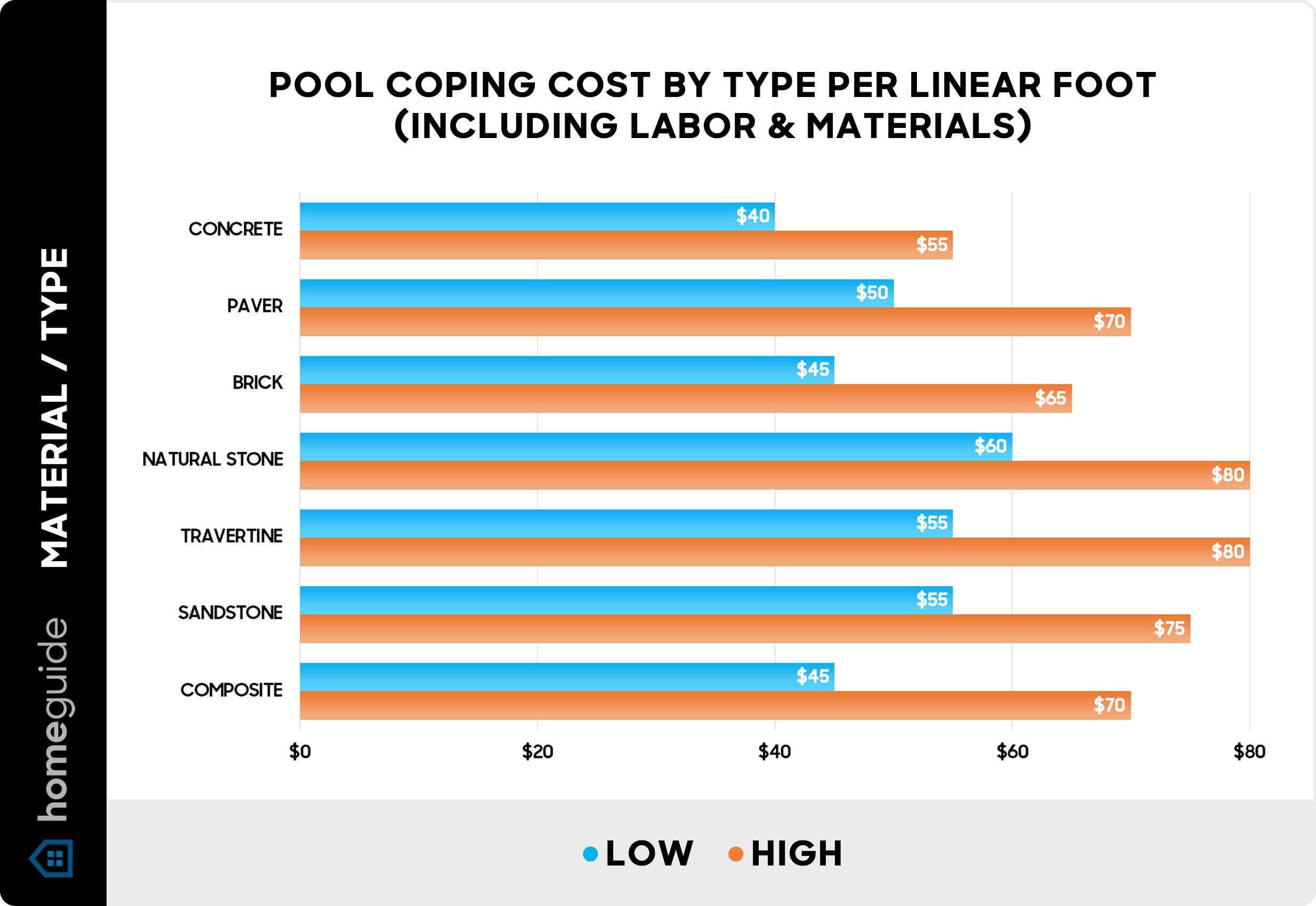
| Material / type | Average cost per linear foot* |
|---|---|
| Concrete | $40 – $55 |
| Paver | $50 – $70 |
| Brick | $45 – $65 |
| Natural stone | $60 – $80 |
| Travertine | $55 – $80 |
| Sandstone | $55 – $75 |
| Composite | $45 – $70 |
*Including labor and materials
Concrete
Concrete coping costs $40 to $55 per linear foot with installation and can be poured in place or precast in various shapes and finishes. It is easy to customize with colored stains or stamping to mimic more expensive materials.
While concrete is cost-effective and long-lasting, it can crack over time due to freeze-thaw cycles in colder climates. Regular sealing helps maintain its appearance and prevents water damage.
Paver
Paver coping costs $50 to $70 per linear foot installed and provides a clean, modern look with individual interlocking stones that create a uniform edge. Available in numerous colors, shapes, and textures, pavers offer design flexibility to match your pool deck and landscape.
One major advantage is that individual pavers can be replaced if damaged without redoing the entire coping. They're also slip-resistant when textured, making them a safe choice for pool areas.
Brick
Brick coping costs $45 to $65 per linear foot with installation and delivers timeless appeal with a classic, traditional aesthetic. It pairs beautifully with brick homes and creates a cohesive look when matched with brick patios or walkways.
Brick is naturally porous, so it requires sealing to prevent water absorption and staining. When properly maintained, brick coping can last decades and develop an attractive patina over time.
Natural stone
Natural stone coping costs $60 to $80 per linear foot and includes materials like granite, limestone, and bluestone. Each piece is unique, creating an elegant, high-end appearance that enhances your pool's visual appeal.
Stone offers exceptional durability and heat resistance, staying cooler underfoot than concrete on hot summer days. The premium price reflects the material's longevity and luxurious look.
Travertine
Travertine coping costs $55 to $80 per linear foot with installation. The material is a popular natural stone choice known for its cool surface temperature and non-slip texture. Its light colors and natural veining create a sophisticated Mediterranean or resort-style aesthetic.
The stone's porous nature means it requires regular sealing to prevent staining and algae growth. Despite this maintenance need, travertine remains a top choice for upscale pool installations.
Sandstone
Sandstone coping costs $55 to $75 per linear foot installed and provides a warm, earthy appearance with natural color variations ranging from beige to red. Its textured surface offers excellent slip resistance, making it a practical and beautiful option.
This sedimentary stone is slightly softer than granite or travertine, which makes it easier to cut and install but also more susceptible to weathering over time. Proper sealing extends its lifespan significantly.
Composite
Composite coping costs $45 to $70 per linear foot and combines recycled materials with polymers to create a durable, low-maintenance alternative to natural materials. It resists fading, cracking, and staining while offering the look of stone or wood.
Composite coping offers eco-friendly sustainability and has minimal upkeep requirements. It doesn't require sealing and cleans easily with soap and water, though it can be pricier than basic concrete.
Pool coping cost factors
Several factors affect the cost to replace pool coping, including the material, pool shape and size, and more:
Material
The material choice has the biggest impact on your total cost. Budget-friendly concrete and brick options keep costs low, while premium natural stone and travertine push prices higher.
Beyond price, materials differ in durability, maintenance needs, slip resistance, and aesthetic appeal. Consider your climate, budget, and design preferences when selecting coping material.
Pool shape and size
Larger pools require more linear feet of coping, directly increasing material and labor costs. A small plunge pool might need only 40 linear feet, while a large freeform pool could require 150 linear feet or more.
Coping installation costs more for curved or irregular pool shapes than for simple rectangular designs because they require more precise cutting and fitting. Kidney-shaped, L-shaped, and custom freeform pools add complexity that increases labor time.
Pool coping shape and style
The profile or edge style you choose affects both aesthetics and cost. Different styles require varying amounts of material and installation expertise:
Cantilevered coping extends slightly over the pool edge, creating a clean, modern overhang. This style requires careful installation to ensure proper support and typically costs more due to the precision needed.
Bullnose coping features a rounded edge that's smooth and comfortable to touch. Popular for traditional pools, this style is safer for children and easier to grip when entering or exiting the pool.
Square-edged coping provides a contemporary, streamlined look with sharp 90-degree edges. Less expensive than rounded profiles, square edges work well with modern architectural designs.
Flat coping sits flush with the pool deck for a seamless transition. Often used with deck-level or vanishing-edge pools, this style can accommodate wider coping pieces that double as seating.
Design complexity
Intricate patterns, multiple colors, or decorative inlays increase both material waste and installation time. Simple, uniform designs are more cost-effective than elaborate custom layouts.
Special details like radius corners, steps integrated into the coping, or coordinating coping with a spa add complexity. While these features enhance appearance, they require skilled craftsmanship that increases labor costs.
Labor
Professional installation makes up a significant portion of the total project cost. Labor rates vary by region, with contractors in major metropolitan areas charging more than those in rural locations.
Experienced pool coping specialists charge premium rates but deliver better results and longer-lasting installations. Removing old coping, preparing the surface, and ensuring proper drainage require expertise that justifies the investment.
New installation vs. replacement
New pool construction allows for straightforward coping installation without demolition costs. Replacement projects require removing existing coping, which adds labor time and disposal fees to your budget.
The condition of the underlying pool structure also affects replacement costs. If the pool beam or bond beam needs repair before new coping can be installed, expect additional expenses for structural work.
Location
Regional material availability influences pricing, with locally sourced stone costing less than imported options. Transportation fees for heavy materials like natural stone can add significantly to costs in remote areas.
Climate considerations also matter. Freeze-thaw regions need coping materials and installation methods that withstand temperature fluctuations, potentially requiring more expensive cold-weather specifications.
What is pool coping?
Pool coping is the protective cap that sits on top of your pool's edge, where the pool structure meets the surrounding deck. It serves as the border or "lip" that creates a finished transition between the water and deck area.
This essential component provides a gripping surface for swimmers, protects the pool shell from water damage, and enhances your pool's overall appearance. Quality coping prevents water from seeping behind the pool shell, which could cause structural damage over time.
Why is pool coping important?
Pool coping performs several critical functions beyond aesthetics. It directs water runoff away from the pool structure, preventing erosion and damage to the pool shell and foundation.
The coping provides a safe, non-slip surface for swimmers to grip when entering or exiting the pool. It also covers the exposed edge of the pool shell and steel reinforcements, protecting them from weathering and creating a polished, finished look.
How long does pool coping last?
Quality pool coping lasts 10 to 30 years depending on the material and maintenance. Concrete coping generally lasts 15 to 25 years, while natural stone can exceed 30 years with proper care.
The total lifespan depends on climate conditions, maintenance frequency, water chemistry, and installation quality. Regular sealing, prompt crack repairs, and proper pool chemical balance can help to maximize your coping's longevity.
How long does it take to install pool coping?
Most pool coping replacement projects take 3 to 7 days to complete. Simple rectangular pools with precast concrete coping might finish in 3 to 4 days, while complex curved designs with natural stone can take a week or longer.
The timeline includes removing old coping, preparing the surface, installing new coping, and allowing proper curing time. Weather conditions and material availability can extend the schedule.
Getting estimates from pool coping installers
Follow these tips when evaluating pool coping installers near you:
Compare quotes from three or more companies with experience specifically in pool coping installation and replacement.
Look for members of organizations like the Association of Pool and Spa Professionals (APSP).
Read through recent reviews on HomeGuide and Google.
Be cautious with extremely low estimates, which usually indicate low-quality work.
Get a detailed contract and warranty in writing before work begins.
Questions to ask pool coping contractors
Ask these questions to help you choose the best pool contractor for the job:
How long have you been installing pool coping?
Can I see a portfolio of your recent projects?
Are you licensed and insured?
What type of coping material do you recommend for my pool?
How long will the project take?
Can you provide a detailed estimate showing costs for materials, labor, permits, and any other expenses?
Do you offer a warranty on the materials or workmanship? If yes, what does it cover?
Using our proprietary cost database, in-depth research, and collaboration with industry experts, we deliver accurate, up-to-date pricing and insights you can trust, every time.