
How much does hydroseeding cost?
How much does hydroseeding cost?
$0.12 – $0.35 average cost per square foot

$0.12 – $0.35 average cost per square foot
Are you a pro?How much will your project cost?TABLE OF CONTENTSEdited by Tara Farmer
Average cost of hydroseeding
Hydroseeding costs $0.12 to $0.35 per square foot on average, depending on the lawn size and slope, grass type, site conditions, and whether you choose any additives. Costs per square foot are typically on the low end of that range for large properties over an acre and on the high end for smaller projects.
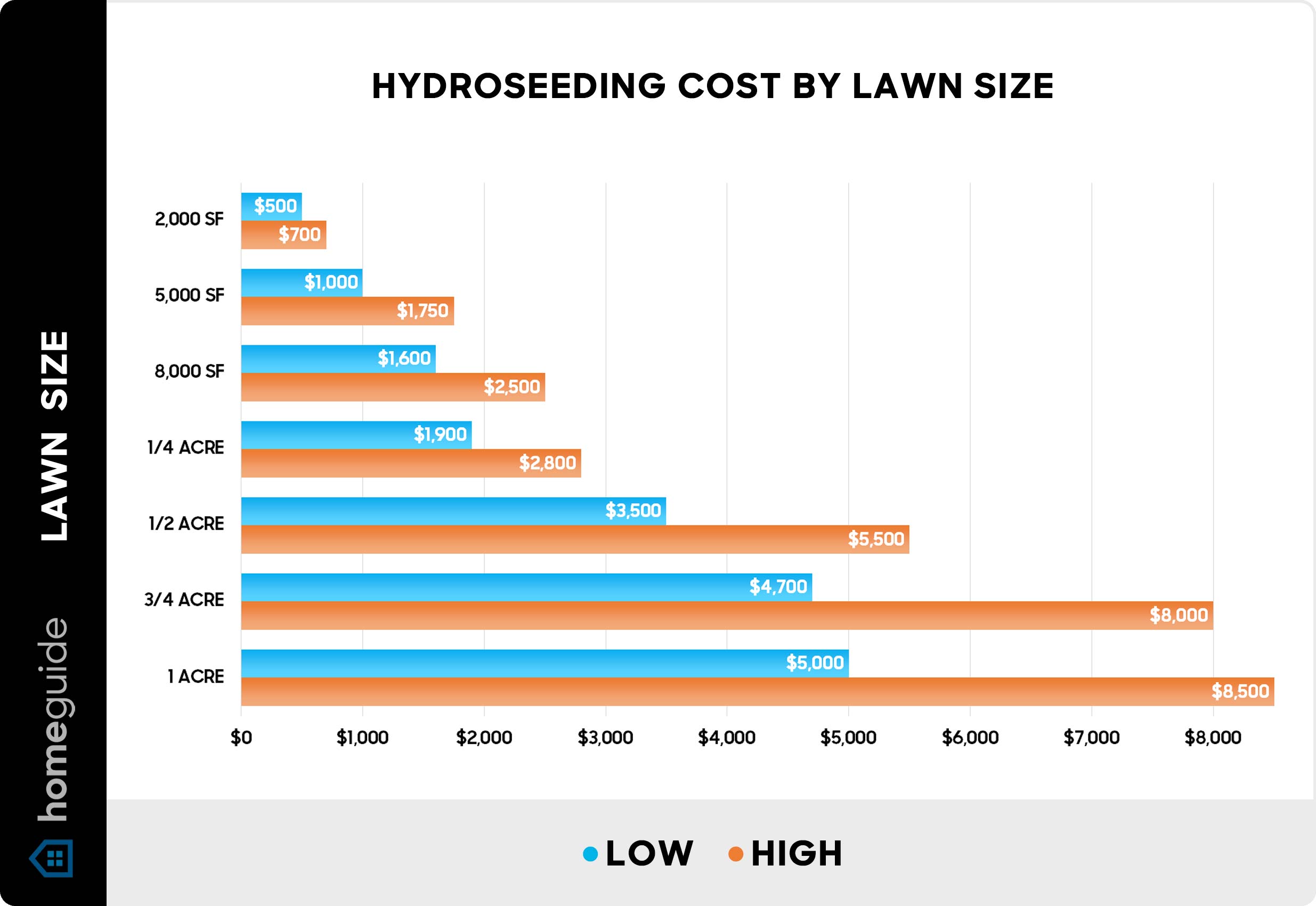
| Lawn size | Average cost* |
|---|---|
| 2,000 square feet | $500 – $700 |
| 5,000 square feet | $1,000 – $1,750 |
| 8,000 square feet | $1,600 – $2,500 |
| 1/4 acre | $1,900 – $2,800 |
| 1/2 acre | $3,500 – $5,500 |
| 3/4 acre | $4,700 – $8,000 |
| 1 acre | $5,000 – $8,500 |
*Most hydroseeding companies have minimum job fees of $300 to $500 or more.
Hydroseeding cost factors
Several factors affect the total cost of hydroseeding, including the project size, seed mixture, and more.
Lawn size
The square footage of your lawn is the primary cost factor. Larger properties get discounted rates per square foot, while smaller yards may hit the contractor's minimum fee. Measure your lawn accurately to get precise estimates.
Grass type & mixture
Premium grass seeds cost more than standard varieties. Cool-season grasses like fescue and ryegrass suit northern climates, while warm-season options like Bermuda grass thrive in southern regions.
The hydroseed mixture includes more than just seeds. Fertilizer promotes healthy growth, hydro mulch retains moisture, and bonding agents help the mixture stick to slopes. Tackifier adds extra adhesion on steeply sloped terrain. These components protect the seeds and improve germination rates.
Additives
Optional additives can enhance your lawn's health and appearance, but each additive can increase the price by $0.02 to $0.04 per square foot. Common options include:
Weed control to prevent unwanted growth competition
Grub control to protect roots from damaging insects
Fungus control to guard against lawn diseases
Biostimulants to accelerate seed germination
Moisture retainer to help soil stay hydrated longer
Yard slope & terrain
Yards with steeply sloped areas can add $0.05 to $0.10 per square foot to the total. Steep slopes require extra materials and labor to prevent erosion, and the mixture needs stronger bonding agents to stay in place. Contractors may also need specialized equipment for hard-to-reach areas.
Soil conditions
Poor soil prevents seeds from thriving. Soil testing costs $10 to $40 and reveals pH levels and nutrient deficiencies. Amendments like lime adjust acidity, while compost improves texture and fertility. Addressing these problems up front ensures better germination.
Some contractors include basic soil testing in their hydroseeding service, while others charge for it separately. Major amendments may require additional investment before hydroseeding begins.
Site preparation
Proper preparation creates ideal conditions for seed growth. Common prep work includes these services, which may be included in hydroseeding packages or charged separately:
Mowing existing grass to ground level
Removing leaves, debris, and dead vegetation
Lawn dethatching costs $100 to $300+ to remove compacted thatch from the surface.
Lawn aeration costs $100 to $300 to improve the flow of water and oxygen to the new seeds.
Watering
Consistent moisture is critical during the first 4 to 6 weeks after hydroseeding. You'll need to water lightly 2 to 3 times daily until seedlings establish. An irrigation system simplifies this task, while manual watering requires daily attention. Factor in increased water bills during this period.
Hydroseeding vs. sod
Hydroseeding is typically cheaper than sod. Sod installation costs $1 to $4 per square foot, depending on whether you're installing a new lawn or removing and resodding an existing lawn.
While sod provides instant results, hydroseeding offers excellent root development for grass types suited to the local climate. The best choice depends on your timeline, budget, and climate.
| Factor | Hydroseeding | Sod |
|---|---|---|
| Cost per square foot* | $0.12 – $0.35 | $1.00 – $4.00 |
| When to install | Spring or fall for best results | Any time during growing season |
| Growth speed | 5 to 7 days for germination | Instant green lawn |
| Time to establishment | 3 to 4 weeks until full coverage | 2 to 3 weeks for root establishment |
| Labor intensity | Quick application process | Heavy labor for installation |
*Including professional installation
What is hydroseeding?
Hydroseeding is a lawn-seeding method that involves spraying a mixture of grass seed, mulch, fertilizer, and water onto your lawn. The process creates a protective layer that promotes germination while preventing erosion. The green-tinted slurry bonds to the soil, keeping seeds moist and protected from wind, rain, and hungry birds.
With proper site preparation, professional application, and a correct slurry mix, hydroseeding typically yields more uniform growth than traditional seeding.
Is hydroseeding worth it?
Hydroseeding offers excellent value for most homeowners. It costs less than sod and often produces superior root systems. However, hydroseeding requires extensive watering, which may not be suitable for all climates.
Consider hydroseeding if you need erosion control, have uneven terrain, or want faster results than hand-seeding. The investment often pays off through reduced maintenance and healthier grass.
How long does it take for hydroseeding to grow?
You'll see initial germination in 5 to 7 days under optimal conditions. Full coverage typically takes 3 to 4 weeks. Your lawn will be ready for the first mowing after 4 to 6 weeks, depending on the grass type and weather.
Cool-season grasses like fescue germinate faster than warm-season varieties like Bermuda. Consistent watering and favorable temperatures accelerate growth.
How long after hydroseeding can you walk on the lawn?
Avoid walking on hydroseeded areas for at least 3 to 4 weeks. The seeds and young roots need time to establish without disturbance. Light traffic is acceptable after the first mowing at 4 to 6 weeks, but heavy use should wait until 7 to 8 weeks post-application.
Keep pets off freshly hydroseeded areas to prevent paw irritation from wet mulch and to protect germinating seeds.

Getting estimates for hydroseeding
Follow these tips to help you find an experienced, reputable hydroseeding company near you:
Get quotes from at least three hydroseeding companies to compare.
Request detailed estimates that show the seed type, additives, and labor costs.
Check reviews from recent customers on HomeGuide and Google.
Confirm the company is licensed and insured.
Questions to ask hydroseeding companies
Ask these questions to ensure you hire the best company for the job:
How long have you been hydroseeding?
Do you give free on-site estimates? If not, how much is the consultation fee?
What is the best seed type for my lawn?
Can you test the soil first to make sure the new seeds will grow well here?
When is the best time of year to hydroseed in this area?
Does my yard need any site preparations?
Will I need dethatching or core aerating before hydroseeding?
How often should I water my new hydroseed?
Do you offer a warranty?
What's your policy on treating bare spots in the lawn after hydroseeding?
Using our proprietary cost database, in-depth research, and collaboration with industry experts, we deliver accurate, up-to-date pricing and insights you can trust, every time.