
How much does an Earthship cost?
How much does an Earthship cost?
$300 – $400 average cost per square foot
$450,000 – $1,000,000 average total cost

Average Earthship cost
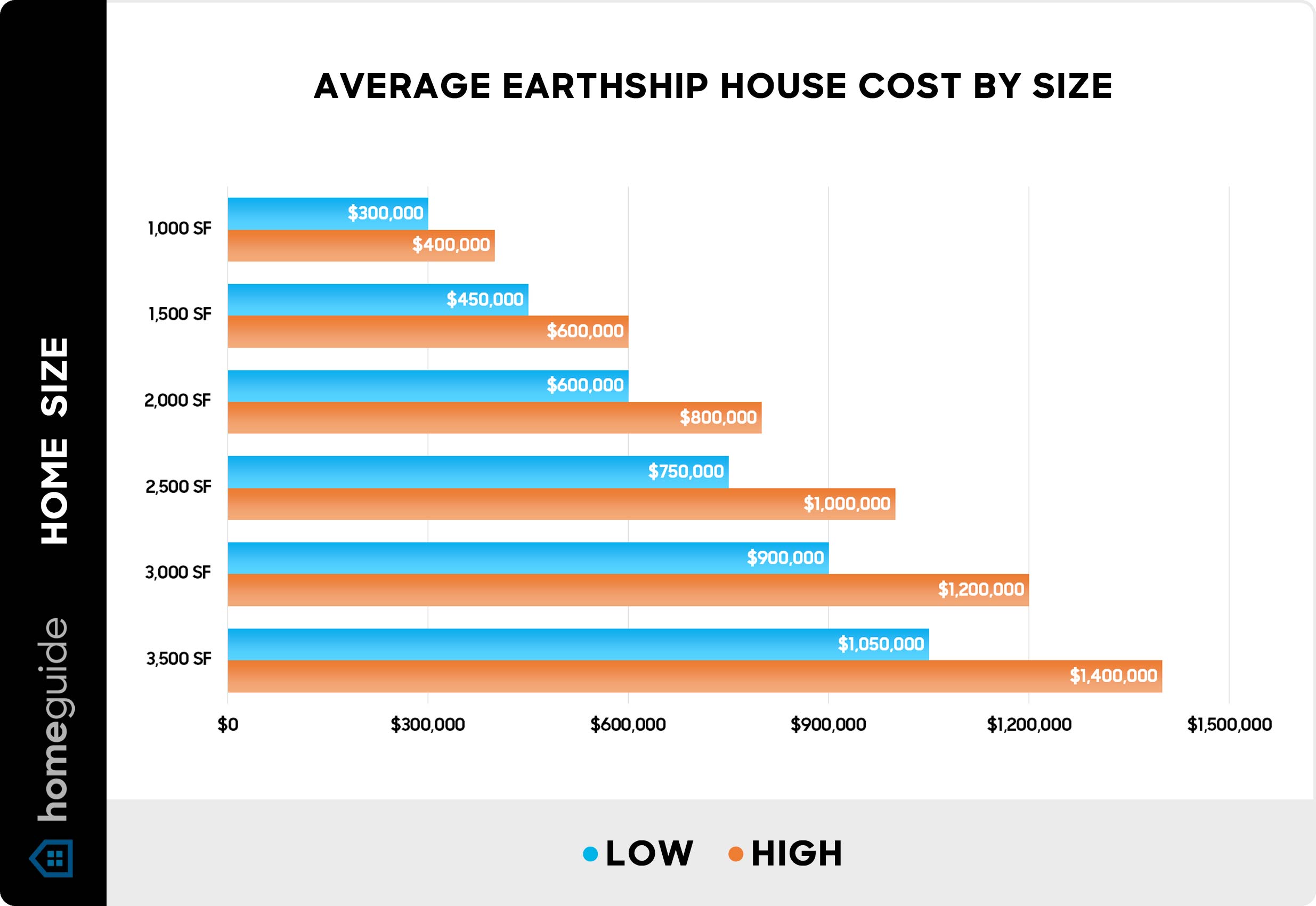
An Earthship costs $300 to $400 per square foot or $450,000 to $1,000,000 total on average for the labor, materials, and a turnkey finish. However, the cost of an Earthship home varies dramatically depending on the location, home size, design complexity, how the materials are sourced, and if you do any of the construction yourself.
| Home size | Average cost* |
|---|---|
| 1,000 | $300,000 – $400,000 |
| 1,500 | $450,000 – $600,000 |
| 2,000 | $600,000 – $800,000 |
| 2,500 | $750,000 – $1,000,000 |
| 3,000 | $900,000 – $1,200,000 |
| 3,500 | $1,050,000 – $1,400,000 |
*Total cost for professional construction
What is an Earthship?
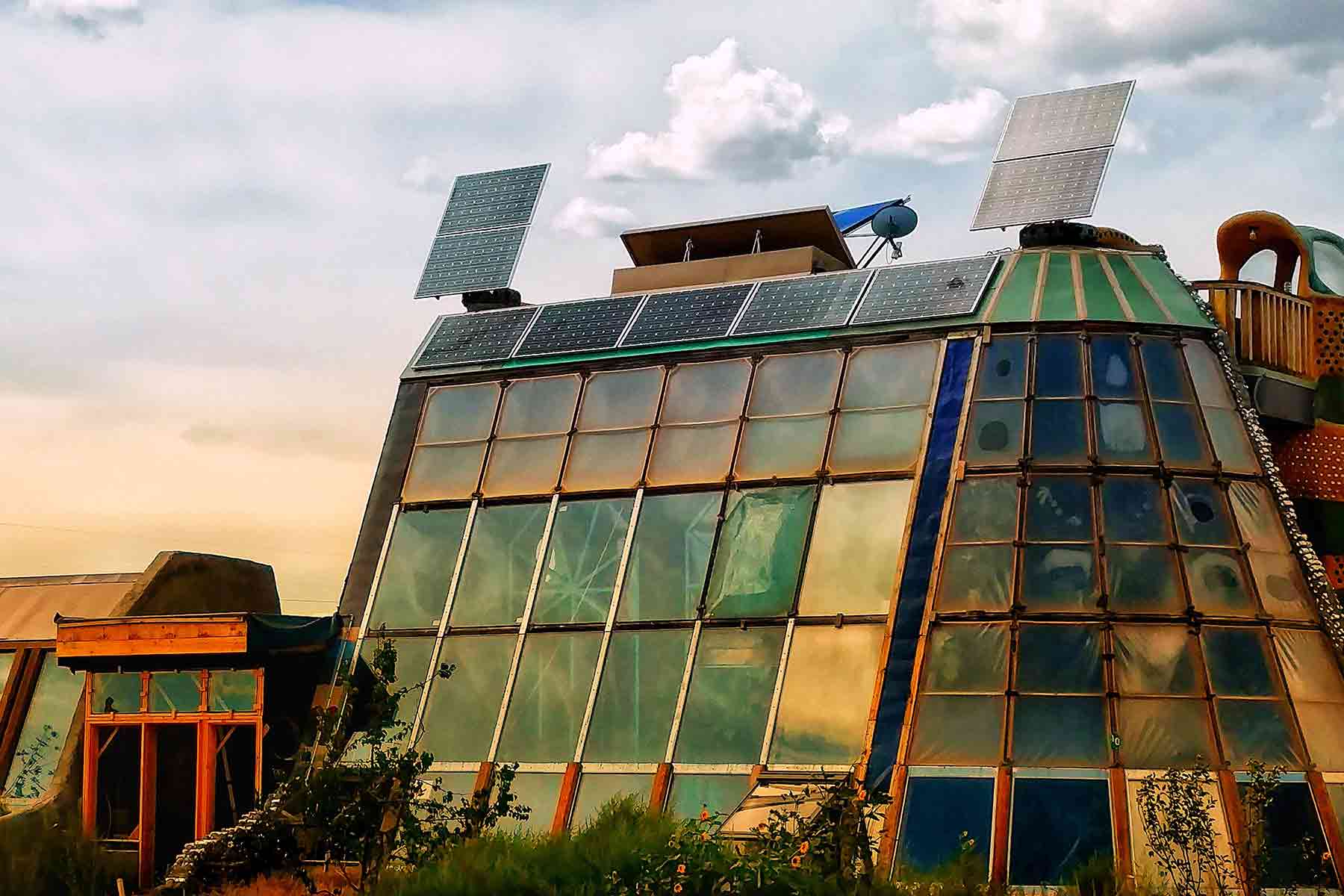
An Earthship home is constructed from natural and recycled materials, designed for energy efficiency. It is created using low-tech methods to be self-sufficient in energy, water, and food. These passive solar homes use earth-packed tires for thermal mass, incorporate recycled bottles and cans, and feature integrated systems for water collection, waste treatment, and food production.
What affects the cost of an Earthship home?
Multiple variables influence your final Earthship building costs:
Design complexity and size: Earthship costs increase with size and complexity. A simple Earthship costs around $50,000 to $100,000 to build, but bigger, more complex models can cost over $500,000. Custom features and non-standard designs add substantial costs.
Location: Earthship homes are not permissible everywhere, and some locations may require extensive code modifications or variances. Building code compliance adds costs through:
Engineering and architectural fees
Modified construction methods
Additional inspections and testing
Legal and consulting expenses
Consultation & design fees: Once you have land and funding, Earthship Biotecture charges $400 per hour or $250 per ½ hour to assist with the planning and design phase. They also sell Earthship construction drawings for $1,499 to $2,099.
DIY vs. professional build: Building your own home costs less but requires significant time and skills, even more so for an Earthship home. Earthship Biotecture charges about $2,000 for an extensive training program to learn about the specialized design and construction methods.
Resale challenges: The unique nature of these homes affects their marketability. Limited buyer pools and financing challenges extend selling timeframes, often to 3 years or more.
Labor costs and expertise
Not many construction companies have experience with building Earthships, and those who do have experience are few in number. Since they're rare, they're able to set their prices higher. Geographic location also affects labor availability and costs. Remote locations may require higher transportation costs for materials and workers.
Materials and sourcing
Material costs vary widely based on your sourcing strategy. Old tires are often free from local auto shops or recycling centers. Bottles, cans, and reclaimed wood carry little to no cost. You'll need to budget for travel required to obtain the materials and storage if you plan to source free materials over time.
Additionally, systems components represent major material expenses that you may not be able to find for free:
Solar panels and electrical systems
Plumbing and water systems cost
Windows and doors
Systems and utilities
Solar panels, inverters, and water catchment systems are the largest expenses but can be scaled to your budget. Off-grid systems require substantial upfront investment but eliminate ongoing utility costs. Water collection and treatment systems, waste management, and renewable energy infrastructure all add to initial costs but provide long-term savings.
An off-grid solar system costs $40,000 to $80,000 installed on average.
A rainwater harvesting system costs anywhere from $2,000 to $24,000, depending on the size and whether it's above ground or underground.
Mortgage challenges
Earthships are often labeled as "experimental architecture" because they don't fit standard building codes, and funding for experiments is hard to come by. Due to the difficulty in securing a traditional mortgage for an Earthship, builders and buyers often have to find other financing methods or make the purchase with available cash.
Earthbag homes as an alternative
Earthbag construction offers another sustainable building method that provides distinct cost and construction advantages. These homes can cost $15 to $50 per square foot when using owner-builder methods, making them significantly more affordable than Earthships. Earthbag homes use polypropylene or burlap bags filled with earth to create structural walls.
The technique involves stacking earth-filled bags in courses, compacting each layer, and adding barbed wire for tensile strength. Like Earthships, earthbag homes provide excellent thermal mass and can incorporate passive solar design principles. However, they require different permitting approaches and may face similar building code challenges in some areas.
While earthbag homes don't include the integrated systems that make Earthships fully autonomous, they offer a more accessible entry point for sustainable building. Many owners add solar power, rainwater collection, and greywater systems after construction, spreading costs over time.
Earthship FAQs
Are Earthships legal?
Earthship legality depends on local building codes and zoning regulations. Currently, Earthships are permissible in parts of New Mexico, Pennsylvania, Wyoming, Nevada, Colorado, Florida, and Virginia. Other locations may allow Earthships with modifications to meet local codes, while some prohibit them entirely. Always check with local authorities before purchasing land or beginning construction.
Can you get a loan to build an Earthship home?
It's nearly impossible to get a conventional mortgage on an Earthship because lenders rely on comparable listings to accurately assess home value, and Earthships don't reliably compare to other homes in a given area. However, alternative financing options exist including specialty lenders, personal loans, home equity loans, and land-only financing.
How long does it take to build an Earthship?
It may take up to 2 years to build your own Earthship, while professional builds typically require 12 to 18 months. The labor-intensive construction methods, particularly tire packing and earth work, extend construction timelines significantly beyond conventional homes. Weather, permit delays, and system complexity can further extend construction periods.
Getting estimates for your Earthship project
Follow these guidelines to find experienced home builders near you who understand Earthship construction methods:
Contact Earthship Biotecture directly for official pricing on standard designs and custom builds.
Request quotes from at least three contractors experienced with alternative construction methods.
Look at their ratings on reputable sites such as HomeGuide and Google.
Factor in 15% to 20% contingency funds for unexpected costs and design changes.
Request itemized breakdowns showing labor, materials, and systems costs separately.
Compare costs for different design models like Refuge, Encounter, or Global designs.
Questions to ask Earthship contractors and designers
Before committing to any Earthship project, these essential questions will help you understand the full scope and costs involved:
What is your experience building Earthships and how many have you completed successfully?
Can you provide references from recent Earthship clients and photos of finished projects?
What permits and approvals are required in my specific location and who handles the process?
How do local building codes affect design choices and what modifications might be necessary?
What is the estimated timeline from permit approval to move-in date?
Which systems (solar, water, waste) are included in your base price versus optional add-ons?
How do you handle cost overruns and change orders during construction?
What warranties do you provide for construction work and system installations?
Can you help with financing options or connecting with specialty lenders?
What ongoing maintenance will be required and what are typical annual costs?
How do you source recycled materials and what happens if specific items aren't available?
What happens if we encounter unexpected site conditions or permitting delays?
Using our proprietary cost database, in-depth research, and collaboration with industry experts, we deliver accurate, up-to-date pricing and insights you can trust, every time.