
How much does dry well installation cost?
How much does dry well installation cost?
$1,200 – $5,200 average cost (materials + labor)

Average dry well installation cost
Dry well installation costs $1,200 to $5,200 on average, depending on materials, volume, soil conditions, and regional labor prices. Installing a dry well is an effective drainage solution that prevents soil erosion, protects home foundations, and manages stormwater by channeling excess water underground.
| Expected water volume | Average total cost |
|---|---|
| 50 – 250 gallons | $500 – $1,200 |
| 250 – 500 gallons | $1,200 – $5,200 |
| 500+ | $5,200+ |
What is a dry well?
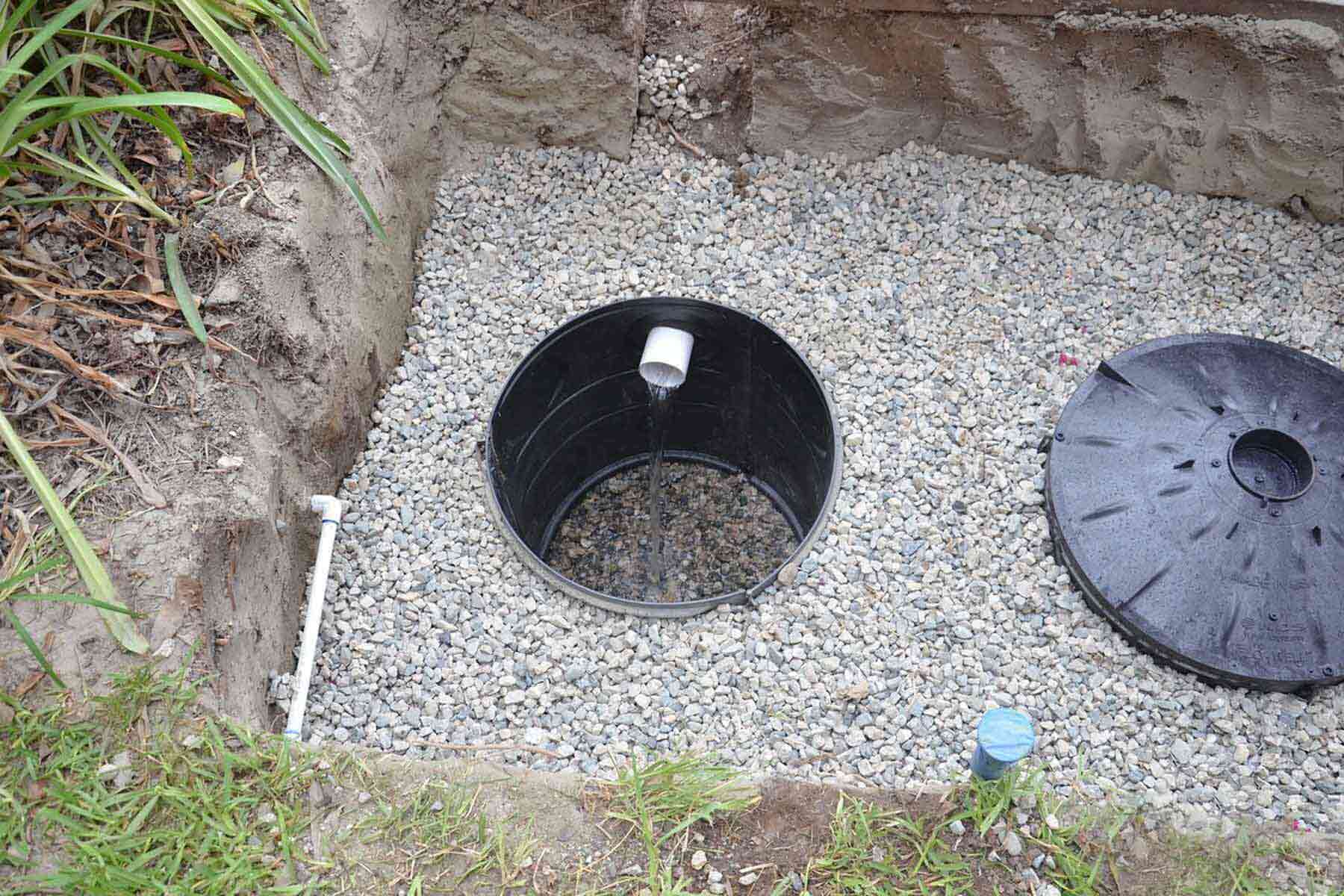
A dry well is an underground pit, typically filled with gravel, designed to collect and infiltrate surface water, such as stormwater or runoff, into the ground and eventually the local groundwater. Water enters the dry well from downspouts and seeps through the surrounding gravel or casing, dispersing into the surrounding soil.
They are an effective, low-cost drainage solution for preventing surface water accumulation and are often used to reduce the impact of stormwater on aquatic ecosystems.
Dry well price by type
Dry well prices range anywhere from $50 to $4,500+ for the materials alone, depending on the type. Gravel dry wells use minimal materials and are the most budget friendly. Plastic dry wells offer moderate durability at a mid-range price point. Concrete drywells cost the most but provide the highest capacity and durability.
| Dry well type | Average cost* |
|---|---|
| Gravel (seepage pit) | $50 – $250 |
| Plastic basin | $90 – $650 |
| Concrete basin | $300 – $4,500+ |
*Not including installation
Gravel dry wells use a hand-dug hole filled with gravel.
Plastic dry wells use prefabricated containers and often include pipe and drain installation.
Concrete dry wells require heavy machinery and higher labor costs.
Dry well cost factors
Several factors affect the cost to install a dry well:
Volume and water capacity
The volume of water your well must handle significantly influences cost. Dry wells are sized based on the amount of runoff they need to absorb, which depends on your lawn's size and local rainfall. For context, each square foot of lawn requires about 0.62 gallons of water absorption weekly. Larger capacity wells to handle excess water or future expansion will increase material and labor costs.
Soil absorption rate
Soil type affects how quickly water can drain into the ground, which impacts the number and size of dry wells needed. Clay-heavy or less permeable soils might require additional wells or larger units. Many professionals recommend percolation tests to determine soil absorption rates for accurate sizing. A perc test costs $200 to $3,000+, depending on the method.
Labor and permits
The labor cost to install a dry well varies by region and complexity, ranging from $5 to $13 per linear foot. Some municipalities require permits and inspections, which add to total costs. Labor typically includes excavation, installation, and connection to drainage pipes.
Inspection & testing
A well inspection costs $250 to $550 to make sure the technician installed everything properly. To confirm that your water is safe, well water testing costs $100 to $350.
Alternatives to dry wells
If your property is collecting too much standing water but you're not sure a dry well is the right choice for you, consider these alternatives:
French drain: A French drain costs $10 to $35 per linear foot or $500 to $8,800 total. A French drain is a trench filled with gravel that surrounds a perforated pipe to collect and redirect water from a soggy area or downspout.
Sump pump: A sump pump costs $600 to $2,500 and is a submersible pump that discharges water away from a low-lying area, often into a drainage pipe, making it an effective solution for waterlogged properties.
Rainwater harvesting: A rainwater system costs anywhere from $200 to $2,500 for a rain barrel or $2,000 to $12,000+ for a residential cistern. Collecting rainwater and storing it in tanks or rain barrels for later allows you to use it in gardening or other non-potable needs.
Dry well FAQs
How deep should a dry well be?
A dry well should ideally be 5 to 6 feet deep to prevent freezing and effectively drain stormwater, though the exact depth depends on factors like the volume of water, the property's soil type, and local climate.
How does a dry well work?
A dry well works by collecting stormwater and slowly releasing it into the surrounding soil through a system of perforated pipes and gravel-filled pits. Water from downspouts or other sources flows into the dry well, which is a buried chamber lined with geotextile fabric and backfilled with stones.
The stones provide a large surface area, and the perforated pipes allow water to seep through the casing and porous stone into the soil, preventing flooding and foundation damage.
Do I need a permit to install a dry well?
Permit requirements for dry wells vary by location, so check with your local municipality before you proceed with the installation.
How often should a dry well be maintained?
Dry wells should be cleaned annually, especially in the fall or winter, to prevent clogging from debris and maintain effectiveness.
Getting estimates for yard drainage contractors
Follow these steps when searching for drainage contractors near you:
Look for licensed contractors or drainage professionals with dry well installation experience.
Read customer reviews on HomeGuide and Google and ask for references on past projects.
Verify that the contractor offers soil testing and percolation assessments.
Confirm they handle permits, inspections, and site cleanup.
Request detailed, written estimates comparing materials and labor costs.
Questions to ask well drilling contractors
Before you proceed with the installation, ask contractors these questions:
What type of dry well do you recommend for my property, and why?
How do you determine the appropriate size and capacity?
Will you conduct soil absorption tests or site evaluations before installation?
What permits or inspections are required in my area?
Can you provide a written estimate with a clear breakdown of materials, labor, and additional fees?
How long will the installation take, and what is the expected lifespan of the dry well system?
What kind of maintenance will the system require, and can you provide ongoing services?
Using our proprietary cost database, in-depth research, and collaboration with industry experts, we deliver accurate, up-to-date pricing and insights you can trust, every time.