
How much does it cost to strip and wax floors?
How much does it cost to strip and wax floors?
$0.50 – $3.00 average cost per square foot

$0.50 – $3.00 average cost per square foot
Are you a pro?How much will your project cost?TABLE OF CONTENTSEdited by Kristen Cramer
Average cost to strip and wax floors
The cost to strip and wax floors ranges from $0.50 to $3.00 per square foot on average. The total cost depends on the floor size, type, condition, and layout, the specific services needed, and your location. Most pros have minimum service fees of $250 to $500 or more.
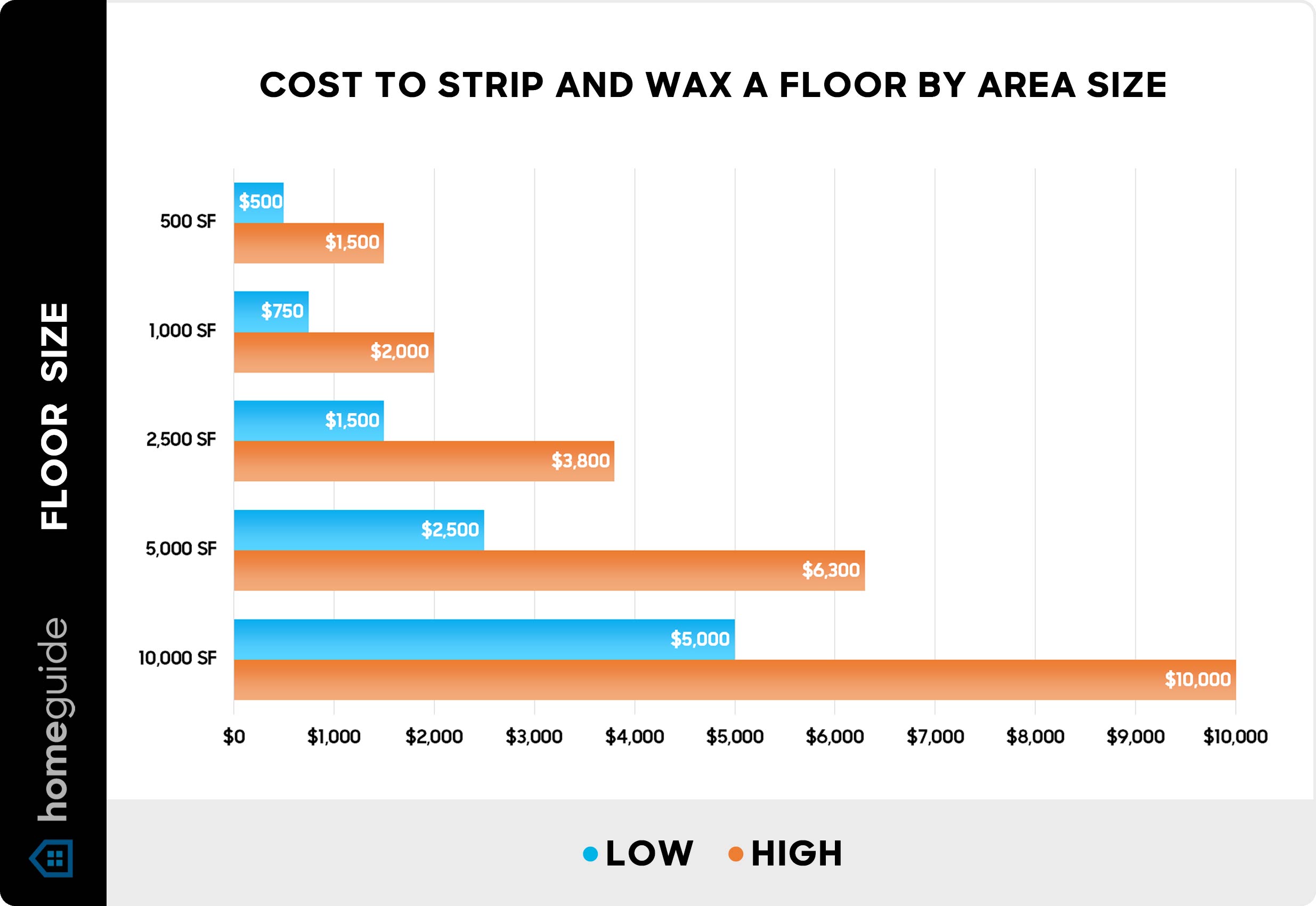
| Floor size (square feet) | Average cost* |
|---|---|
| 500 | $500 – $1,500 |
| 1,000 | $750 – $2,000 |
| 2,500 | $1,500 – $3,800 |
| 5,000 | $2,500 – $6,300 |
| 10,000 | $5,000 – $10,000 |
*These prices factor in economies of scale and minimum services fees.
Floor strip and wax pricing factors
Professional cleaning companies almost always price this service by the square foot. Several factors influence this rate, including the location, floor type, area size and layout, and more.
Floor type
The material of your floor is a major factor in the overall cost. Some surfaces require more delicate handling, specialized chemicals, or additional steps, which increases the price. VCT is the most common and generally the most affordable type of flooring to service.
The table below shows how different floor materials can impact the cost.
| Floor material | Average cost per square foot |
|---|---|
| Vinyl composition tile (VCT) | $0.50 – $1.50 |
| Sealed concrete | $0.75 – $3.50 |
| Sheet vinyl or linoleum | $0.75 – $2.00 |
| Terrazzo | $1.00 – $4.00 |
| Natural stone (marble, slate) | $1.50 – $5.00 |
Condition of the floor
A floor in poor condition will always cost more to restore. If the existing wax is extremely thick, has multiple layers from years of neglect, or is heavily scuffed and soiled, the stripping process will require more time, effort, and potent chemicals. Contractors often charge at the higher end of the range, around $1.25 to $3.00+ per square foot, for floors in bad shape.
Area size and layout
While the pricing is usually per square foot, the total size and layout of the space play a significant role. Large, open areas like gymnasiums or hallways are easier and faster to work on, often resulting in a lower per-square-foot rate. Smaller, partitioned spaces like offices or restrooms with lots of corners, edges, and built-in obstacles require more detailed manual labor, which can increase the rate.
Labor costs
Labor typically accounts for 70% to 80% of the total cost to strip and wax a floor. The job complexity, the experience of the crew, and your geographic location all influence this cost. The average labor rate for a floor cleaning technician ranges from $25 to $60 per hour. A standard project requires a team of at least two technicians to work efficiently.
Number of wax coats
A professional floor waxing service typically includes the application of 2 to 4 coats of floor finish or wax. This is usually sufficient for most commercial and residential settings. However, for very high traffic areas or to achieve a superior "wet look" shine, the floor might require additional coats. Each extra coat of wax can add $0.10 to $0.25 per square foot to the final bill.
Type of wax or finish
The quality and type of finish will also impact the price. The base price usually includes a standard commercial-grade acrylic finish. However, opting for a premium product, such as a high-solids wax for enhanced durability or a specialized finish like an electrostatic dissipative (ESD) coating for server rooms, can add $0.20 to $0.50+ per square foot.
Location
Where you live matters. The cost to strip and wax a floor is generally higher in major metropolitan areas and regions with a higher cost of living due to increased labor rates, transportation costs, and business overhead. Expect to pay more in cities like New York or San Francisco than you would in a smaller town.
Commercial vs. residential pricing
Commercial projects, which often cover thousands of square feet, typically have a lower cost per square foot due to economies of scale.
In contrast, residential jobs are much smaller and subject to minimum service fees of $250 to $500+. This results in a higher per-square-foot rate for a home kitchen or basement, as the price must cover the professional's travel, setup, and detailed manual labor in a smaller, more obstructed space.
Additional services & costs to consider
Beyond the basic per-square-foot rate, several other factors can affect the total cost:
Furniture and obstacle removal: If the cleaning crew needs to move heavy furniture, filing cabinets, retail displays, or other obstacles, you will incur an additional charge. This is often billed at an hourly rate of $30 to $75per hour, per worker. To avoid this cost, clear the space before the team arrives.
Detailed edge work: Corners, edges along baseboards, and tight spaces around permanent fixtures require manual hand-scrubbing and detailing. This labor adds to the total job time and increases the cost per square foot on projects with complex layouts or numerous small rooms.
Deep cleaning and repairs: Floor stripping and waxing can only be performed on a clean, intact surface. If your floor has deep-seated stains, grout that needs scrubbing, or damage like cracks and deep gouges, these issues must be addressed first. Pre-treatment for stains or minor repairs will add to the project's cost.
What is floor stripping and waxing?
Floor stripping and waxing is a professional maintenance process that restores and protects hard surface flooring. The stripping phase removes old wax layers, embedded dirt, and accumulated grime using specialized chemical solutions and equipment. This prepares the surface for fresh wax application.
The waxing phase involves applying multiple protective coating layers that shield floors from daily wear, scratches, and spills. This protective barrier enhances appearance while extending floor lifespan, making it essential maintenance for vinyl composition tile (VCT), linoleum, and other resilient flooring types.
The floor stripping and waxing process
A meticulous process is essential for achieving a durable, high-gloss finish. Most professional stripping and waxing services follow these general steps:
Preparation: The team begins by thoroughly sweeping and dust-mopping the floor to remove all loose debris. They will also tape off and protect baseboards and adjacent flooring.
Stripping solution application: A powerful chemical stripping agent is diluted and applied evenly across the floor. This solution is left to dwell for 10 to 15 minutes to break down and dissolve the old layers of wax.
Scrubbing: Using a low-speed rotary floor machine with an aggressive stripping pad, the crew scrubs the entire area. This agitation lifts the emulsified old wax and embedded dirt from the floor's surface.
Removal and rinsing: The resulting slurry of old finish and stripping solution is removed using a wet/dry vacuum. The floor is then thoroughly rinsed with clean water and a neutralizing agent to ensure all chemical residue is gone.
Sealing: Once the floor is completely dry, a coat of sealer may be applied. The sealer fills the pores of the flooring material, creating a smooth, uniform base for the wax and improving its adhesion.
Wax application: The team applies several thin, even coats of high-quality floor finish using a clean microfiber mop. Each coat must dry completely before the next is applied, a process that can take 30 to 60 minutes per coat.
Curing: After the final coat, the floor needs time to cure and harden, which can take several hours. Light foot traffic may be permitted after 8 hours, but heavy items and regular traffic should be avoided for at least 24 hours.
FAQs about stripping and waxing floors
How often should you strip and wax floors?
The frequency depends heavily on foot traffic. High-traffic commercial environments like retail stores or schools may require a full strip and wax every year. Low-traffic areas might only need the service every 2 to 3 years. Regular maintenance like buffing and burnishing can extend the time between full services.
What is the difference between buffing and stripping and waxing?
Buffing (or burnishing) is a maintenance procedure that uses a high-speed floor machine to polish the top layer of existing wax, removing scuffs and restoring its shine. Stripping and waxing is a restorative process that completely removes all old layers of wax and replaces them with a fresh finish.
Can I strip and wax a floor myself?
While DIY kits are available, stripping and waxing a floor is a labor-intensive and challenging task. It requires specialized equipment like a rotary floor machine and wet/dry vacuum, as well as knowledge of how to safely handle stripping chemicals. An improper job can damage your floors or leave a streaky, uneven finish, often costing more to fix. Hiring a pro is best.
How long does it take to strip and wax a floor?
The time it takes to strip and wax a floor depends on the area size as well as the crew size. A 1,000-square-foot open area can typically be stripped and waxed in 4 to 8 hours. This includes the application and drying time for multiple coats of wax. The time can increase significantly for cluttered spaces, floors in poor condition, or larger areas.
What types of floors can be stripped and waxed?
This service is primarily for resilient flooring types. The most common include Vinyl Composition Tile (VCT), luxury vinyl tile (LVT), sheet vinyl, linoleum, sealed concrete, and some types of stone like terrazzo and slate. You should never strip and wax wood floors, laminate, or unsealed porous materials like unsealed concrete.
Getting estimates for floor stripping and waxing
Following the below guidelines will help you select the best stripping and waxing service near you:
Request detailed written estimates from at least three local providers.
Check out reviews of floor care professional on HomeGuide and Google.
Request references from customers with similar facilities.
Confirm the pros use commercial-grade equipment and quality products.
Verify they are licensed and insured.
Ask about their experience with your specific floor type.
Inquire about service guarantees and follow-up maintenance programs.
Compare not just price but value including materials and service quality.
Questions to ask a floor care professional
Ask these questions before hiring a floor care company:
Are you licensed and fully insured?
What specific services are included in this quote?
What type of stripping chemicals and floor finish will you be using?
How many coats of sealer and wax do you plan to apply?
How long will the entire process take, including drying and curing time?
Do you have a minimum service charge for a job of my size?
Can you describe your process for protecting my baseboards and furniture?
What is your policy if I am not satisfied with the final result?
Using our proprietary cost database, in-depth research, and collaboration with industry experts, we deliver accurate, up-to-date pricing and insights you can trust, every time.