How much does oil-to-gas conversion cost?
How much does oil-to-gas conversion cost?
$6,000 – $20,000 average conversion cost

Oil-to-gas conversion cost
Oil-to-gas conversion costs range from $6,000 to $20,000 for most homes. The total cost to convert to gas from oil varies depends on the home size, location, equipment choice, installation complexity, whether you're converting to natural gas or propane, and if you need a gas line installation from the street.
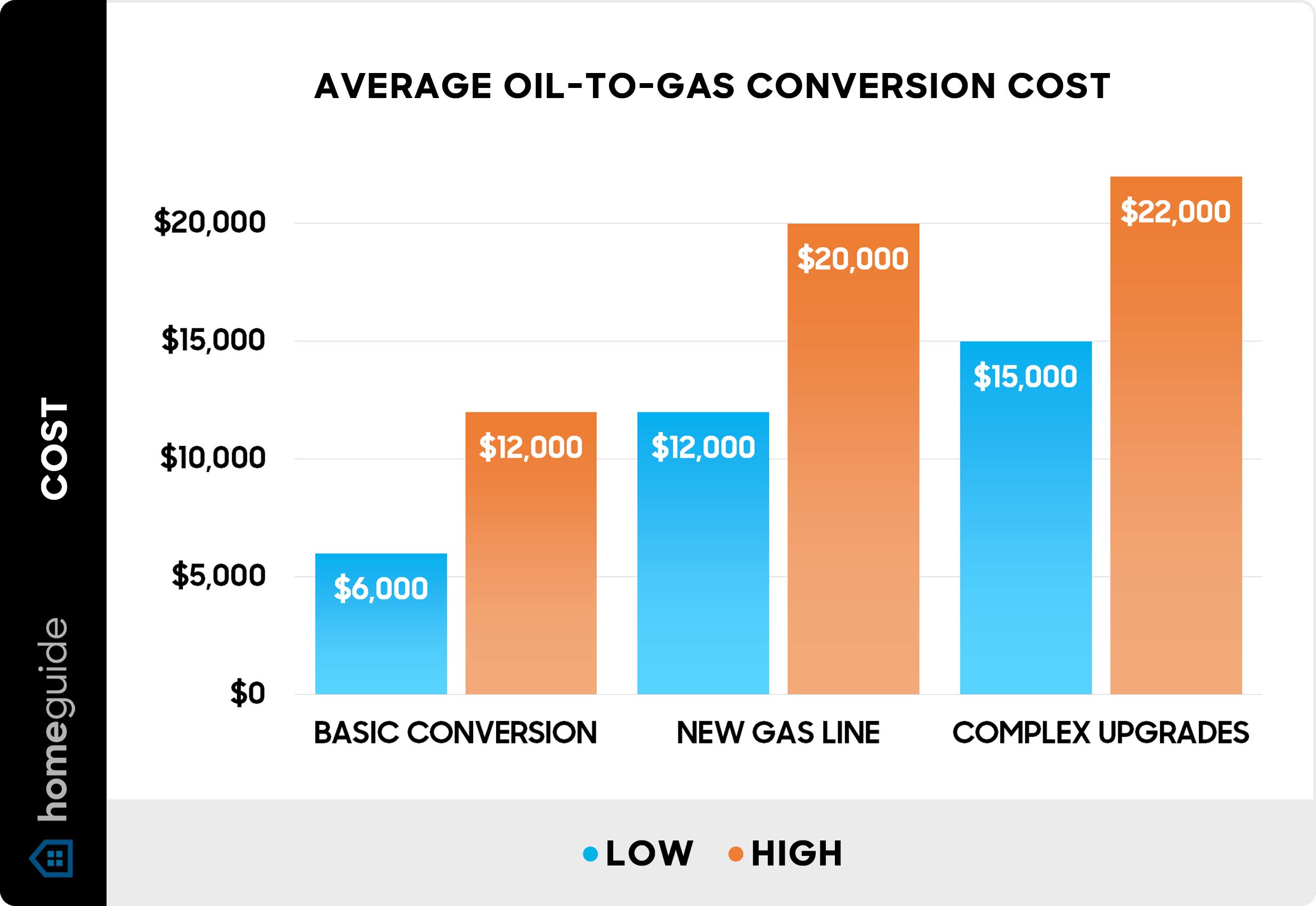
| Project type | Average cost |
|---|---|
| Basic conversion (existing gas line) | $6,000 – $12,000 |
| Conversion with new gas line | $12,000 – $20,000 |
| Large home or complex upgrades | $15,000 – $22,000+ |
Factors affecting the cost to convert from oil to gas
A complete oil-to-gas conversion involves multiple components beyond just swapping out your heating equipment. It often requires replacing or retrofitting heating equipment, installing new gas lines, removing and disposing of old equipment, and modifications to ventilation or chimneys if needed.
The table below shows a breakdown of potential costs when converting from oil to gas.
| Component | Average cost |
|---|---|
| New gas furnace or boiler installation | $3,500 – $12,000 |
| Propane tank installation | $300 – $5,000 |
| Gas line installation | $500 – $3,000+ |
| Chimney liner installation | $1,500 – $4,000+ |
| Removal of old oil equipment | $500 – $3,000+ |
| Permits and inspections | $50 – $300+ |
| Additional upgrades (ductwork; other appliances) | Varies |
Several factors influence the cost to convert to gas from oil:
Gas line availability: If a gas main line is not currently connected, the cost of running a new gas line from the street significantly raises costs.
Installation complexity: Older homes needing ductwork modifications, chimney relining, or vent upgrades incur higher labor charges.
Additional appliances: Converting other appliances (water heater, stove) to gas during the project also affects the overall price.
Location: Labor costs and permit fees vary by region. The Northeast sees the highest costs due to higher labor rates and stricter regulations.
Equipment
The largest single expense in your conversion will be the new heating equipment itself. Gas furnaces and boilers come in various efficiency levels, and higher-efficiency units cost more up front but save money over time through reduced fuel consumption.
For forced-air heating systems, you'll need a gas furnace. The table below shows the average cost of a new gas furnace based on efficiency.
| Efficiency rating (AFUE) | Average unit cost | Average installed cost* |
|---|---|---|
| Standard (80% – 89%) | $700 – $1,800 | $3,800 – $6,200 |
| Moderate (90% – 95%) | $1,500 – $3,700 | $5,200 – $8,800 |
| High (96%+) | $2,800 – $6,200 | $7,500 – $12,000 |
*Not including ductwork modifications or replacement
If your home uses radiators or baseboard heating, you'll need a gas boiler instead of a furnace. Gas boiler costs follow similar patterns to furnaces, with standard-efficiency models starting around $3,500 and high-efficiency condensing boilers reaching $7,000or more installed.
A high-efficiency system with AFUE ratings of 90% or above costs more initially but may qualify for local incentives and utility rebates that offset some of the expense. These units also deliver greater long-term savings by lowering your energy bills through reduced gas consumption.
Oil tank removal
Once you convert to gas, they should remove your oil tank to free up space and eliminate potential liability. Properly removing the oil tank costs $400 to $3,400, based on its location and condition. Above-ground tanks in basements or exterior locations cost $400 to $2,800 to remove.
Underground tanks cost more at $800 to $3,400 due to the excavation work involved. The removal process includes:
Pumping out remaining oil
Testing the surrounding soil for contamination
Cutting and removing the tank
Disposing of the tank properly
If soil testing reveals contamination from a leaking tank, remediation costs can add $2,500 to $15,000+ to your project.
Some homeowners choose tank abandonment, where contractors simply fill the tank with foam or concrete. This costs $600 to $3,400 and may be required when the tank sits under a structure. However, abandonment is prohibited in some areas and can complicate future property sales since many buyers and lenders prefer complete removal.
Gas line installation
If your home doesn't already have natural gas service, you'll need new gas lines installed both outside and inside your home. This represents one of the most variable costs in the conversion process, as the expense depends heavily on how far your home sits from the existing gas main.
Outside your home: The utility company handles extending the gas main from the street to your property and installing your gas meter. This service typically costs $1,000 to $2,000+, though some utility companies cover part or all of this expense when you convert to gas. The cost increases if your home sits far from the street or if obstacles like driveways or landscaping complicate the installation.
Inside your home: A licensed contractor will run gas piping from the meter to your new heating equipment. Interior gas line installation costs $15 to $50+ per linear foot, with an average total of $350 to $2,000 for a typical installation. The price rises if your heating equipment sits far from where the gas enters your home or if the installation requires running lines through finished spaces.
Homes without access to natural gas lines can use propane instead. Propane tank installation costs $300 to $5,000 for the tank and professional labor, depending on the size and if it is above or below ground. Above-ground tanks cost less to install since they don't require excavation.
Chimney liner installation
When you convert from oil to gas, you may need a new chimney liner to safely vent the gas appliance. Many high-efficiency gas systems vent through PVC pipes rather than the chimney, eliminating the need for a liner. However, local codes and designs may still require chimney venting or modifications.
If your new system requires chimney venting, a new chimney liner costs $1,500 to $4,000+ installed.
Professional labor
Labor accounts for 20% to 30% or more of your total conversion cost. Most HVAC contractors charge $50 to $200 per hour, with rates varying based on your location and the complexity of the installation.
Your contractor should also handle obtaining all necessary permits as part of their service. Oil-to-gas conversions normally require building permits for the heating equipment installation, gas line work, and often chimney modifications. Your municipality may also require separate permits for oil tank removal.
Steps to convert oil heat to natural gas
While every home is unique, converting from oil heat to natural gas involves the following general steps:
Hire a licensed HVAC contractor to assess your home and heating system requirements.
Check local gas availability and coordinate gas line installation if needed.
Choose a high-efficiency gas furnace or boiler compatible with your home size.
Schedule professional removal of the old oil tank and furnace.
Obtain necessary permits and arrange inspections during conversion.
Install new gas heating system and associated ductwork or venting modifications.
Test the system for safety and proper function before use.
FAQs about converting from oil to gas
Is it worth converting from oil to natural gas?
Converting from oil to gas is worth it for most homeowners who plan to stay in their homes for at least 5 to 7 years. Natural gas can cut annual heating costs by 60% or more compared to oil, so you'll recoup your investment over time.
Gas systems also require less maintenance than oil heating equipment and eliminate the need for oil deliveries.
How long does an oil-to-gas conversion take?
A complete oil-to-gas conversion takes 2 to 6+ weeks from initial consultation to final activation. The actual installation work requires only 1 to 3 days, but coordinating utility connections, obtaining permits, and scheduling inspections extends the overall timeline.
Can I convert my existing oil furnace to gas?
Most oil furnaces cannot be converted to burn gas. While conversion burners exist for some boilers, most HVAC professionals recommend complete equipment replacement rather than conversion. Modern gas equipment offers higher efficiency and reliability than converted units.
Do I need to remove my oil tank after converting to gas?
You're not legally required to remove your oil tank after converting to gas in most areas, but professionals strongly recommend it. Abandoned tanks can leak and contaminate soil, creating expensive cleanup obligations. Removing the tank eliminates this risk and may increase property value.
Does converting to gas increase home value?
Converting from oil to gas can increase home value, particularly in areas where gas heating is preferred. Many homebuyers view gas heating favorably due to its lower operating costs and convenience. The conversion eliminates concerns about underground oil tanks that can complicate property sales.
Getting estimates for oil-to-gas conversion
To ensure a successful oil-to-gas conversion, follow these tips for finding a trusted HVAC contractor near you:
Look for licensed professionals with experience specifically in oil-to-gas conversions.
Read reviews on HomeGuide and Google and ask for references from recent customers.
Request quotes from at least three different companies to compare pricing and services.
Ensure their quote includes all components of the conversion, not only the equipment.
Verify they'll handle all permit applications and coordinate with the utility company.
Questions to ask an HVAC contractor
Before hiring a contractor for your oil-to-gas conversion, ask these questions to ensure you're making an informed decision and working with a qualified professional:
Are you licensed and insured to perform oil-to-gas conversions in my area?
How many oil-to-gas conversions have you completed in the past year?
Will you handle all permit applications and inspections, or is that my responsibility?
Does your estimate include removing the old oil tank, or is that separate?
What brand and model of gas furnace or boiler do you recommend for my home?
How long will the installation take, and will I be without heat during the work?
Do you coordinate with the utility company for gas line connection?
What warranty do you offer on the installation work and equipment?
Can you provide references from recent conversion projects?
What rebates or incentives are available, and will you help me apply for them?
How will you protect my home's interior during gas line installation?
What happens if you discover unexpected issues during the installation?
Using our proprietary cost database, in-depth research, and collaboration with industry experts, we deliver accurate, up-to-date pricing and insights you can trust, every time.