
How much does it cost to build a chimney?
How much does it cost to build a chimney?
$3,000 – $4,500 prefab chimney installation cost

Cost to build a chimney
The cost to build a chimney can range widely based on chimney type, size, and materials. A prefab chimney installation costs $3,000 to $4,500. A custom-built masonry chimney costs $5,000 to $10,000 for a brick or stone structure both above and below the roofline. Decorative designs and premium materials can cost $15,000 or more.
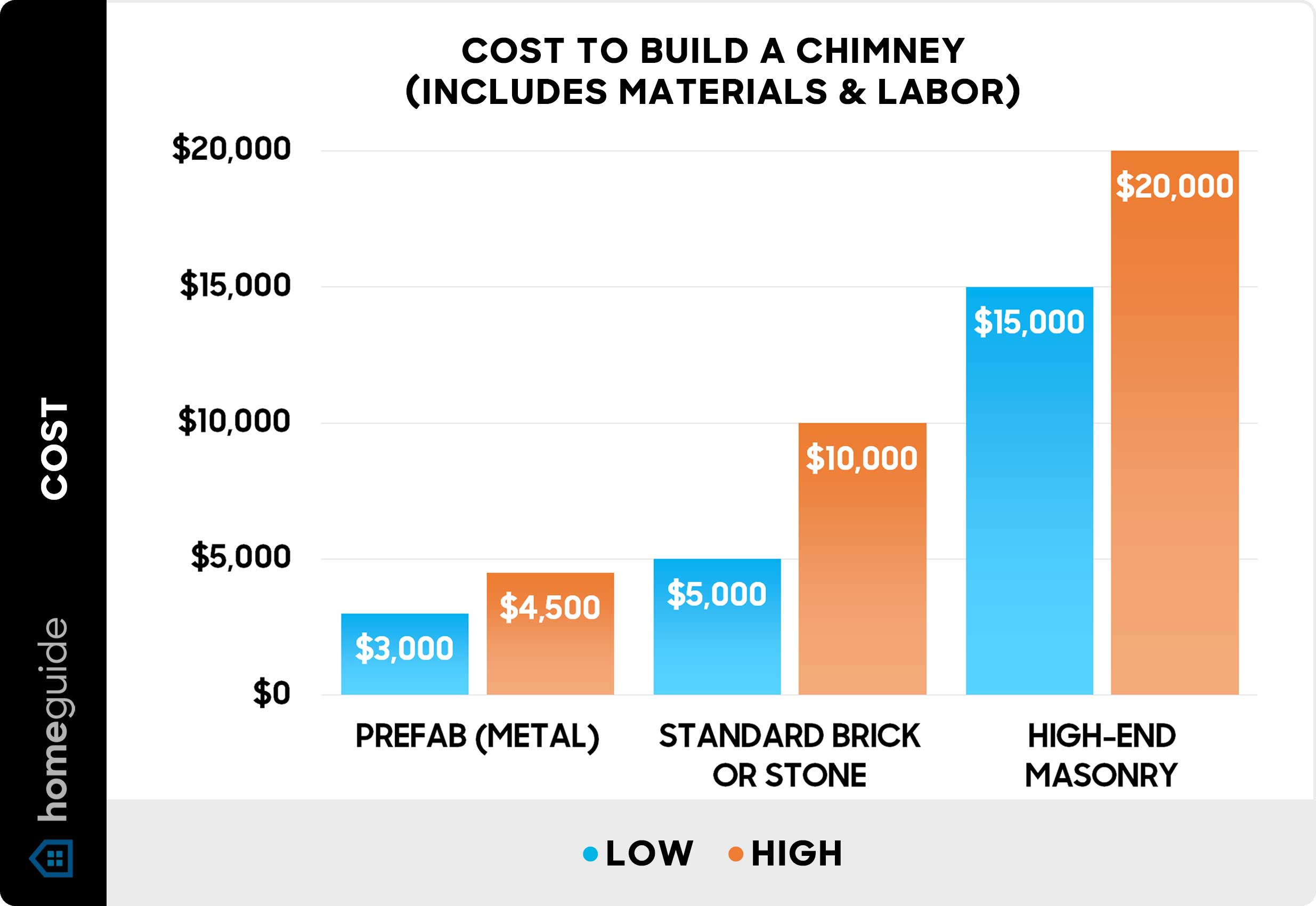
| Material | Average total installed cost* |
|---|---|
| Prefab (metal) | $3,000 – $4,500 |
| Standard brick or stone | $5,000 – $10,000 |
| High-end masonry | $15,000 – $20,000+ |
*Includes materials & labor for 30-foot chimney.
Prefabricated chimney cost
A prefab chimney uses stainless steel or other metal components to provide safe venting for fireplaces, wood stoves, or gas appliances. These chimneys cost $3,000 to $4,500 fully installed. They are lighter, faster to assemble, and less expensive than masonry designs.
Prefabricated chimneys fit well in modern construction, require less labor, and are popular for homes seeking reliable venting on a tighter budget.
Masonry chimney cost
A masonry chimney constructed from standard brick or stone costs $5,000 to $10,000. This traditional chimney material provides a durable venting system for wood-burning fireplaces or stoves. This style often lasts for several decades, adds significant curb appeal, and withstands high temperatures well.
High-end or decorative masonry chimneys with custom stonework, ornate crowns, or premium finishes can cost $15,000 to $20,000 or more due to added materials, design complexity, and specialized labor requirements.
Chimney installation cost by size
Chimney installation costs depend on the height and type of chimney selected. Prefabricated chimney installation runs $100 to $150 per foot, while custom masonry chimneys cost $150 to $300 per foot. The total project price increases with chimney height and chosen materials, especially for taller or two-story structures.
The following table shows estimated installed costs for various chimney heights:
| Chimney height | Metal chimney cost | Brick or stone chimney cost |
|---|---|---|
| 15 feet | $1,500 – $2,300 | $2,300 – $4,500 |
| 24 feet | $2,400 – $3,600 | $3,600 – $7,200 |
| 30 feet | $3,000 – $4,500 | $4,500 – $9,000 |
| 35 feet | $3,500 – $5,300 | $5,300 – $10,500 |
| 38 feet | $3,800 – $5,700 | $5,700 – $11,400 |
3-2-10 rule explained
Proper height and clearances are crucial for chimney safety. The "3-2-10 rule" requires every chimney to extend at least 3 feet above the point where it exits the roof and also at least 2 feet higher than any roof point within 10 feet horizontally.
This helps prevent smoke or gases from re-entering the home and ensures the chimney drafts safely and efficiently. Meeting this rule can increase the installation height and cost for some homes.
Chimney cost by number of flues
A flue is the inner passage inside a chimney that safely vents smoke, gases, or fumes from a fireplace, stove, or appliance to the outside. The number of flues in a chimney directly impacts the total cost since each flue requires additional materials, labor, and custom work for safe installation.
The following table shows costs for single-flue and multi-flue chimneys.
| Number of flues | Average installed cost* | Description |
|---|---|---|
| One | $3,000 – $9,000 | Standard for one fireplace or stove; vents a single appliance safely |
| Two | $6,000 – $12,000 | Separate flues for a fireplace and a second appliance, like a furnace or boiler |
| Three | $7,500 – $14,000 | Needed for multiple fireplaces or stoves to keep exhaust separated |
*Masonry and labor included.
Chimney construction cost factors
Several variables influence the total cost to build a chimney:
Chimney height and size: Taller chimneys require more materials and labor, raising the overall installation price.
Material selection: Masonry chimneys made from brick or natural stone cost more than prefab metal options due to higher material and skilled labor expenses.
Number of flues: Adding multiple flues for venting separate appliances increases construction complexity and leads to additional costs.
Roof access and pitch: Steep or difficult roof access adds to labor time and may require specialized equipment, which increases the total project cost.
Decorative and custom features: Adding crowns, caps, or intricate brickwork raises both material and labor expenses.
Code compliance and permits: Local building codes may require certain construction standards or inspections, which can add to the cost and timeline.
Foundation or repair needs: Existing structural issues, foundation changes, or required masonry repairs can further raise the cost of chimney construction.
Additional chimney services
Once a new chimney is in place, it's important to keep it in good working order for safety. Below are average costs for common chimney repair and maintenance jobs.
A chimney liner costs $1,500 to $4,000 to improve safety and ensure proper venting.
Most chimney repairs cost $200 to $850 to fix cracks, leaks, or brickwork.
Adding or replacing a chimney cap costs $200 to $860 to block rain, pests, and debris.
A full chimney rebuild costs $4,000 to $15,000, depending on the materials used.
A masonry fireplace installation costs $3,500 to $5,600 on average.
Chimney installation FAQs
Who builds chimneys?
Chimneys are built by certified masonry contractors, chimney specialists, or contractors experienced in fireplace and masonry work. These professionals ensure the structure meets safety codes and is properly engineered for efficient venting.
How are chimneys constructed?
Chimneys are constructed with brick, stone, or prefabricated metal, with layers assembled to form a vertical shaft for venting exhaust gases. Steps include building a solid foundation, stacking materials, adding flue liners, and flashing at the roofline for waterproofing.
Does every chimney need a liner?
Most modern building codes require chimneys to have a liner for fire safety, efficient venting, and to prevent masonry deterioration. A liner is especially important when using gas or wood-burning appliances.
Getting estimates from chimney builders
Hiring a reliable masonry contractor or chimney installer ensures quality construction and long-term safety. Follow these tips:
Check that the contractor holds proper certifications or licenses for chimney work.
Verify proof of liability insurance and workers' compensation coverage.
Ask about the contractor's experience with masonry or prefab chimneys.
Check online reviews on HomeGuide and Google to assess reputation and quality of work.
Request several written estimates, itemizing labor, materials, and any additional fees.
Make sure the warranty terms clearly explain materials and labor coverage.
Use a payment schedule that ties payments to project milestones instead paying up front.
Ensure the contract lists start and end dates, cleanup procedures, and all agreed details.
Questions to ask a chimney service
When interviewing a chimney service, ask the right questions helps ensure you hire a qualified and trustworthy professional:
How many years of experience do you have with new chimney installation?
Are you licensed and insured, and can you provide documentation?
Do you perform additional chimney services, like inspections, cleaning, or repairs?
Can you give me a detailed written estimate, and what does it include?
Do you offer written warranties or guarantees on your work?
Can you provide recent references from local customers?
How do you handle unforeseen issues or additional repairs found during the job?
What is your schedule for completing the project, and will you provide definite start and end dates?
Using our proprietary cost database, in-depth research, and collaboration with industry experts, we deliver accurate, up-to-date pricing and insights you can trust, every time.