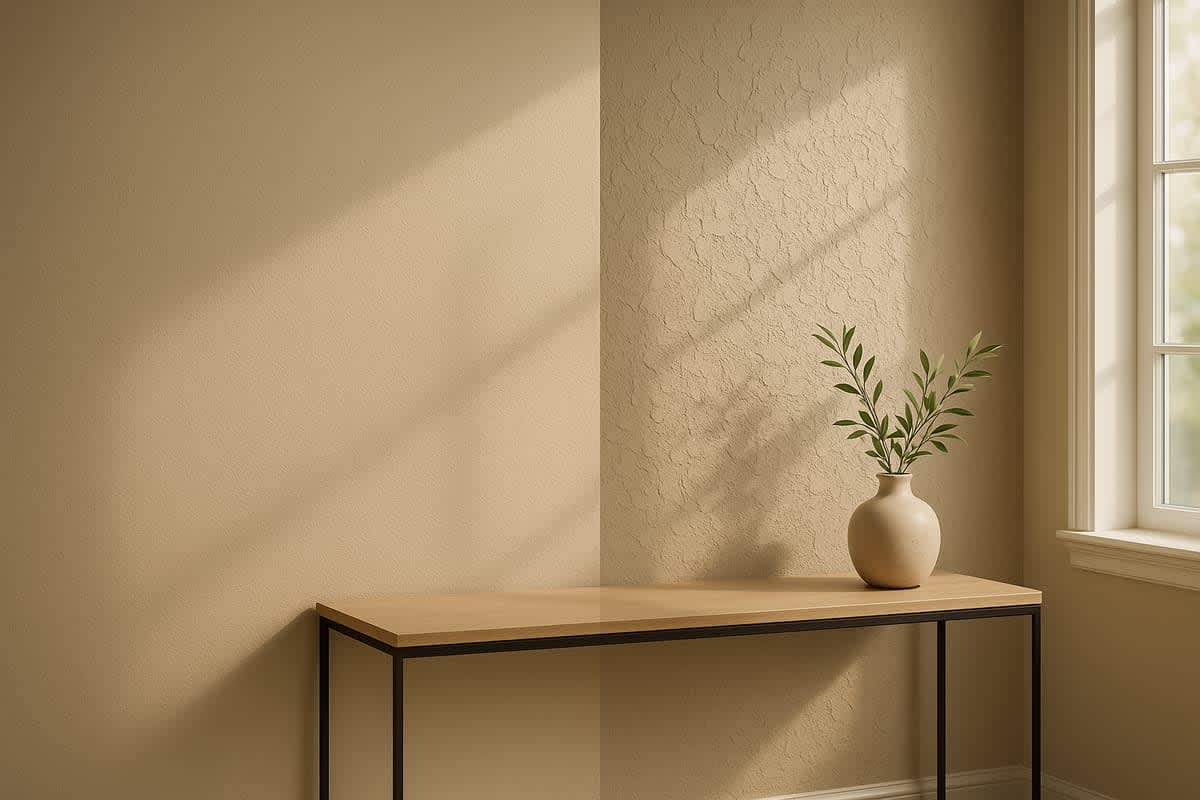
Orange Peel vs. Knockdown Texture: Which Is Better for Your Walls?
Orange Peel vs. Knockdown Texture: Which Is Better for Your Walls?
$1.25 – $1.95 per square foot (orange peel)
$2.00+ per square foot (knockdown)
$600 – $940 per 12x12 room (orange peel)

Key differences between orange peel and knockdown texture
Orange peel and knockdown are both spray-on drywall textures, but they deliver very different results. Orange peel produces a fine, bumpy surface that resembles the skin of an orange, while knockdown creates larger, flattened splatter patterns with more visual depth. Knockdown costs slightly more because it requires an extra application step, and it's harder to repair. Orange peel is quicker to apply, easier to patch, and better suited for modern interiors.
| Feature | Orange peel | Knockdown |
|---|---|---|
| Texture pattern | Fine, small bumps | Large, flattened splatters |
| Visual impact | Subtle and uniform | Bold and dimensional |
| Application method | Spray only | Spray then flatten with knife |
| Cost per square foot | $1.25 – $1.95 | $2.00+ |
| Repairability | Easier to patch and blend | Harder to match surrounding pattern |
| DIY difficulty | Beginner-friendly | Often needs professional help |
| Best style match | Modern, transitional, minimal | Rustic, Mediterranean, traditional |
| Hiding imperfections | Medium | High |
Both textures are popular across the United States, especially in new construction and remodeling projects. Choosing between them comes down to your design preferences, budget, wall condition, and willingness to handle maintenance down the road.
Appearance and visual style
The most noticeable difference between these two textures is how they look on your walls. Orange peel is subtle and almost invisible from a distance, while knockdown commands attention with its layered, organic pattern.
| Aspect | Orange peel | Knockdown |
|---|---|---|
| Surface feel | Lightly bumpy, uniform | Varied peaks and flat areas |
| Visual from a distance | Appears nearly smooth | Textured pattern is clearly visible |
| Light diffusion | Moderate | High; softens harsh side-lighting |
| Design character | Clean and understated | Decorative and artisan-like |
Orange peel look
Orange peel texture consists of fine, evenly distributed bumps across the wall surface. The effect is consistent and predictable, adding just enough dimension to break up a flat wall without drawing the eye away from furniture, artwork, or other design elements in the room.
This texture works beautifully with most paint finishes, from matte to semi-gloss. It reads as clean and modern, which is why builders frequently use it in new construction and rental properties.
Knockdown look
Knockdown texture features larger, irregularly shaped patches that have been sprayed on and then flattened. The result is a mottled, stucco-like surface with more depth and shadow play. It creates a stronger design statement and can make a room feel more finished or upscale.
Because knockdown has so much visual variation, it tends to diffuse light more effectively. This makes it a solid choice for ceilings or walls that receive strong side-lighting, where a smooth or lightly textured surface would reveal every flaw.
Cost comparison
Orange peel is the more affordable option. It costs $1.25 to $1.95 per square foot for professional installation, while knockdown typically runs over $2.00 per square foot. The price difference comes from the extra labor step knockdown requires. For reference, the overall cost to texture drywall varies based on texture type, room size, and local labor rates.
| Texture type | Cost per square foot | Estimated cost for a 12x12 room (4 walls) |
|---|---|---|
| Orange peel | $1.25 – $1.95 | $600 – $940 |
| Knockdown | $2.00+ | $960+ |
For a standard 12-by-12-foot room with roughly 480 square feet of wall space (minus windows and doors), orange peel saves you anywhere from $60 to $350 compared to knockdown. On a whole-house project, that gap widens significantly.
If you're on a tight budget or texturing a large area, orange peel delivers solid results at a lower price. However, the cost difference between the two finishes is relatively small compared to the overall expense of a full remodel, so style preferences should carry more weight than savings alone.
Application process and DIY difficulty
Both textures start the same way: drywall joint compound (mud) is loaded into a hopper gun and sprayed onto the wall. After that, the processes diverge.
| Step | Orange peel | Knockdown |
|---|---|---|
| Spraying | Spray and leave to dry | Spray and wait a few minutes |
| Flattening | Not required | Flatten peaks with a knockdown knife |
| Timing sensitivity | Low | High; must flatten at the right moment |
| Tools needed | Hopper gun or texture roller | Hopper gun + knockdown knife/trowel |
| DIY friendliness | Good for beginners | Better suited for experienced DIYers |
Applying orange peel
Orange peel is a one-step process. You load your hopper gun with thinned joint compound, adjust the air pressure and nozzle for the desired spatter size, then spray the wall in even passes. Once the mud hits the surface, you simply let it dry. The result is a consistent, pebbled finish.
This simplicity makes orange peel one of the most DIY-friendly drywall textures. Homeowners can achieve decent results with a rented hopper gun or even a pre-mixed texture roller kit for small areas.
Applying knockdown
Knockdown adds a critical second step. After spraying the joint compound, you must wait until the mud has partially set (typically five to ten minutes, depending on humidity and temperature). Then you drag a wide knockdown knife across the surface to flatten the peaks.
Timing is everything. Flatten too early and the mud smears into a mess. Wait too long and it's too dry to knock down smoothly. This timing sensitivity, combined with the need for consistent knife pressure and angle, is why many homeowners choose to hire a professional for knockdown texture.
Durability and maintenance
Both textures are durable enough for everyday residential use. They resist minor scuffs and scratches, and both hold up well under standard paint finishes. The differences show up in cleaning and long-term upkeep.
| Maintenance factor | Orange peel | Knockdown |
|---|---|---|
| Dust accumulation | Minimal | Slightly more due to deeper grooves |
| Ease of cleaning | Easy; wipe with damp cloth | Moderate; grooves may need vacuuming |
| Scuff/scratch resistance | Good | Good |
| Humidity performance | Better in humid climates | Adequate but collects more moisture in grooves |
Orange peel's finer texture means fewer places for dust, cobwebs, and allergens to collect. A quick wipe with a damp cloth is usually enough to keep it clean. This makes it particularly practical for kitchens, hallways, and homes in humid climates.
Knockdown's deeper valleys and raised edges can trap dust over time, especially on ceilings. Regular dusting or light vacuuming with a brush attachment keeps knockdown walls looking their best.
Hiding wall imperfections
Knockdown is the clear winner here. Its heavier, more irregular pattern conceals larger dents, uneven seams, and patching inconsistencies far better than orange peel. If your walls have significant wear or if you're covering up previous repair work, knockdown provides more forgiving coverage.
| Imperfection type | Orange peel | Knockdown |
|---|---|---|
| Small dents and nail pops | Hides well | Hides well |
| Tape seams and joints | Moderate coverage | Good coverage |
| Large patches and repairs | May show edges | Blends effectively |
| Uneven surfaces | Limited masking | Strong masking |
Orange peel handles minor blemishes like small dents, light unevenness, and nail holes without issue. It's ideal for newer drywall that has been properly finished to at least a Level 3 standard.
For older homes with rougher walls, knockdown's bold pattern diffuses light and draws the eye away from underlying flaws. It's also a popular choice in remodeling projects where new drywall meets old, because the irregular texture makes transitions less obvious.
Which texture fits your home's style?
Your home's architectural style and interior design should guide your texture choice. Neither option is universally "better," as each complements different aesthetics.
| Home style | Recommended texture |
|---|---|
| Modern/contemporary | Orange peel |
| Transitional | Orange peel |
| Minimalist | Orange peel or smooth |
| Rustic/farmhouse | Knockdown |
| Mediterranean | Knockdown |
| Traditional | Knockdown |
| Open-plan remodel | Knockdown |
| New construction | Orange peel |
| Rental property | Orange peel |
Current design trends lean toward cleaner, more minimal finishes, which gives orange peel a slight edge in popularity for new builds and contemporary remodels. That said, knockdown remains a strong choice in markets where textured, character-rich walls are expected, particularly in the southern and southwestern United States.
Both textures are widely recognized by homebuyers, and neither will hurt your resale value. In some regions, knockdown reads as slightly more premium, while orange peel is considered the standard. Check what's common in your local market before making a decision.
When to choose each texture
The right texture depends on your specific project, your walls' condition, and how much maintenance you're willing to handle. Here's a quick decision guide.
Choose orange peel if you want:
- A smooth, modern, understated wall finish
- Easier and cheaper application
- Simple future repairs that blend quickly
- Lower maintenance with minimal dust collection
- A fast project timeline for new construction or rentals
- Consistency across multiple rooms without specialized skill
Choose knockdown if you want:
- A bolder, more decorative wall texture
- Better coverage for older or imperfect walls
- Enhanced light diffusion on ceilings or side-lit surfaces
- A slightly more upscale or artisanal appearance
- A cohesive look in remodels where you're blending old and new drywall
- A rustic, Mediterranean, or traditional design aesthetic
When to hire a professional
You can DIY either texture with the right tools, but knockdown benefits significantly from professional installation. The timing-critical flattening step and the difficulty of matching existing patterns make it easy to end up with uneven or mismatched results.
| Scenario | Recommended approach |
|---|---|
| Small orange peel touch-up | DIY with spray can or roller |
| Full room, orange peel | DIY possible with hopper gun |
| Small knockdown patch | DIY with practice; pro if matching matters |
| Full room, knockdown | Hire a professional |
| Matching existing texture | Hire a professional |
| Multiple rooms or high walls | Hire a professional |
Consider hiring a drywall professional or interior painter if you're texturing multiple rooms, working on high walls or ceilings, need to match existing knockdown patterns, or simply want a consistent, polished result. Poor texture matching can make repairs and transitions painfully obvious, especially with knockdown's irregular pattern.
If you're attempting knockdown texture for the first time, practice on a scrap piece of drywall or cardboard before working on your actual walls. Experiment with the wait time before flattening to find the sweet spot for your specific compound and room conditions.
Frequently asked questions
Is knockdown or orange peel better?
Neither is objectively better. Orange peel is ideal for modern interiors, easier repairs, and lower cost. Knockdown is the stronger choice when you want more visual texture, better flaw coverage, or a rustic and traditional design.
Can you apply knockdown over orange peel texture?
Yes, you can apply knockdown texture over an existing orange peel finish. The wall should be clean, primed, and in good condition before applying the new texture. Keep in mind that adding knockdown over orange peel will increase the overall wall thickness slightly and change the room's visual character.
Which texture is better for ceilings?
Knockdown is generally preferred for ceilings because it diffuses light more effectively and hides seams, patches, and minor imperfections that side-lighting can reveal. Orange peel works on ceilings too, but it provides less visual masking under overhead or angled light.
Which texture is easier to repair?
Orange peel is significantly easier to repair. You can feather the edges and spray over a patched area to blend it with the surrounding texture. Knockdown repairs require carefully recreating the irregular pattern, which demands skill and experience to get right. If you need to fix larger areas, understanding drywall repair costs can help you decide whether to DIY or hire a pro.
How much more does knockdown cost than orange peel?
Knockdown typically costs $0.05 to $0.75 more per square foot than orange peel. For a standard room, that translates to roughly $25 to $350 in additional cost, depending on room size and local labor rates.
| Texture type | Cost per sq ft | Cost difference per sq ft |
|---|---|---|
| Orange peel | $1.25 – $1.95 | Baseline |
| Knockdown | $2.00+ | $0.05 – $0.75 more |
Does wall texture affect home resale value?
Wall texture has a minor impact on resale value. Both orange peel and knockdown are widely accepted finishes across the United States. The key is consistency. Mismatched textures from room to room can look unfinished and may raise concerns with buyers. Matching the dominant texture throughout your home presents a more cohesive, well-maintained appearance.
Which texture performs better in humid climates?
Orange peel is slightly better in humid environments because its smoother surface collects less moisture and is easier to wipe down. Knockdown's deeper grooves can trap humidity and dust, requiring more frequent cleaning in areas like bathrooms, kitchens, and coastal homes.