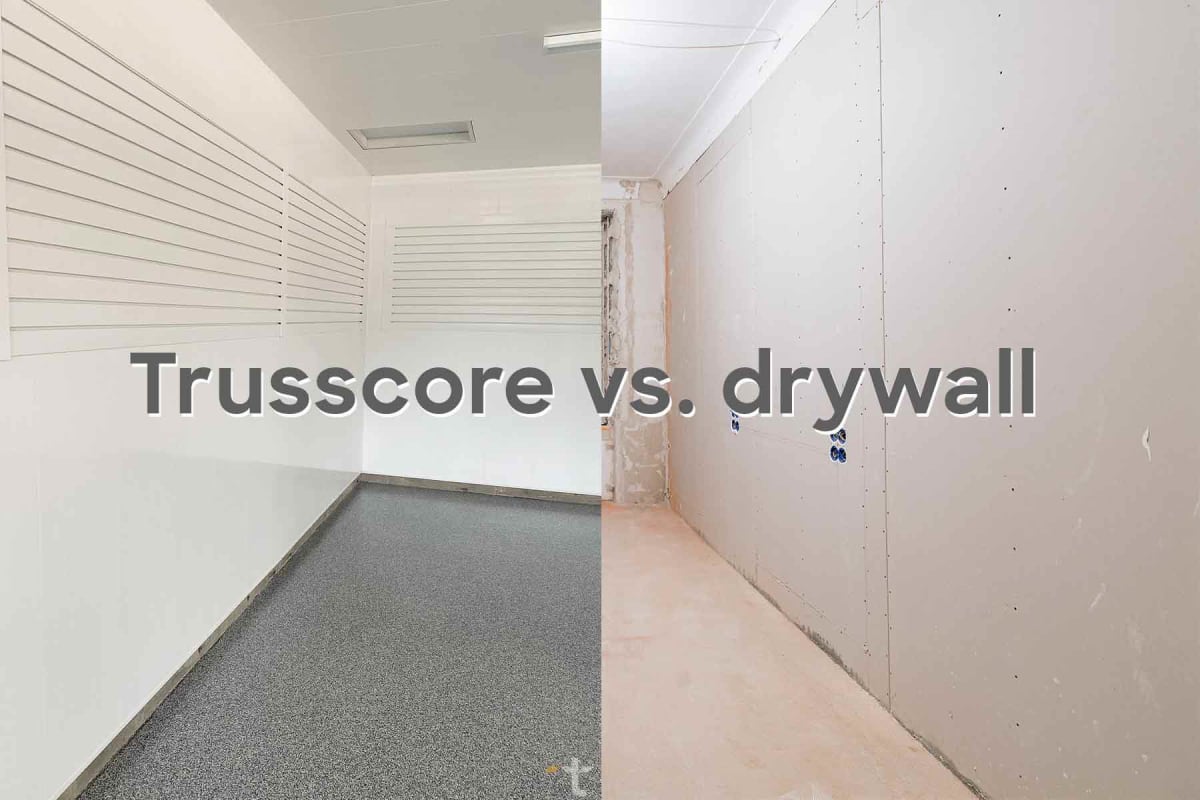
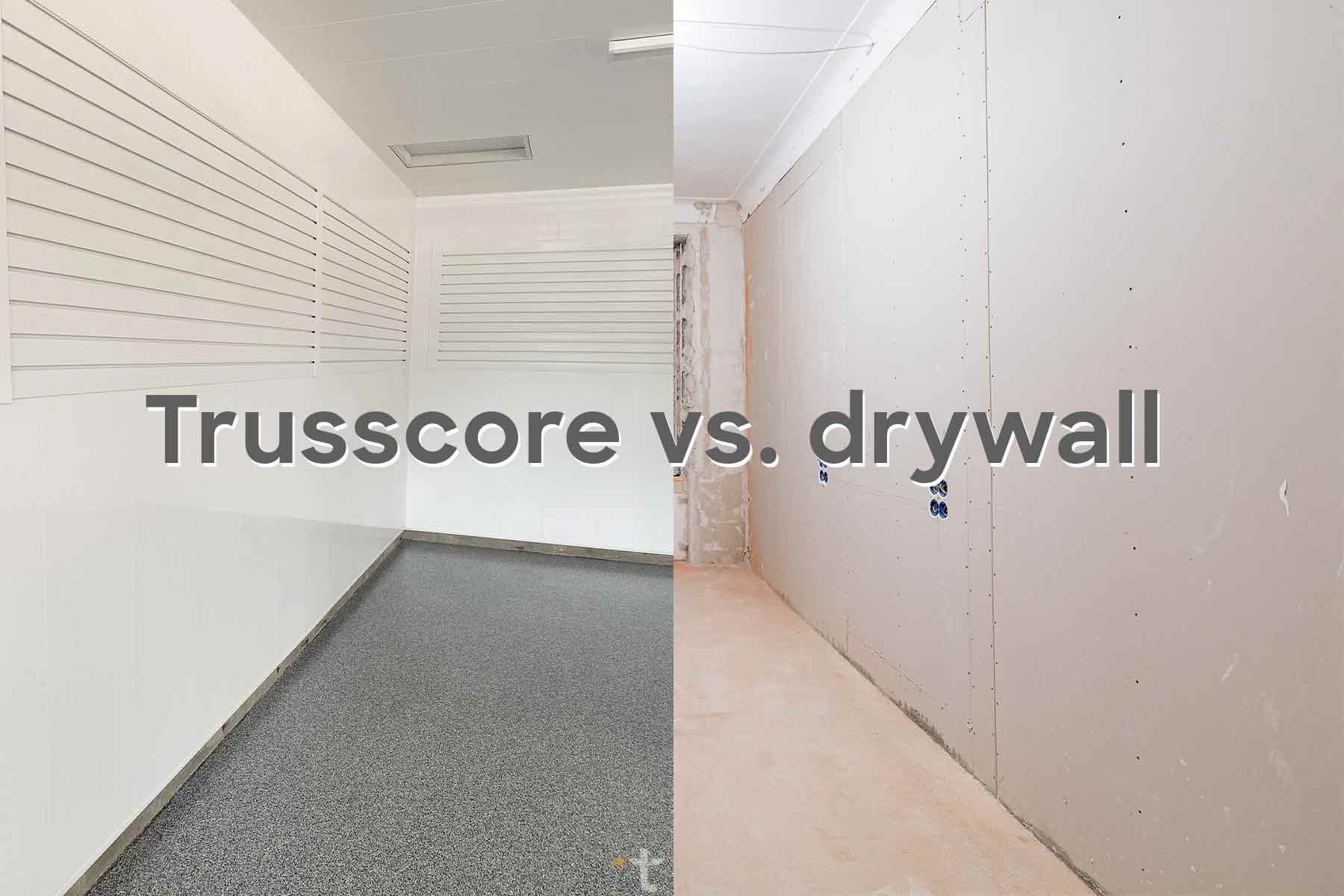
Trusscore vs. drywall cost: Complete pricing guide
Trusscore vs. drywall cost: Complete pricing guide
$2.00 – $3.50 drywall cost per square foot installed
$5.00 – $6.70 Trusscore cost per square foot installed

$2.00 – $3.50 drywall cost per square foot installed
$5.00 – $6.70 Trusscore cost per square foot installed
Are you a pro?How much will your project cost?TABLE OF CONTENTSEdited by Kristen Cramer
Trusscore vs. drywall cost
Drywall costs $2.00 to $3.50 per square foot for the materials and installation. In comparison, Trusscore costs $5.00 to $6.70 per square foot installed on average. Trusscore is a premium, more expensive option but offers savings on labor and maintenance, while drywall is cheaper initially but can have higher labor and upkeep costs in the long run.
| Factor | Trusscore | Drywall |
|---|---|---|
| Average cost per square foot* | $5.00 – $6.70 | $2.00 – $3.50 |
| Average total cost (12' x 12' room) |
$760 – $960 | $300 – $500 |
| Installation time (12' x 12' room) |
Half day | 2 – 3 days |
| Finish work required | None | Taping; mudding; painting |
| Maintenance costs | Minimal | Repairs; repainting |
| Best applications | Moisture-prone areas; garages | Living spaces; bedrooms |
*Including materials and installation
Understanding Trusscore and drywall materials
Before diving into the cost details, it helps to understand what you're actually buying.
Drywall, also known as gypsum board or sheetrock, has been the standard for interior walls and ceilings for over a century. It consists of gypsum plaster sandwiched between paper layers and requires multiple finishing steps—applying joint compound (mud), tape, and sanding—to achieve a smooth, paintable surface.
Trusscore Wall&CeilingBoard is a newer, high-performance alternative made from durable PVC with a unique internal truss design. These pre-finished panels come ready to install and don't require taping, mudding, or painting.
Trusscore panels are designed specifically for spaces where moisture, durability, and easy cleaning matter most. They also have a hollow-core design, making them lightweight yet incredibly strong.
Factors that affect the cost of Trusscore vs. drywall
No matter which material you choose, several variables can significantly impact your final project cost:
Materials
The upfront material costs for Trusscore and drywall differ dramatically:
Trusscore Wall&CeilingBoard panels cost $3 to $4 per square foot on average. These pre-finished panels come in lengths from 8 to 20 feet and are ready to install without any additional finishing materials. However, you'll typically need J-trims, corner trims, and base trims to complete the job, which adds another $0.50 to $1.00 per square foot.
If you choose Trusscore Slatwall, an on-the-wall organizational panel that can be accessorized with snap-in baskets, hooks, and shelves, the materials cost increases to $6 to $7 per square foot.
Drywall costs $0.50 to $0.80 per square foot, with specialty boards for mold and moisture resistance falling at the high end of that range. However, you'll also need joint compound, drywall tape, screws, corner beads, primer, and paint, which typically add $0.30 to $0.50 per square foot to your project cost.
Project size
The table below shows a comparison of drywall and Trusscore material costs by project size. Larger projects may benefit from lower per-square-foot costs due to economies of scale.
| Project size (square feet) |
Trusscore cost (materials only) |
Drywall cost (materials only) |
|---|---|---|
| 100 | $350 – $500 | $80 – $130 |
| 250 | $900 – $1,300 | $200 – $325 |
| 500 | $1,800 – $2,500 | $400 – $650 |
| 800 | $2,800 – $4,000 | $650 – $1,000 |
| 1,000 | $3,500 – $5,000 | $800 – $1,300 |
| 1,200 | $4,200 – $6,000 | $1,000 – $1,600 |
| 1,500 | $5,300 – $7,500 | $1,200 – $2,000 |
| 1,800 | $6,300 – $9,000 | $1,400 – $2,300 |
| 2,000 | $7,000 – $10,000 | $1,600 – $2,600 |
Complexity
A simple, square room with no windows is the cheapest scenario for both materials. As you add corners, outlets, light switches, windows, and utility cutouts, the labor time increases. This is especially true for drywall, where every corner and joint needs to be perfectly taped and mudded.
Installation
Trusscore installs up to 4 times faster than drywall because the panels simply screw into studs with an interlocking design. Hiring a handyperson or certified installer costs $50 to $150 per hour, and you can complete a room's worth of installation in a single afternoon.
Drywall installation is much more labor intensive and involves hanging sheets, taping joints, applying multiple coats of mud, sanding, and then priming and painting. Professional installers charge $50 to $100 per hour on average. The complete process takes 2 to 3 days for a 12-by-12-foot room.
Room purpose
For a standard living room or bedroom, drywall is the undisputed winner on cost. But for a garage, basement, or bathroom, you need to use more expensive materials. You'd need moisture-resistant drywall (green board) or even cement board, which costs more and is harder to work with. Trusscore's price remains the same, as it's already 100% waterproof.
Location and labor rates
Where you live significantly impacts labor costs. Drywall installation in major metropolitan areas like San Francisco or New York City can cost 30% to 40% more than the same work in rural areas. Regional differences in material availability also affect pricing for both Trusscore and drywall.
Finish level requirements
For drywall, the finish level you choose dramatically affects the cost. Drywall finishing costs range from $1.00 to $6.50 per square foot. A basic Level 1 finish (suitable only for utility areas) costs much less than a Level 5 ultra-smooth finish required for high-end homes with critical lighting.
Trusscore doesn't have finish levels because the panels come pre-finished from the factory. This simplifies budgeting and eliminates one major variable from your cost calculations.
Existing conditions
If you need to remove old drywall before installing new material, budget an additional $0.50 to $2.50 per square foot for removal and disposal. Dealing with mold, asbestos, or lead paint in older homes can add $1,000 to $3,000 or more to your project costs before you even start installing new wall material.
Beyond the price tag: Long-term value and maintenance
Upfront cost is one thing; lifetime cost is another. This is where Trusscore often provides significant long-term value, especially in demanding environments.
Water and mold resistance
Trusscore: This is Trusscore's biggest advantage. It is 100% waterproof. The panels shed water, and the interlocking system prevents water from getting behind them. It will never grow mold or mildew. If your basement floods, you can hose the walls down, dry them, and they are good as new.
Drywall: Drywall acts like a sponge. Even moisture-resistant green board will fail if it gets saturated. A burst pipe or a minor flood means tearing out and replacing all affected drywall. Damp drywall is a perfect breeding ground for toxic black mold, which is a serious health hazard and expensive to remediate.
Maintenance and cleaning
Trusscore: Trusscore requires virtually no maintenance. The panels resist scratches, dents, and moisture damage. They clean easily with soap and water and never need repainting. According to the manufacturer, Trusscore offers 55% lower total cost of ownership compared to drywall when you factor in materials, labor, and maintenance over the product's lifetime.
Drywall: To keep it looking fresh, drywall needs to be repainted every 5 to 10 years. In a garage, painted drywall gets dirty fast and is difficult to clean without leaving marks on the paint. Drywall in moisture-prone areas often requires repairs over time. Drywall repair costs average $300 to $800+ per repair, depending on the size and extent of the damage. Common issues include water damage, mold growth, holes, cracks, and dents from normal use.
Durability and lifespan
Trusscore: Trusscore comes with a lifetime warranty and is designed to outlive the buildings where it's installed, with a service life of 100 years. The panels are impact-resistant and designed to withstand dings and dents in a busy garage or workshop. Because the color is solid, a scratch is far less noticeable. The material will not chip, flake, or peel.
Drywall: Well-maintained drywall lasts 40 to 60 years in ideal conditions. However, drywall is notoriously soft. A doorknob, a piece of furniture, or a misplaced tool can easily leave a dent, hole, or scuff. These repairs, while small, add up in cost and time.
Drywall vs. Trusscore: What should you choose?
While Trusscore seems to shine over drywall in several areas, there are still many situations where drywall is the appropriate choice.
When to choose drywall
Drywall remains the standard for a reason. It is the best choice for:
Finished living spaces: For bedrooms, living rooms, and dining rooms, drywall provides a traditional, warm finish.
Lowest upfront budget: If the primary goal is to finish a space for the least amount of money, drywall is the cheaper option.
Painting & customization: Drywall can be painted any color, wallpapered, or textured. Trusscore comes in a limited range of colors (mostly white and gray).
Ceilings: While you can use Trusscore on ceilings, drywall is generally preferred for a traditional, flat-finish ceiling in living spaces.
When to choose Trusscore
Despite its higher upfront cost, Trusscore is the clear winner in specific situations:
High-moisture areas: It's ideal for basements, bathrooms, laundry rooms, indoor pools, grow rooms, and car washes.
Utility and high-traffic spaces: Trusscore is perfect for garages, workshops, mudrooms, and commercial kitchens where walls need to be durable and easy to clean.
Agricultural and commercial use: Barns, stables, food processing plants, and laboratories benefit from its hygienic, waterproof properties.
Fast installations: When you need a room finished in a day or two, not a week, Trusscore is the answer.
Drywall vs. Trusscore FAQs
Is Trusscore cheaper than drywall?
Trusscore costs more for materials but may result in lower overall project costs due to faster installation and no finishing requirements. When you include the labor for hanging, taping, mudding, sanding, and painting drywall, the total installation costs become comparable. Trusscore also eliminates ongoing maintenance and repainting costs over time.
Can you install Trusscore over existing drywall?
Yes, Trusscore can be installed directly over existing drywall as long as the wall is structurally sound. This approach saves money on demolition and disposal costs. Simply screw the Trusscore panels through the existing drywall into the studs behind it. This makes Trusscore an excellent option for covering damaged or outdated drywall without the mess of removal.
Does Trusscore meet fire code requirements?
Trusscore does not meet fire resistance requirements where building codes require fire-rated assemblies. However, you can install Trusscore over fire-rated drywall or cement board to achieve code compliance. This is common in shared walls between attached garages and living spaces. Always check your local building codes before starting any project.
Can you paint Trusscore panels?
Trusscore panels come pre-finished in white or gray and don't require painting. While you technically can paint PVC, it's not recommended because the paint may not adhere well and the panels are designed to be maintenance-free. If you want to match existing paint colors in adjacent rooms, Trusscore provides color matching recommendations from major paint brands for transitional walls.
How to find the best contractor near you
Follow these guidelines when searching for a Trusscore installer or drywall contractor near you:
Look for contractors with experience in your specific material choice.
Verify the contractor has proper licensing and insurance for your state.
Check reviews and ratings on multiple platforms, including HomeGuide and Google.
Ask for references from recent projects similar to yours.
Get detailed written estimates that break down materials and labor separately.
Ensure the quote includes cleanup and disposal of materials.
Ask about warranties on both materials and workmanship.
Questions to ask a contractor
Before you hire someone for your project, ask these important questions to avoid surprises and ensure you're making the right choice.
How many years of experience do you have installing this specific material?
Are you licensed and insured, and can you provide proof?
Can you provide references from recent projects I can contact?
What's included in your quote, and what costs extra?
How long will the project take from start to finish?
What preparation work is required, and who handles it?
How do you handle unexpected issues or additional costs that arise?
What warranty do you offer on your workmanship?
Will you handle permits and inspections if required?
What's your payment schedule, and do you require a deposit?
How do you protect existing flooring and furniture during installation?
What's your cleanup and disposal process?
Using our proprietary cost database, in-depth research, and collaboration with industry experts, we deliver accurate, up-to-date pricing and insights you can trust, every time.