
How much does gas leak repair cost?
How much does gas leak repair cost?
$150 – $500 average cost for minor gas leak repair
$500 – $1,500 cost for more extensive leak repairs

Gas leak repair cost
Gas leak repair costs $150 to $3,500+ depending on your location, the leak location and severity, material costs, and whether emergency surcharges apply. Minor gas leak repair costs $150 to $500 for simple fixes like sealing or tightening loose fittings. More severe leaks requiring pipe replacement or disruptive excavation work can exceed $3,500.
| Repair level | Average cost | Typical repairs |
|---|---|---|
| Minor leak repair | $150 – $500 | Tightening loose fittings; replacing small connectors; fixing accessible valve leaks |
| Moderate leak repair | $500 – $1,500 | Replacing pipe sections; fixing appliance connections; repairing accessible indoor lines |
| Major leak repair | $1,500 – $3,500+ | Buried or hard-to-reach leaks involving concrete, driveway, or landscaping restoration |
Cost to fix a gas leak by repair type
Gas leak repairs are priced differently based on the specific type of repair needed. The table below shows the average cost for several common repairs.
| Repair type | Average cost* |
|---|---|
| Appliance connection repair | $100 – $400 |
| Tightening loose fittings | $150 – $200 |
| Sealing the gas line | $150 – $600 |
| Replacing a valve | $250 – $750 |
| Fixing a small pipe section | $200 – $500 |
| Replacing gas line sections | $400 – $1,000 |
| Replacing main gas line | $1,200 – $3,500 |
| Underground pipe repair | $1,500 – $3,000+ |
*Most gas line repair pros charge a minimum service fee of $150 to $200.
Keep in mind that emergency repairs typically cost 1.5 to 2 times more than standard service calls due to after-hours labor rates.
What affects the cost of gas leak repair?
Several factors influence the final cost of fixing a gas line:
Labor rates
Licensed gas line technicians charge $75 to $150 per hour, depending on your location and their expertise. Emergency calls can push rates to $200 per hour or more. Master plumbers with specialized gas certifications often charge premium rates, but they bring valuable expertise for complex repairs.
Material costs
The type of pipe material significantly impacts repair costs. Black iron pipe is most common for indoor lines, while corrosion resistant high-density polyethylene (HDPE) is typically favored for underground lines. Fittings, valves, and connectors add another $20 to $100 to material costs.
| Pipe material | Material price per linear foot* |
Details |
|---|---|---|
| Black iron | $5 –$10 | Traditional choice for interior gas lines in homes |
| Copper | $2 – $6 | Less commonly used for gas lines today due to regulatory changes in some areas |
| Corrugated stainless steel tubing (CSST) | $2 – $10 | Flexible, easy to install, but requires special bonding and grounding to prevent lightning damage |
| Galvanized steel | $3 – $9 | Durable; suitable for high-pressure systems and indoor/outdoor above-ground use |
| High-density Polyethylene (HDPE) | $1 – $3 | Often preferred for underground and exterior lines due to its corrosion resistance |
*Material cost only; does not include installation
Location of the leak
Where the leak occurs dramatically affects the repair complexity and cost. Easily accessible indoor leaks are cheapest to fix, while buried outdoor lines requiring excavation cost significantly more. Leaks behind walls need drywall removal and restoration, adding to the total repair cost.
Leaks under concrete slabs are the most expensive to repair, potentially requiring jackhammering and extensive restoration work. Concrete driveway repair costs can add anywhere from $300 to $3,000 to your final bill, depending on the extent of restoration needed.
Timing / emergency services
Gas leaks require immediate attention, but timing affects costs. Evening and weekend calls typically add 50% or more to labor rates. True emergencies with immediate dispatch can double or triple standard rates.
Insurance coverage
Your homeowner's insurance may cover gas leak repairs depending on the cause. Sudden, accidental damage is often covered, while gradual deterioration typically isn't. Review your policy and ask about coverage before starting repairs.
Additional costs
Gas leak repairs sometimes require additional services to ensure safety and code compliance. Common extra expenses to consider:
Inspections & testing: Your contractor usually sets up any required inspections and tests to identify potential leaks and ensure the repair is up to code. Standard pressure tests range from $75 to $150, but the cost can go up to $500 for the extended tests that last 12 or 24 hours.
Ventilation: If leaks occurred due to poor ventilation around gas appliances, upgrades may be recommended to prevent the issue from recurring.
Landscaping: If excavation damaged your yard, restoration could cost $300 to $2,000+ depending on the area affected and whether professional landscaping is needed.
Complete gas line replacement
Sometimes replacing the entire gas line is more cost-effective and safer than repeated repairs, especially in older homes. Full gas line replacement costs $350 to $2,000 depending on your home's size and pipe accessibility. Homes with multiple gas appliances or extensive pipe runs can see costs reach $10,000 or more.
Consider complete replacement if:
Your home has pipes over 50 years old.
You've had multiple leaks in different locations.
You're planning major renovations.
New gas lines come with warranties and modern safety features, potentially saving money on future repairs and reducing insurance premiums. Many contractors offer financing options for larger replacement projects.
How do you know if you have a gas leak?
Recognizing a gas leak quickly can prevent dangerous situations and minimize repair costs. Natural gas companies add a distinctive sulfur or "rotten egg" smell to help you detect leaks, since natural gas is naturally odorless.
Beyond smell, watch for signs like:
Hissing sounds near gas lines
Dead vegetation over underground pipes
Visible dust clouds near gas connections
Physical symptoms like headaches, dizziness, nausea, or fatigue when spending time in affected areas
If you suspect a leak, evacuate immediately and call your gas company or 911 from outside your home.
What causes a gas leak?
Knowing what causes gas leaks can help you prevent them and catch problems early. The most common culprits are:
Aging pipes: Older homes with corroded or deteriorating pipes are prone to leaks. Gas lines older than 50 years should be inspected regularly.
Physical damage: Construction, landscaping, or even tree roots can damage underground gas lines. Always call 811 before digging.
Poor installation: Improperly fitted connections or low-quality materials can fail over time, especially if installed by unlicensed contractors.
Natural disasters: Earthquakes, floods, or shifting soil can stress gas lines and cause ruptures.
Appliance issues: Faulty gas appliances or worn flexible connectors can develop leaks where they attach to the gas supply.
Regular inspections at least every 2 to 3 years can catch potential issues before they become dangerous leaks.
Gas leak repair FAQs
What does a gas leak smell like?
Natural gas smells like rotten eggs or sulfur thanks to mercaptan, an additive used for safety. Some people describe it as smelling like a skunk or spoiled cabbage. The smell is intentionally strong and unpleasant to ensure you notice even small leaks. If you detect this odor, don't try to locate the source yourself. Evacuate and call for help.
Can a carbon monoxide detector detect a gas leak?
No, carbon monoxide detectors cannot detect natural gas leaks. Carbon monoxide (CO) is a byproduct of incomplete combustion, while natural gas is methane. You need a specialized natural gas detector, which costs $30 to $100, to detect gas leaks. Many homes benefit from having both types of detectors for comprehensive protection.
Who do you call for a gas leak?
If you smell gas or suspect an active leak, evacuate immediately and call 911 or your gas company's emergency line from outside your home. For non-emergency repairs or if the gas company has identified a leak on your side of the meter, call a licensed plumber with gas line certification.
Never attempt DIY gas line repairs. Gas lines are strongly regulated in most areas, and repairs are sometimes illegal and often extremely dangerous.
How do you test for a gas leak?
Professionals use several methods to detect gas leaks. Electronic gas detectors can pinpoint even tiny leaks. A soap solution applied to connections will bubble if gas is escaping. Pressure testing involves pumping air into the line and monitoring for pressure drops. Never use an open flame to check for leaks—this is extremely dangerous and can cause explosions.
How long does it take to fix a gas leak?
Most gas leak repairs take 2 to 4 hours for simple fixes like replacing valves or tightening connections. Moderate repairs requiring pipe replacement might take 4 to 8 hours. Major repairs involving excavation or extensive line replacement can take 1 to 3 days. Emergency technicians often arrive within 1 to 2 hours of your call.
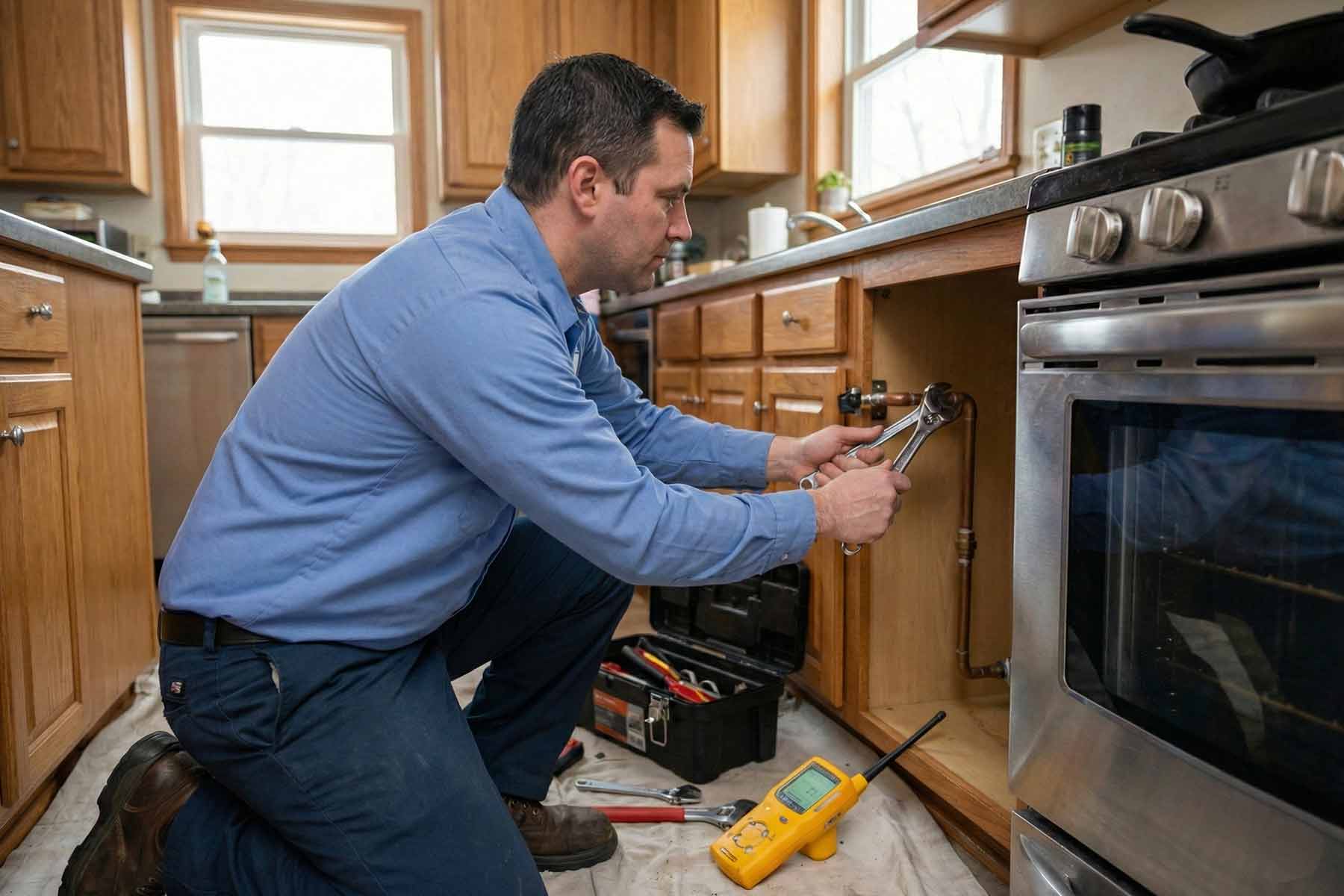
Getting estimates for gas leak repair
When searching for a gas line plumber near you to fix your gas leak, follow these guidelines to help you choose the best pro for the job:
Compare estimates from at least three licensed plumbers who specialize in gas line work.
Get detailed written estimates with a breakdown of labor, materials, and all extra costs.
Check reviews of gas line plumbers on HomeGuide and Google.
Ask for references to gauge the company's reputation and customer retention.
Confirm the company is licensed, insured, and has specific experience in gas leak repairs.
Don't pay in full until the repair is complete and has passed any required inspections.
Questions to ask a gas line plumber
Before hiring a contractor for gas leak repair, ask these important questions to ensure you're working with a qualified professional:
Are you licensed specifically for gas line work?
How long have you been working with gas lines?
Can you provide references from recent gas leak repairs?
Is your work guaranteed, and for how long?
Will you pull necessary permits and arrange inspections?
What safety protocols do you follow during repairs?
Do you carry liability insurance and workers' compensation?
Can you provide a detailed written estimate before starting work?
Using our proprietary cost database, in-depth research, and collaboration with industry experts, we deliver accurate, up-to-date pricing and insights you can trust, every time.