
How much does it cost to bury power lines?
How much does it cost to bury power lines?
$2,700 – $10,000 average total cost (300 – 500 feet)

Cost to bury power lines
Burying power lines costs $9 to $20 per linear foot on average, or $2,700 to $10,000 total for a typical residential project. The total cost depends on your location, the distance from the power source to your home, soil conditions, trenching method used, and whether you're burying existing lines or running new service.
| Length of run (linear feet) |
Average cost |
|---|---|
| 50 | $450 – $1,000 |
| 100 | $900 – $2,000 |
| 200 | $1,800 – $4,000 |
| 300 | $2,700 – $6,000 |
| 500 | $4,500 – $10,000 |
| 1,000 | $9,000 – $20,000 |
What affects the cost of burying power lines?
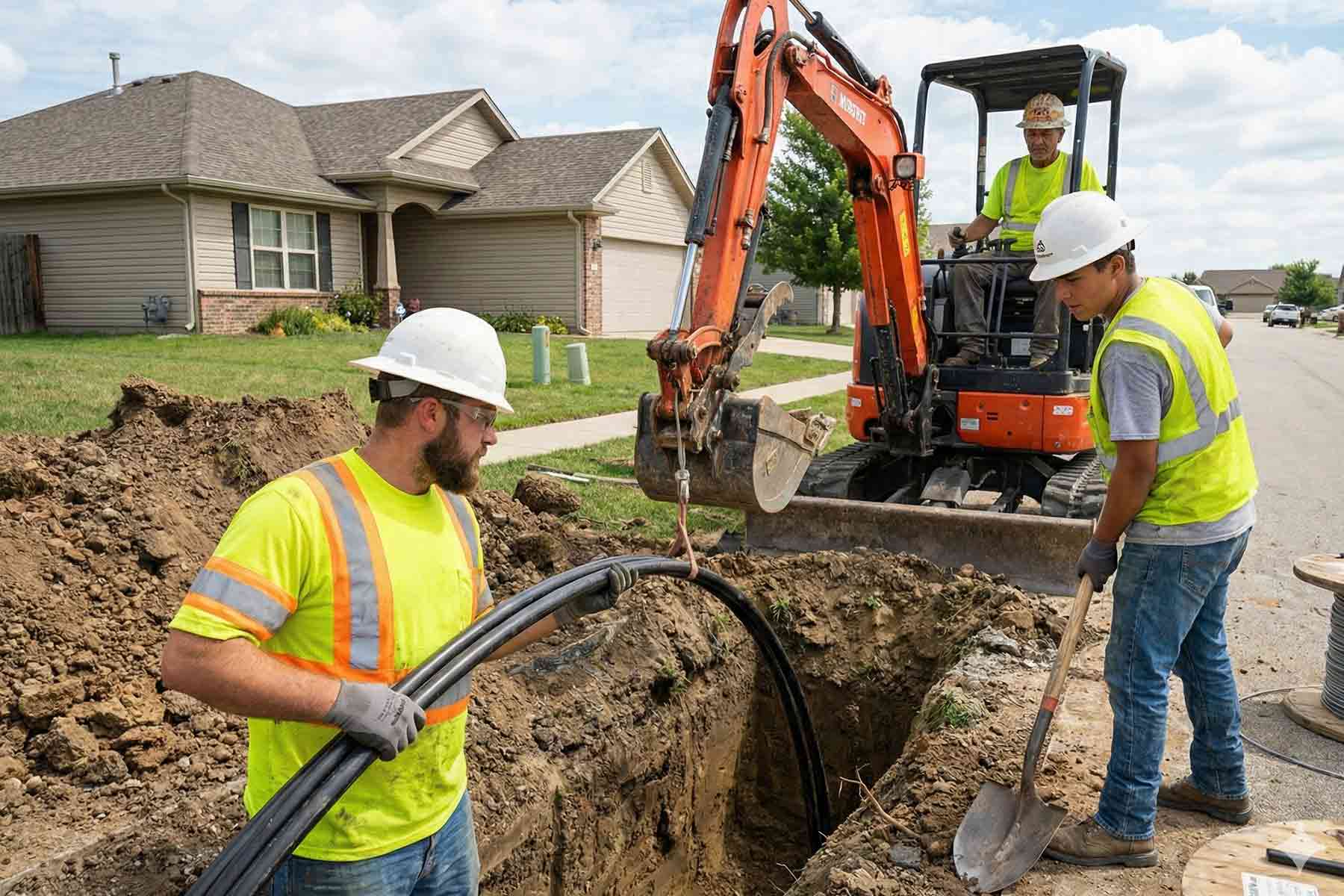
Trenching makes up a significant portion of the cost to bury power lines. The trench must be dug deep enough to meet local code requirements, typically 24 to 48 inches for residential power lines. Most power companies also require installing PVC or rigid metal conduit to house and protect the electrical wiring underground.
| Factor | Average cost (per linear foot) |
Details |
|---|---|---|
| Trenching | $5 – $12 | Cost depends on soil type, depth, and obstacles. |
| Conduit and wire | $4 – $8 | Price varies based on material quality and size of wire. |
| Average total cost | $9 – $20 per linear foot |
Several factors affect the total cost to run power underground:
Distance and location
Longer runs cost more due to increased materials and labor. Rural properties often require more extensive work than suburban locations with existing infrastructure nearby. The terrain between the power source and your home also impacts pricing.
Soil and ground conditions
Rocky soil or clay-heavy areas require specialized excavation equipment, increasing labor costs. Contractors may encounter unexpected obstacles like tree roots, existing utility lines, or ledge rock that slow the digging process.
Depth requirements
Local building codes dictate minimum burial depths based on your area's climate and frost line. Deeper trenches in cold-weather regions cost more than shallow installations in warmer climates.
Labor rates and permits
Labor is a major portion of the project budget, and it varies by your location and the professionals you hire. Most licensed electricians or utility contractors charge $50 to $130 per hour. Trenching crews may charge $35 to $65 per hour. A complex job will naturally require more hours and specialized labor.
Before the project begins, contractors must secure the required permits from the local building department, which range from $50 to $350 in most cases. Some areas charge flat fees while others calculate costs based on project scope.
Trenching method
The excavation technique significantly impacts both cost and property disruption. Standard open trenching costs $5 to $12 per linear foot. This method is the most common and budget-friendly method, but it requires full excavation of the path and extensive property restoration afterward.
Directional drilling or boring costs more up front but reduces restoration expenses and minimizes property damage. This method creates underground pathways without disturbing the surface, preserving landscaping, driveways, and hardscaping. Many utility companies now prefer directional drilling for residential projects to maintain customer satisfaction.
Electrical service upgrades
The electrical connection work for burying power lines involves running cables through the conduit and making final connections at both the power source and your home's service panel. Many utility companies charge a one-time $300 to $650+ service fee for this work.
Converting to underground service often requires upgrading your electrical panel from 100 to 200 amps, adding $1,300 to $1,600+ to your project cost. Your utility company may also mandate a new meter installation, adding an extra $500 to $1,200.
Property restoration
After installation, contractors may need to restore your landscaping, driveway, or lawn. Complex restoration work for gardens, irrigation systems, or hardscaping adds to the final bill.
Existing power lines vs. new installation
Burying existing overhead lines typically costs less than running entirely new underground service. New installations require additional components like transformers and service drops, often increasing the cost to $25+ per foot. The power company may cover portions of new service costs depending on distance and estimated revenue from your property.
Some utility companies offer free conversion programs if you make required meter box modifications. Contact your local provider to learn about available cost-sharing programs.
Utility company vs. contractor: Who does what?
Burying power lines is often a collaborative effort between the utility company that owns the main lines and a licensed electrician whom you hire.
In most cases, the utility company is responsible for the main lines and the equipment on the pole or in the street. If you are converting from overhead to underground service, they typically handle the connection at the main line and the final hookup.
The homeowner is generally responsible for hiring a contractor to install the trench, conduit, and sometimes the wire from the pole or transformer all the way to the house's meter. The hired electrician also handles any required work on the home's meter base or electrical panel to accept the new underground service.
It's crucial to contact your local utility provider first. They will have specific requirements, often provide the necessary primary cable, and must approve the project before construction begins.
Utility underground programs
Some utility companies, like Dominion Energy, have large-scale initiatives like the Strategic Underground Program (SUP). This program identifies the most outage-prone overhead power lines in neighborhoods and proactively move them underground at the utility's expense (funded by a small rate adjustment), thereby improving reliability for entire communities.
Pros and cons of burying power lines
There are several advantages to burying power lines, such as fewer power outages, less maintenance, and reduced fire hazards and electrocution risks. However, repairs can be costly, and undergrounding may be impractical or prohibitively expensive in some areas, like extremely rural locations or those with rocky terrain.
The table below shows a breakdown of the major benefits and potential disadvantages of burying power lines to help you make an informed decision.
| Pros | Cons |
|---|---|
|
|
FAQs about burying power lines
How deep are power lines buried?
Power lines are typically buried 24 to 48 inches deep for residential service. However, the exact depth depends on local building codes, climate conditions, and whether the cable runs through conduit. Areas with deep frost lines require deeper burial to prevent ground movement from damaging lines.
Can I bury power lines myself?
No, you cannot bury power lines yourself. Licensed electricians and utility companies must perform this work to meet safety codes and legal requirements. Improper installation creates serious safety hazards and violates most local ordinances.
You may be responsible for hiring a contractor to dig the trench and install conduit on your property, but the utility company handles all electrical connections. Always call 811 before digging to locate existing underground utilities.
How long does it take to bury power lines?
Burying power lines takes 1 to 3 weeks from start to finish for most residential projects, depending on the distance and complexity. The work involves multiple phases: obtaining permits, digging trenches, installing conduit, running cables, making connections, and restoring your property.
Your power will be temporarily interrupted during the final connection, typically for 4 hours or less. The utility company notifies you in advance of scheduled outages.
Will burying power lines eliminate all outages?
No, underground lines still connect to above-ground infrastructure that remains vulnerable to storms and other issues. However, strategic undergrounding significantly reduces outage frequency and duration in areas where lines are buried.
Getting estimates for burying power lines
Work with a qualified professional to ensure your underground power line project meets code requirements and functions safely. Follow these guidelines to help you choose the best contractor near you:
Request quotes from at least three licensed and insured contractors with underground utility experience.
Confirm they coordinate with your utility company and handle all permit applications and inspections.
Review customer feedback on HomeGuide and Google to assess their reliability and quality of work.
Check their references from recent similar projects.
Ask about warranties on both labor and materials for the installation.
Ensure they carry adequate liability insurance to protect your property during excavation.
Questions to ask an electrician
Before hiring an electrician for your power line burial project, ask these important questions to ensure you're working with the right professional.
What experience do you have with underground electrical installations?
Will you handle coordination with my utility company and pull all required permits?
What's included in your price quote, and what might cost extra?
How will you protect my landscaping and property during excavation?
What's your timeline from start to completion?
Do you guarantee your work, and what does the warranty cover?
Can you provide references from recent underground utility projects?
What payment schedule do you require?
How do you handle unexpected issues like rock or existing utility lines?
Will the same crew complete the entire project, or will different contractors be involved?
Using our proprietary cost database, in-depth research, and collaboration with industry experts, we deliver accurate, up-to-date pricing and insights you can trust, every time.