
How much does a concrete footing cost?
How much does a concrete footing cost?
$700 – $1,500 average cost per footing with installation
$10 – $14 cost per square foot for footing and slab

Average concrete footing cost
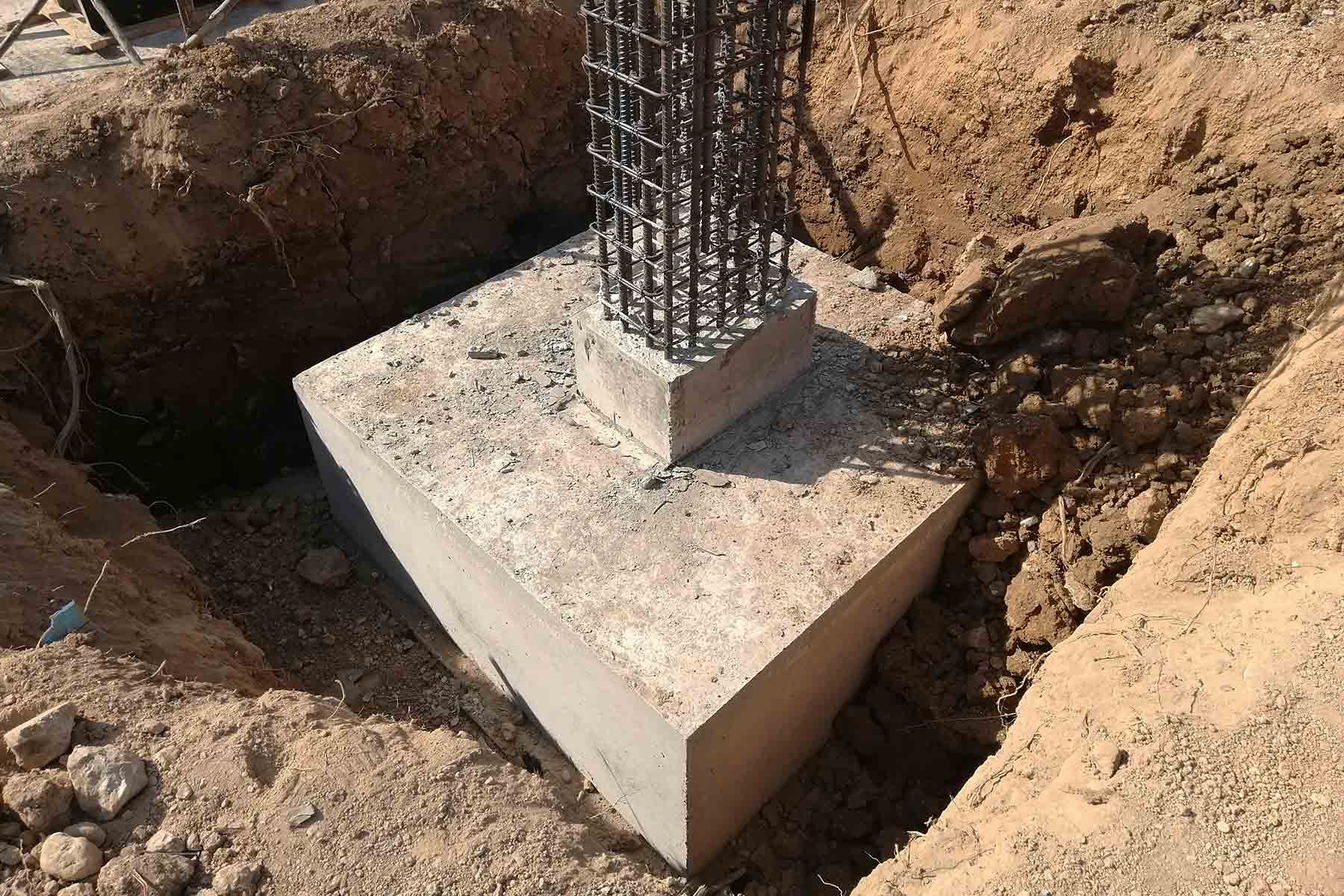
Concrete footings cost $700 to $1,500 per footing on average with installation, but costs can reach $3,000+ per footing for complex projects involving sloped areas or specialized footings. The total cost depends on the footing size and type, soil conditions, site conditions, and local labor rates.
A concrete footing is a reinforced concrete base poured into the ground below a foundation to distribute the weight of a building over a larger area.
| Project type | Average cost* |
|---|---|
| Concrete footings | $700 – $1,500 per footing (standard project) $1,500 – $3,000 per footing (complex project) |
| Footings and slab | $10 – $14 per square foot |
*Including materials and installation; not including site preparation.
Concrete footing cost factors
Several factors influence the final cost of a concrete footing project, including the home size and design, the footing type, soil conditions, local labor rates, and more.
House size
The size and weight of the structure directly impact the footing requirements and costs. A larger or heavier home needs more footings positioned closer together to distribute weight properly, while a smaller building requires fewer support points.
Two-story homes require deeper, wider footings than single-story structures due to increased load. Houses with complex layouts featuring multiple wings, bay windows, or architectural details need additional footings at corners and intersections, increasing overall project costs.
Footing size & depth
Footing dimensions affect both material and labor costs. Deeper footings cost more due to additional excavation and concrete volume. Footings must extend below the frost line—sometimes as much as 3 to 4 feet deep or more in cold climates—to prevent damage due to frost heaving.
Footing type
Different construction projects require specific types of footings designed to handle varying loads and soil conditions. The footing type affects both the installation complexity and overall cost. Simple spread footings are the most economical, while specialized pile footings typically cost the most.
| Footing type | Description | Best for | Pros & cons |
|---|---|---|---|
| Strip / wall | Continuous concrete strips under load-bearing walls | Load-bearing walls | Pros: Even weight distribution; cost-effective for walls Cons: Requires more excavation; not ideal for poor soil |
| Spread | Individual square or rectangular pads under columns | Posts; columns; deck supports | Pros: Simple installation; economical for point loads Cons: Multiple footings increase labor time |
| Slab-on-grade | Thickened concrete slab edges that act as integrated footings | Warm climates; simple structures | Pros: Faster installation; lower labor costs Cons: Not suitable for cold climates or poor soil |
| Stepped | Footings installed at different levels on sloped terrain | Hillside construction; uneven lots | Pros: Works on slopes; maintains proper depth Cons: Complex installation; higher labor costs |
| Pile | Deep concrete columns extending to stable soil or bedrock | Poor soil conditions; high water tables | Pros: Excellent stability in weak soil Cons: Expensive; requires specialized equipment |
Soil conditions
The soil type and stability also affect the footing design and cost:
Clay soils expand and contract with moisture changes, which may require wider footings and additional reinforcement to prevent cracking and settling.
Sandy or loose soils lack load-bearing capacity and may need deeper footings or soil stabilization techniques.
Rocky terrain increases the excavation difficulty, raising labor costs.
Labor
Professional installation typically accounts for 40% to 60% of total footing costs. Experienced concrete contractors charge $50 to $150 per hour, depending on your location and the project complexity. Complex projects with multiple footing types or difficult site access require more skilled labor and time, increasing overall costs.
Permits & inspections
Most municipalities require building permits for concrete footings. Permit costs depend on the project scope and your location. Inspections occur at critical stages to ensure the footings meet local building codes and safety standards.
Other cost factors
These other factors will also affect your total project cost:
Project complexity: A simple rectangular foundation with uniform footing sizes costs less than a foundation on a sloped site with varied footing depths, multiple levels, or architectural features requiring specialized formwork.
Concrete materials: Concrete prices fluctuate based on market conditions and location. Delivery fees add to the cost.
Site preparation: Clearing vegetation and leveling or grading the site adds to the cost. Proper preparation ensures stable ground and prevents future settling issues.
Site accessibility: Labor costs increase for installations in tight spaces requiring hand-mixing concrete or transporting materials via wheelbarrow instead of using concrete trucks.
Drainage: Foundations in wet areas may require a drainage system to prevent leaks and flooding. An exterior French drain costs $10 to $35+ per linear foot with installation.
FAQs about concrete footings
What is a concrete footing?
A concrete footing is a structural element that supports and distributes the weight of a building into the ground. Footings act as the base of your foundation, transferring loads from walls, columns, or posts to the soil below.
Footings spread weight over a larger area to prevent settling and structural damage. They're typically poured below the frost line to protect against ground movement caused by freezing and thawing cycles.
How deep should concrete footings be?
The ideal footing depth depends on your climate zone and local building codes. In warm climates with minimal frost, footings may only need to be 12 to 18 inches deep, while homes in northern regions often require footing depths of 3 to 4 feet below grade.
The general rule is footings must extend below the frost line—the maximum depth ground freezes in winter. Your local building department provides specific frost depth requirements for your area. Deeper footings also provide better stability in loose or sandy soils.
What is the difference between concrete footings and piers?
Concrete footings are wide, shallow bases that spread structural weight horizontally across the soil to prevent settling. Piers are vertical columns that extend further downward to transfer loads to deeper, more stable ground. They are ideal for sloped lots or areas with unstable ground conditions.
Piers are often used in combination with footings, with the pier resting on top of a footing pad for added stability. This pier-and-footing system is common for decks, porches, and structures built on sloped terrain or in areas with weak surface soil that require deeper support.
Getting quotes from concrete contractors
Before hiring a concrete contractor near you, remember to:
Look for contractors with experience specifically pouring concrete footings and slabs.
Check out their HomeGuide and Google reviews.
Get at least three quotes to compare.
Choose a licensed and insured company that has been in business for 5+ years.
Avoid the lowest quotes, which usually indicate low quality work.
Get an itemized contract and warranty in writing.
Never pay in full before the job is complete.
Questions to ask concrete contractors
Ask your contractor these questions to ensure you choose a qualified professional for your project:
Is your business licensed and insured for concrete and foundation work?
How long have you been pouring concrete footings in my area?
Can you provide an itemized written estimate, contract, and timeline for the project?
What does your estimate include, and what additional costs might come up?
How long will the footings take to install?
How soon can you start the project?
Do you have past clients I can contact for references?
Using our proprietary cost database, in-depth research, and collaboration with industry experts, we deliver accurate, up-to-date pricing and insights you can trust, every time.