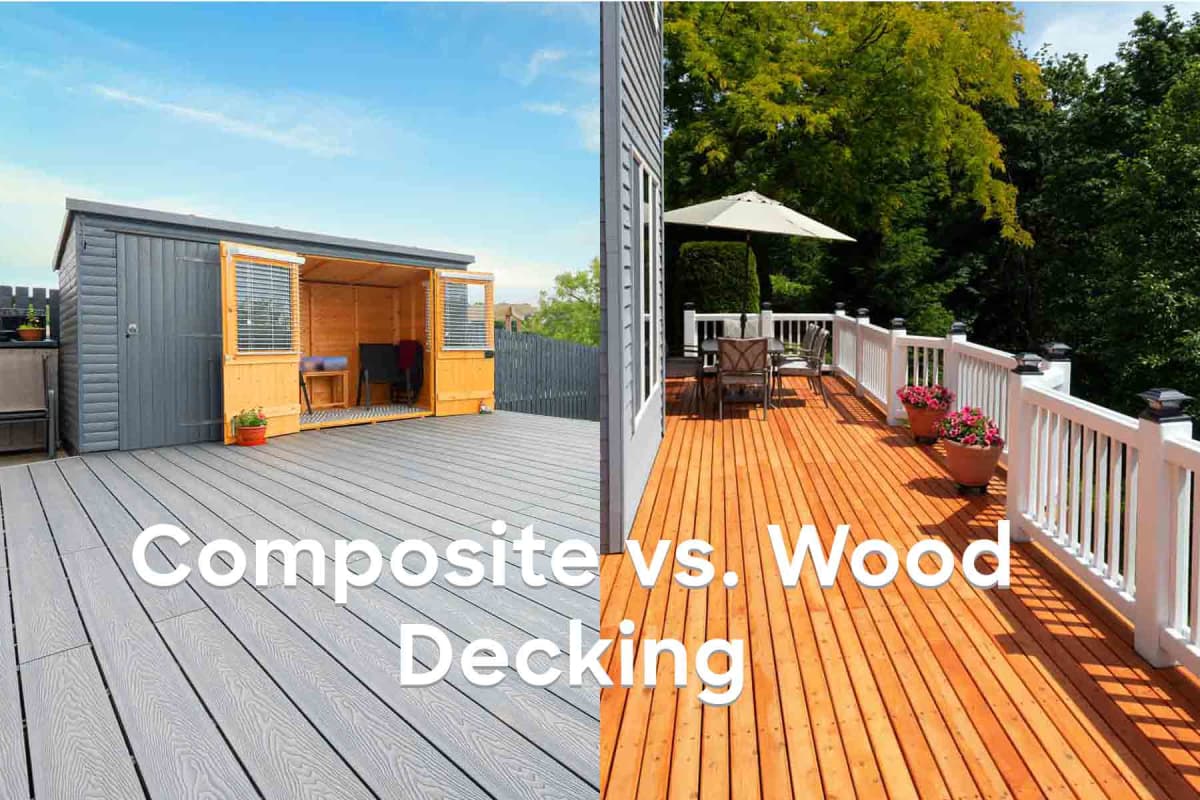
Composite decking vs. wood cost
Composite decking vs. wood cost
$40 – $80+ cost per square foot installed (wood)
$50 – $100+ cost per square foot installed (composite)

Composite decking vs. wood cost per square foot
Composite decking costs $50 to $100+ per square foot installed on average. Wood decking costs $40 to $80+ per square foot installed, depending on the species and job complexity. Composite decking offers superior longevity and minimal maintenance, while wood decking delivers authentic natural beauty for a lower upfront cost.
| Deck type | Average installed cost per square foot |
|---|---|
| Wood | $40 – $80+ |
| Composite | $50 – $100+ |
Composite deck vs. wood cost by size
Over larger deck areas, the price gap between wood and composite becomes more noticeable, making wood more cost-effective for big projects initially. However, composite's lower maintenance costs often offset the difference over time.
The following table shows average installed costs based on deck size:
| Square footage | Composite deck average cost | Wood deck average cost |
|---|---|---|
| 200 | $10,000 – $20,000+ | $8,000 – $16,000+ |
| 300 | $15,000 – $30,000+ | $12,000 – $24,000+ |
| 400 | $20,000 – $40,000+ | $16,000 – $32,000+ |
| 500 | $25,000 – $50,000+ | $20,000 – $40,000+ |
| 750 | $37,500 – $75,000+ | $30,000 – $60,000+ |
| 1,000 | $50,000 – $100,000+ | $40,000 – $80,000+ |
Composite deck vs. wood deck comparison
Composite decking features a wood plastic composite material designed to look like real wood, while wood decking is made from natural lumber. Deciding between them involves considering appearance, performance, value, and your priorities for maintenance, longevity, and climate resistance.
he following table compares the features of composite versus wood decking:
| Feature | Composite decking | Wood decking |
|---|---|---|
| Installed cost | $50 – $100+ per square foot | $40 – $80+ per square foot |
| Construction | Wood fibers and recycled plastic | Solid pieces of natural lumber |
| Moisture resistance | High | Low to moderate |
| Maintenance | Minimal (soap and water cleaning) | High (annual staining or sealing) |
| Refinishing ability | Cannot refinish | Can sand and restain |
| Lifespan | 25 – 50 years | 10 – 30+ years |
| Climate suitability | All climates and conditions | Best in moderate climates |
Initial cost
Composite decking costs $50 to $100+ per square foot installed on average, including materials and labor. Installation labor is often comparable to wood since both require similar framing and fastening techniques.
Wood decking costs $40 to $80+ per square foot installed. The cost varies based on the wood species and design complexity, with pressure-treated lumber being most affordable and exotic hardwoods commanding premium pricing.
Durability
Composite decking resists scratches, stains, and fading from UV exposure. It won't splinter, warp, or rot like natural wood. However, it can be damaged by excessive heat or sharp objects, and the damage may require board replacement.
Wood decking can scratch, dent, and splinter from daily use and weather exposure. However, owners can repair most damage through sanding and refinishing, allowing restoration to its original condition multiple times.
Moisture resistance
Composite decking handles moisture excellently and resists mold, mildew, and rot. It performs well in humid climates, coastal areas, and regions with frequent rain without requiring protective treatments.
Wood decking varies in moisture resistance depending on the species. Pressure-treated lumber and naturally resistant woods like cedar perform better, but all wood requires regular sealing and maintenance to prevent rot and decay.
Maintenance
Composite decking requires minimal maintenance with just soap and water cleaning 2 to 3 times per year. These decks need no staining, sealing, or refinishing, saving significant time and money over the deck's lifetime.
Wood decking demands regular maintenance including annual cleaning, staining or sealing every 1 to 2 years, and periodic board replacement. This ongoing care is essential to prevent rot, decay, and maintain appearance.
Installation
Composite decking installs similarly to wood using standard deck construction methods. Many brands offer hidden fastener systems for a cleaner appearance. Installation may require special cutting tools for some composite materials.
Wood decking uses traditional installation methods with screws or hidden fasteners. Pressure-treated lumber is easiest to work with, while hardwoods may require pre-drilling and special tools.
Lifespan
Composite decking lasts 25 to 50 years with minimal maintenance. Many manufacturers offer 20- to 25-year warranties covering fading, staining, and structural integrity, reflecting their confidence in the material's longevity.
Wood decking lasts 10 to 25 years, depending on the species. Pressure-treated pine lasts 10 to 25 years, cedar 15 to 20 years, and exotic hardwoods 30+ years. Proper maintenance significantly extends the life of a wood deck.
Eco-friendliness
Composite decking uses recycled plastic and wood fibers, diverting waste from landfills. Most composite boards contain 50% to 95% recycled content, making them environmentally sustainable choices.
Wood decking uses renewable natural resources, but the harvesting impacts forests. Sustainably sourced lumber and a long lifespan with proper maintenance can minimize the environmental impact over time.
Appearance
Composite decking offers consistent color and grain patterns with modern manufacturing creating realistic wood textures. There are a wide variety of colors and finishes available, though some products may look artificial to discerning eyes.
Wood decking provides authentic natural beauty with unique grain patterns and the ability to customize through staining. Many homeowners prefer the appearance and warmth of natural wood for traditional aesthetics.
Temperature performance
Composite decking can become hot in direct sunlight, potentially uncomfortable for bare feet. Light-colored options and newer formulations help reduce heat retention compared to early composite products.
Wood decking stays cooler in hot weather and provides natural insulation. Most wood species remain comfortable for bare feet even in direct sunlight.
Long term cost
Composite decking offers superior long-term value despite its higher upfront costs. Annual maintenance costs average $50 for soap and water cleaning. Over 30 years, total costs include only the initial installation plus minimal cleaning expenses, with no replacement needed.
Wood decking requires significant ongoing investment. Annual maintenance costs $400 to $600 for staining, sealing, and repairs. Many wood decks need replacement every 15 to 20 years, effectively doubling the total investment. Over a 30-year timeline, wood's maintenance costs often exceed composite's initial premium price.
Resale value
According to the Journal of Light Construction (JLC) Cost vs. Value Report, wood deck additions recoup 83% of their cost, while composite deck additions recoup 68% of their cost. Both add significant home value, with composite appealing to buyers seeking low-maintenance features.
Which deck material is right for you?
Wood decking makes sense for homeowners who prioritize natural beauty and have specific budget or timeline constraints. Composite delivers superior long-term value for most homeowners when considering total ownership costs and convenience. Your choice depends on balancing upfront costs, long-term expenses, maintenance preferences, and your aesthetic priorities.
Choose wood decking if you:
Prefer authentic wood appearance and feel
Have limited upfront budget for deck installation
Enjoy DIY maintenance projects and have time availability
Plan to sell your home within 5 to 10 years
Want complete customization through staining and finishing
Choose composite decking if you:
Prioritize low maintenance and time savings
Want consistent appearance without annual upkeep
Live in harsh climate conditions with extreme weather
Plan to own your home for 10+ years
Value environmental sustainability and recycled materials
Prefer splinter-free, consistently safe surface
FAQs about composite vs. wood decking
Can you stain or paint composite decking?
No, you can't stain or paint composite decking manufactured after 2010 effectively. The material is designed to maintain its original color throughout its lifespan. Wood decking can be stained, painted, or left natural and refinished multiple times.
Which decking is better for harsh climates?
Composite decking performs better in harsh climates due to its resistance to moisture, temperature fluctuations, and UV damage. Wood decking requires more maintenance in extreme climates but can perform well with proper care and suitable species selection.
Getting estimates from deck builders
When getting estimates from local composite deck builders or wood deck builders near you, look for the following:
Compare pricing and services from at least three different deck contractors.
Verify they are licensed and have liability insurance and workers' compensation coverage.
Ask for recent customer references from projects similar to yours.
Check for consistently positive reviews on HomeGuide and Google.
Confirm the estimate breaks down all costs, including materials, labor, permits, and any additional services (such as demolition, site preparation, or railings).
Never pay the full amount up front. Work out a payment plan instead for work completed.
Questions to ask a deck builder
Ask your deck builder these questions to ensure you hire a qualified professional and avoid unexpected issues:
How many years of experience do you have building composite and wood decks?
Are you licensed and insured for deck construction?
Can you provide references from recent clients with similar projects?
What types and brands of decking do you recommend for my situation and climate?
Are site preparation and permits included in your quote?
Do you handle demolition and disposal of existing deck structures?
What is your projected timeline for starting and completing the project?
What kind of warranty do you offer on your workmanship and materials?
How do you handle unexpected issues, such as structural problems or permit delays?
Will you install railings, lighting, or other accessories?
How will you protect landscaping and the surrounding areas during construction?
What is your payment schedule, and what forms of payment do you accept?
Do you provide guidance on deck maintenance and care after completion?
Using our proprietary cost database, in-depth research, and collaboration with industry experts, we deliver accurate, up-to-date pricing and insights you can trust, every time.