![How To Become an HVAC Technician [PRO]](https://res.cloudinary.com/liaison-inc/image/upload/f_auto/q_auto:eco,w_1200:eco,w_1200/v1762936541/content/homeguide/homeguide-how-to-become-an-hvac-technician-technician-inspecting-air-conditioning-filter.jpg)
How To Become an HVAC Technician [PRO]
How To Become an HVAC Technician [PRO]

What is an HVAC technician?
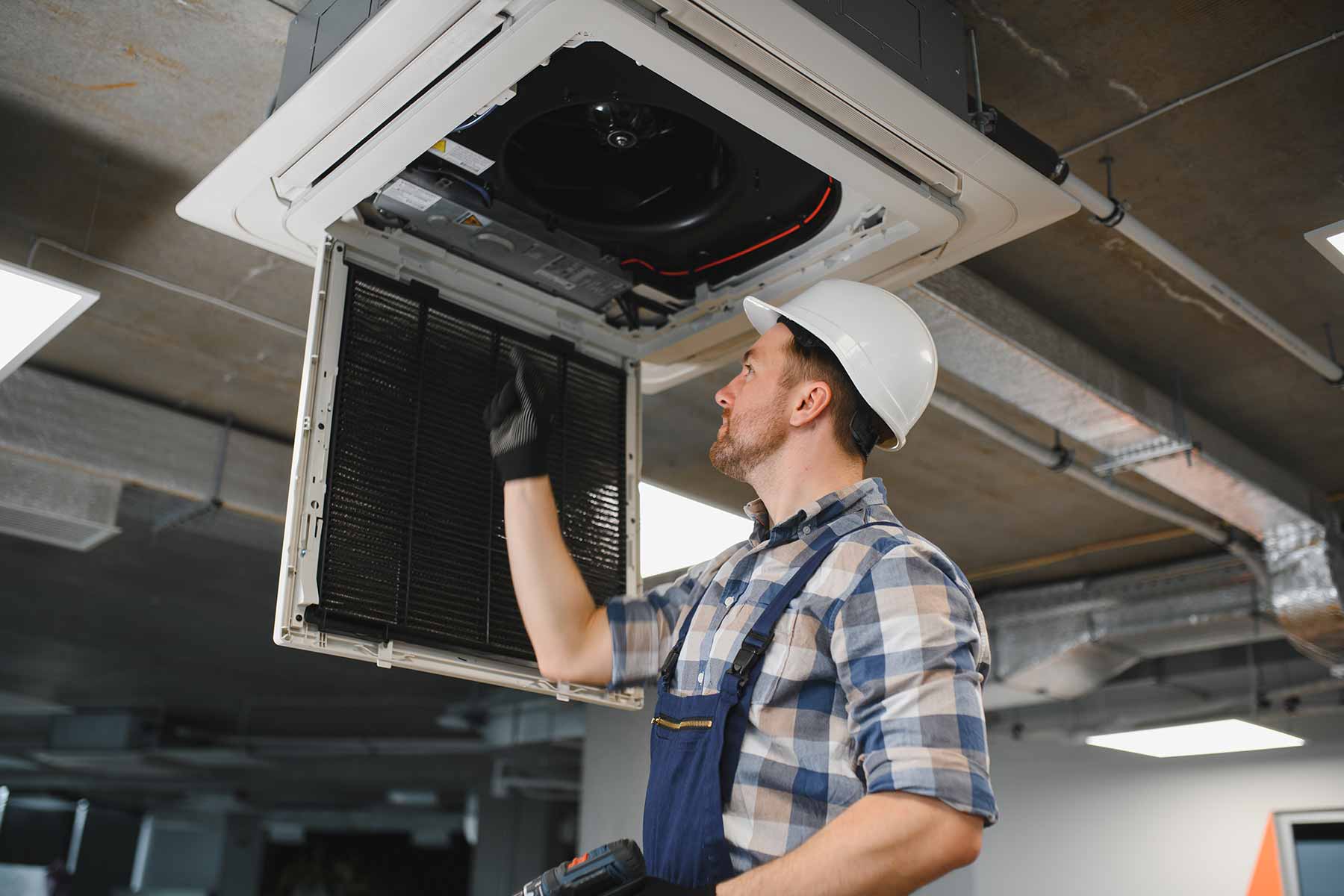
"HVAC" stands for Heating, Ventilation, and Air Conditioning. An HVAC technician is a skilled tradesperson who installs, maintains, and repairs these complex systems. They work in homes, offices, hospitals, factories, and any other buildings that need climate control.
HVAC techs are the problem-solvers who diagnose why a furnace is blowing cold air or an AC unit has stopped working. This hands-on job blends mechanical skill, electrical knowledge, and excellent customer service.
What do HVAC techs do?
On any given day, an HVAC tech might:
Install a new air conditioner or furnace.
Perform routine maintenance, like cleaning coils and changing filters.
Diagnose and repair a broken system.
Run tests and conduct inspections to ensure systems are efficient and safe.
Talk with customers about their comfort needs or repair options.
Your 5-step guide on how to become an HVAC technician
While every journey is a little different, this is the most common path to becoming a qualified HVAC tech:
Step 1: Get your high school diploma or GED
This is the non-negotiable first step. A high school diploma or equivalent (like a GED) is required by all trade schools, apprenticeship programs, and employers. While you're there, classes in math, physics, and shop or vocational training will give you a valuable head start.
Step 2: Choose your training path (school vs. apprenticeship)
After high school, you have a big choice: go to a formal school or find an apprenticeship. Both paths can lead to a great career, but they are very different.
Trade school / technical college: You can enroll in a focused HVAC certificate program. These are career-oriented and designed to be completed quickly, often in 6 to 12 months. They are great for getting the hands-on lab training and essential theory you need to enter the workforce fast.
Community college: Another option is an associate degree in HVAC technology. This program typically takes 2 years to complete and provides a deeper education, often including general education courses alongside in-depth HVAC training. This can be a great foundation for future management roles.
Apprenticeship: As an apprentice, you get paid to learn. You'll work full-time for an HVAC contractor, learning directly from experienced technicians in the field.This is paired with part-time classroom instruction, often at night. Apprenticeships are fantastic for hands-on learners and take 3 to 5 years to complete.
| Feature | Trade school / Community college | HVAC apprenticeship |
|---|---|---|
| Duration | 6 months (certificate) to 2 years (associate degree) | 3 to 5 years |
| Cost | You pay tuition. (costs vary from $1,200 to $15,000+) | You get paid. (earn while you learn) |
| Format | Classroom instruction and lab-based training | Full-time, on-the-job training with some classroom hours |
| Best for | Learners who prefer a structured, academic foundation | Hands-on learners who want to earn money right away |
Step 3: Get your essential HVAC certifications
No matter which path you choose, you'll need certifications. The most important one is the EPA Section 608 Technician Certification. This is a federal requirement for anyone who handles or buys refrigerants, which are present in all air conditioning and refrigeration equipment. You cannot legally work on air conditioning or refrigeration systems without it.
The EPA offers four types of Section 608 certification. Type I covers small appliances, Type II covers high-pressure refrigerants, Type III covers low-pressure refrigerants, and Universal certification covers all types. Most employers require Universal certification.
You can take the EPA certification exam through approved testing organizations. Many trade schools include this certification as part of their programs. The test covers refrigerant recovery, recycling, safety procedures, and environmental regulations.
Step 4: Get your HVAC license
It's important to understand that HVAC licenses are different from certifications.
Certification (like EPA 608) is typically national and proves your knowledge.
Licensing is managed by state or local governments and gives you the legal authority to work.
Not every state requires HVAC techs to be licensed, but many do. The states that do have licensing requirements often have different levels, like apprentice, journeyman, and master. To get your HVAC license as a journeyman (a fully qualified tech), you typically need to:
Show proof of your training (a school certificate or apprenticeship completion).
Provide evidence of 2 to 5 years of verified, on-the-job experience.
Pass a state-administered licensing exam.
Always check with your state's licensing board to understand the specific rules for your area.
Step 5: Gain practical experience
Even after completing your training and getting certified, you'll need real-world experience before most employers consider you a full-fledged technician. Entry-level positions or apprenticeships let you work under supervision while developing your troubleshooting instincts and customer service skills.
This stage typically lasts 1 to 3 years. You'll encounter problems your textbooks never mentioned and learn the tricks experienced techs use to diagnose issues quickly. This experience is invaluable and often required before you can obtain certain advanced licenses or certifications.
Many states require documented work experience before issuing journeyman or master licenses. Keep detailed records of your training hours and the types of work you perform.
Additional HVAC certifications worth pursuing
While figuring out how to become an HVAC technician, consider these valuable credentials that can boost your career prospects and earning potential:
NATE certification from North American Technician Excellence is the industry's gold standard. This voluntary certification demonstrates your expertise to employers and customers. NATE offers specialty certifications in areas like heat pumps, gas furnaces, and air conditioning.
HVAC Excellence provides another respected certification program with various specializations. These credentials show commitment to your profession and often lead to higher pay.
Manufacturer certifications from brands like Carrier, Trane, or Lennox demonstrate expertise with specific equipment lines. Many manufacturers offer training programs that provide in-depth knowledge of their systems.
Specialty licenses for gas fitting, oil burner service, or electrical work expand what you can do independently. These typically require additional training and testing but open more job opportunities.
HVAC tech salary and job outlook
The job outlook for HVAC technicians is good. The U.S. Bureau of Labor Statistics (BLS) projects that employment for HVAC techs will grow 8% over the next decade, which is faster than the average for all occupations.
This demand is driven by new, more complex (and energy-efficient) systems being installed and the need to replace a generation of technicians who are retiring.
How much do HVAC techs make?
According to the BLS, the median annual wage for HVAC mechanics and installers is $59,800. The lowest 10 percent earned less than $39,200, and the highest 10 percent earned more than $91,000. Your salary will depend on your location, experience level, and any specializations you have.
What skills do you need to be an HVAC tech?
Becoming a great HVAC tech isn't just about tools. You need a solid mix of technical knowledge and "soft" people skills.
Technical skills: You'll need strong mechanical aptitude, a solid understanding of electrical principles and wiring, and the ability to read blueprints.
Problem-solving: A huge part of the job is diagnosing complex problems. You must be a good detective to figure out why a system is failing.
Customer service: You'll be in people's homes and businesses every day. Being polite, communicating clearly about the problem, and explaining the solution is essential.
Physical stamina: The job can be physically demanding. You'll need to be comfortable lifting heavy equipment, climbing ladders, and working in tight spaces like attics and crawlspaces.
FAQs about becoming an HVAC tech
How long does it take to become an HVAC technician?
The time it takes to become an HVAC technician depends on your training path. A certificate from a trade school can take as little as 6 to 12 months. An associate degree usually takes 2 years. An apprenticeship, which includes on-the-job training, typically takes 3 to 5 years to complete.
Do I need a license to work as an HVAC technician?
Licensing requirements vary by state and sometimes by city or county. Some states require state-issued licenses for HVAC technicians to work independently, while others have no statewide requirements. However, all HVAC technicians must obtain EPA Section 608 certification to legally handle refrigerants, regardless of state requirements.
Check with your state's contractor licensing board or department of labor to understand specific requirements in your area. Many employers also prefer or require industry certifications like NATE even when not legally mandated.
Is HVAC a good career?
Yes, HVAC is widely considered a great career. It offers strong job security, good earning potential, and high demand (people will always need heating and cooling). It's also a field where you can advance by specializing in commercial refrigeration, building automation, or even starting your own business.
Do you need to be good at math for HVAC?
You don't need to be a calculus genius, but you do need to be comfortable with practical math. You'll use basic algebra and geometry to calculate the right-sized system for a house, measure airflow, and determine electrical loads. Your training program will teach you all the specific math you need to know.
Using our proprietary cost database, in-depth research, and collaboration with industry experts, we deliver accurate, up-to-date pricing and insights you can trust, every time.