![How to Become a Landscape Designer [PRO]](https://res.cloudinary.com/liaison-inc/image/upload/f_auto/q_auto:eco,w_1200:eco,w_1200/v1765544047/content/homeguide/homeguide-how-to-become-a-landscape-designer-choosing-plants-for-residential-landscape-project.jpg)
How to Become a Landscape Designer [PRO]
How to Become a Landscape Designer [PRO]

What does a landscape designer do?
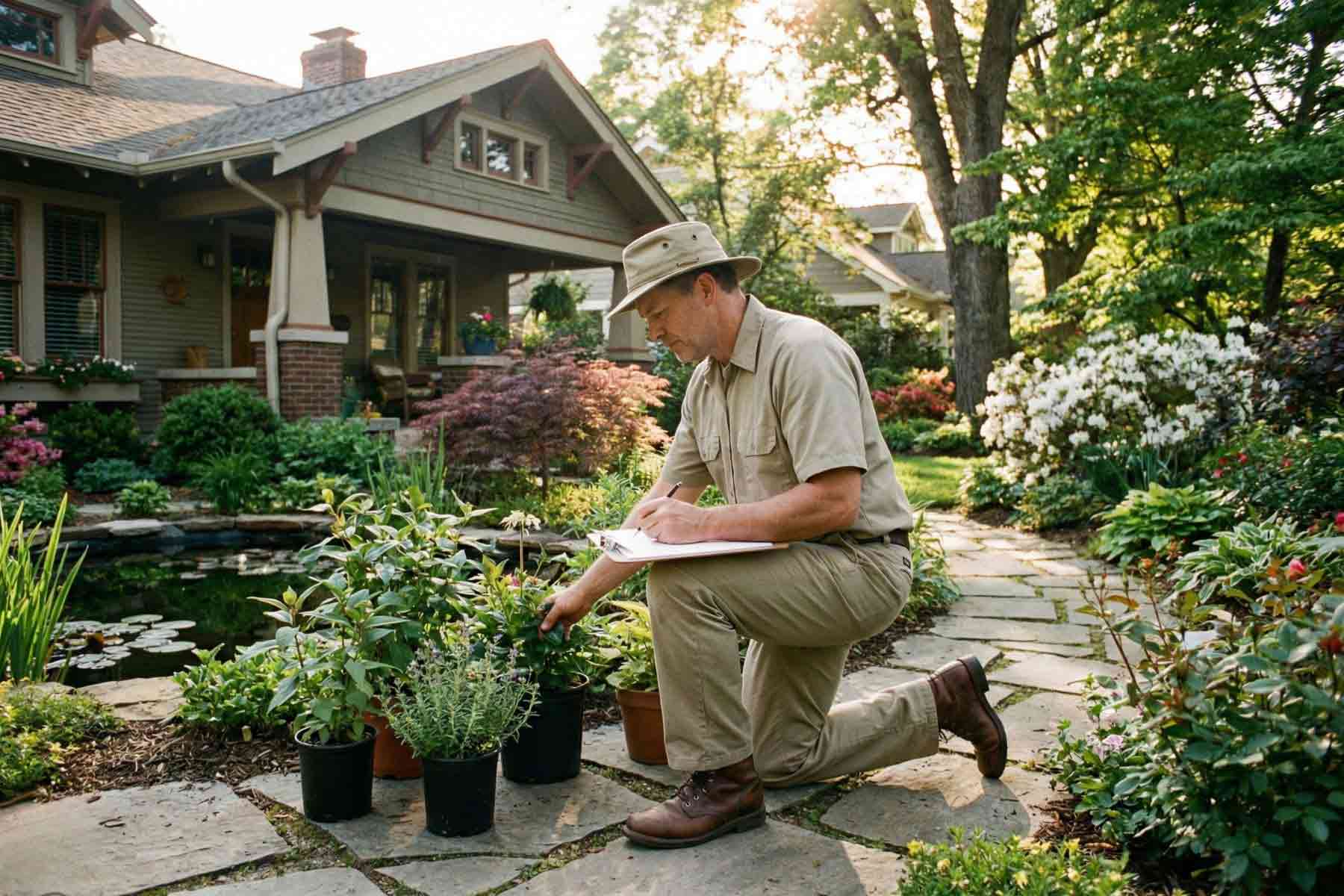
A landscape designer plans and creates outdoor environments that balance beauty, functionality, and ecological responsibility. Unlike landscapers who focus on installation and maintenance, designers work primarily on conceptual and technical design, collaborating with clients and contractors to bring outdoor visions to life.
Common responsibilities include:
Conducting site visits and analyzing conditions such as sunlight, soil, slope, and drainage
Creating conceptual designs, sketches, mood boards, and planting plans
Developing detailed CAD drawings and 3D renderings
Selecting plants, materials, and outdoor features (patios, walkways, lighting, water features)
Advising on sustainable practices such as drought-tolerant landscaping, native plants, or water-wise design
Preparing cost estimates, design presentations, and installation guidance
Collaborating with landscape contractors during installation to ensure designs are executed accurately
Landscape designers often work on residential gardens, small commercial properties, outdoor living areas, and specialty projects such as pollinator gardens or xeriscapes.
Landscape designer vs. landscape architect
Many people confuse landscape designers with landscape architects, but the roles differ significantly in training, regulation, and project scope.
A landscape designer typically focuses on residential properties, small commercial sites, and garden design. They work on elements like planting plans, hardscaping (patios, walkways), water features, and overall aesthetic. In most states, you don't need a license to call yourself a landscape designer.
A landscape architect must be licensed by the state. Their projects are often larger, public-scale sites like parks, urban planning projects, and major infrastructure. They are typically required to have a four- or five-year degree from an accredited program and pass the Landscape Architect Registration Examination (LARE).
The path to become a landscape designer is often more flexible and allows for quicker entry into the field.
Step 1. Get foundational education and training
While no state legally requires an advanced degree to work as a landscape designer, formal education greatly boosts credibility, competence, and client trust. It’s also a significant advantage when competing for design firm positions.
Choose a relevant program
Look for programs in landscape design, horticulture, environmental design, or related fields. Many community colleges, vocational schools, and university extensions offer certificate programs or associate degrees that take one to two years to complete.
Study essential subjects
Your training should cover fundamentals like:
Design theory
Site analysis
Plant and soil science
Hardscape construction techniques
Sustainable and water-wise practices
Local ecology and environmental regulations
Master industry software
Landscape designers must translate ideas into construction-ready plans. Proficiency in industry-standard software like AutoCAD, SketchUp, and various 3D modeling programs for drafting and computer-aided design (CAD) is essential for professional-quality work. CAD and 3D modeling skills are major hiring advantages.
Step 2. Build your core skill set
A landscape designer is part artist, part horticulturist, part problem-solver, and part project manager. Successful professionals intentionally cultivate a broad set of competencies.
Horticulture knowledge
You must know plants inside and out — their growth habits, climate needs, soil requirements, and how to combine them effectively. A beautiful design will fail if the plants don't thrive in their intended environment. This expertise is a key differentiator between a novice and an expert landscape designer.
Design and visualization skills
You need a strong understanding of spatial relationships, scale, texture, and color. Being able to sketch concepts by hand is helpful, but the ability to translate those ideas into clear, professional digital plans is mandatory. You'll also need the ability to visually communicate the final look to a client using renderings or 3D models.
Professional and business acumen
Landscape design is a service profession. Essential soft skills include:
Communicating design ideas clearly
Managing client expectations
Preparing proposals and budgets
Basic sales and marketing skills
Project and time management
These skills matter even more if you plan to run your own landscape design business.

Step 3. Gain hands-on experience
Theory is valuable, but there is no substitute for practical, on-site experience. You need to see how materials behave and how plants are installed in the real world.
Start with an internship or apprenticeship. Look for opportunities with local landscaping companies, nurseries, or established design firms. Working under an experienced professional will expose you to the day-to-day realities of the business, including client meetings, site grading, and installation challenges.
Volunteer for projects. Offer your services to a community garden, a friend's backyard, or a non-profit organization. These small projects are fantastic, low-pressure ways to apply your skills, learn from mistakes, and get those critical "before and after" photos for your portfolio.
Work closely with landscape contractors. Understanding construction and installation processes from a contractor's perspective will make your designs more practical, buildable, and cost-effective.
Step 4. Create a professional portfolio
Your landscape design portfolio is your single most important tool for landing clients or a job. It tells the story of your capability and style better than any resume ever could.
Showcase your best work
Include:
High-quality project photos
2D plans and CAD drawings
Planting palettes
3D renders and visualizations
Clear before-and-after comparisons
Document your design process
Clients and employers love to see:
Initial concept sketches
Site analysis diagrams
Problem/solution breakdowns
Flow diagrams or mood boards
Include diverse project types
If possible, add:
Residential gardens
Small commercial sites
Water-wise/xeriscape designs
Urban spaces or roof gardens
Large-property concept plans
This helps demonstrate versatility and creative range.
Boost your career with professional certification
Certification is optional but can significantly elevate your credibility and earning potential. The Association of Professional Landscape Designers (APLD) offers the Certified Professional Landscape Designer (CPLD) credential — the most recognized certification in the field.
Typical CPLD requirements include:
Holding a degree or 450+ hours of education in a related field
Possessing at least three years of professional experience
Submitting a comprehensive portfolio for review by experts
This credential signals that you meet industry standards for design excellence, competence, and professionalism.
Landscape designer salary and job outlook
Demand for landscape designers remains steadily strong, driven by residential improvements, sustainable landscaping trends, and growing interest in outdoor living spaces.
Average salary and earning potential
Landscape designer salaries vary by skill level, experience, region, and specialization.
| Experience level | Average annual salary |
|---|---|
| Entry-level (less than 1 year) | $40,000 – $55,000 |
| Early Career (1 – 4 years) | $52,000 – $65,000 |
| Experienced (5+ years) | $65,000 – $76,000+ |
Self-employed designers who build a strong reputation and client base often have the potential to earn well above the upper end of these salary ranges.
Create a free profile on HomeGuide to connect with people searching for landscape designers in your area. Get more clients, along with access to our free all-in-one business management software.
Job outlook for landscape designers
The job market for landscape professionals remains stable. While overall projected job growth for the designer role may appear steady, the demand for these high-quality, specialized services is strong:
Sustainable landscape design
Native and drought-tolerant landscapes
Edible gardens
Water-wise design
Outdoor living space planning
New job opportunities are consistently generated by the need to replace workers who retire.
FAQs about becoming a landscape designer
Where do landscape designers typically work?
A landscape designer balances time between the office and the outdoors. They typically work in a variety of environments, including:
Design studios / offices: For drafting, creating 3D models, meeting with clients, and administrative tasks
On-site project locations: Visiting residential gardens, commercial properties, or public parks to conduct site analysis, supervise installation, and meet with contractors
Nurseries / supply houses: Selecting plants and materials for projects
Self-employed / freelance: Working from a home office and traveling to client sites
How long does it take to become a landscape designer?
The time it takes to become a landscape designer depends on your chosen educational path:
Certificate program: A professional certificate in landscape design or horticulture typically takes 1 to 2 years of focused, part-time or full-time study.
Associate's degree: An Associate of Science (AS) degree is generally a 2-year program.
Experience: Regardless of education, it takes several years (3+ years) of practical, hands-on experience and portfolio development to be considered a senior or certified professional landscape designer.
What is the difference between a landscape designer and a landscaper?
A landscape designer creates the conceptual and visual plan for an outdoor space, using tools like CAD and 3D modeling.
A landscaper (or landscape contractor/gardener) performs the installation and ongoing maintenance of the landscape (e.g., mowing, planting, building the patio).
Some companies offer both services, but the roles are distinct.
Learn more about how to become a landscaper.
Using our proprietary cost database, in-depth research, and collaboration with industry experts, we deliver accurate, up-to-date pricing and insights you can trust, every time.