![How to Become a Dog Walker: Your Complete Guide to a Paw-some Career [PRO]](https://res.cloudinary.com/liaison-inc/image/upload/f_auto/q_auto:eco,w_1200:eco,w_1200/v1765195960/content/homeguide/homeguide-how-to-become-a-dog-walker-walking-with-dogs-at-a-park.jpg)
How to Become a Dog Walker: Your Complete Guide to a Paw-some Career [PRO]
How to Become a Dog Walker: Your Complete Guide to a Paw-some Career [PRO]

How to become a dog walker
Do you dream of a career that keeps you active outdoors, involves playing with happy canines, and offers flexibility? If you love dogs, becoming a dog walker is one of the most rewarding and lucrative side hustles you can start today. It allows you to transform your passion into a profitable business.
This guide covers every step for how to become a dog walker, from gaining crucial experience to launching your own professional service.
Skills to become a professional dog walker
A dog walker does far more than just clip a leash on a pup and wander down the street. You are a pet care professional responsible for the safety, health, and happiness of someone's furry family member. Succeeding in this role requires a genuine passion for animals, blended with professional preparation and specific physical traits.
You need to be prepared for the realities of the job. You will walk in rain, heat, and snow. You will handle unpredictable canine behavior. You must communicate consistently and clearly with clients. Your professionalism and dedication ultimately build your reputation.
Essential traits for success
You can't teach enthusiasm, but you can certainly hone the skills that make you an exceptional dog walker!
Physical fitness and stamina: Dog walking is physically demanding work. You must be able to walk briskly for several hours a day and possess the strength to safely manage a large or energetic dog that suddenly pulls on its leash.
Deep knowledge of canine behavior: Understanding dog body language is critical for safety. You need to recognize signs of fear, aggression, anxiety, or illness in a moment's notice to prevent incidents with other dogs or people.
Reliability and professionalism: Clients trust you completely with their pets and access to their homes. You must be punctual, trustworthy, and organized enough to manage multiple schedules and pet needs flawlessly.
Excellent communication skills: You are responsible for relaying information to owners about their dog's potty habits, appetite, and mood during the walk. Clear, concise, and friendly communication builds client trust and retention.
How to become a dog walker in 6 steps
Once you feel confident that you possess the core traits, you can launch your service by following these simple steps. This will take you from being a dog lover to a professional business owner.
Step 1: Get hands-on practice
If you're wondering how you can become a dog walker with no experience, the answer is simple: you create your experience! While you don't need a formal employment history in the pet care industry to start walking dogs, you absolutely need hands-on experience handling different types of dogs before you take on paying clients.
Clients will always prioritize someone who demonstrates confidence and capability. You must build your skills and your portfolio of references before charging for your services.
Start with free practice walks
The quickest way to start getting comfortable handling different breeds and temperaments is by walking dogs for people you already know.
Offer to walk dogs for friends, family, and neighbors for free or for a deeply discounted rate.
Use this time to practice leash-handling techniques, manage distractions, and master pet parent instructions.
Ask for testimonials and written references from these early, informal clients. These references are invaluable when you begin marketing your services professionally.
Volunteer for maximum exposure
Volunteering at a local animal shelter or rescue organization is one of the best ways to gain quick, diverse experience. Shelters have dogs of all sizes, ages, and behavioral needs.
You gain exposure to different leashes, harnesses, and training methods, and you become adept at reading stressed or anxious dogs. Plus, a reference from a shelter manager immediately boosts your credibility, proving you are committed to canine welfare.
Step 2: Prioritize safety and become certified
While formal certification is often not legally mandatory, investing in professional training is essential if you want to be taken seriously and charge premium rates. Pursuing professional credentials moves you toward becoming a certified dog walker, which shows clients you invested in your education and prioritize safety above all else.
Get Pet First Aid and CPR certified
The single most important certification you can obtain is Pet First Aid and CPR. This training is a must for a serious professional. It equips you with the knowledge to respond calmly and effectively during an emergency, such as a choking incident, heatstroke, or injury.
When interviewing with potential clients, always highlight your first aid certification. This qualification provides immense peace of mind to clients and shows you are prepared for the unexpected.
Take professional dog walking courses
Consider completing a professional dog walking or pet sitting course. These courses often cover topics like animal behavior, group walk management, and breed-specific needs, giving you a significant competitive edge in the local market.

Step 3: Get dog walking insurance and bonding
Professional dog walking insurance is a non-negotiable requirement. It covers potential liabilities like the dog you are walking getting injured, the dog injuring another dog or person, or property damage while you are entering or exiting a client's home.
Bonding, which is a form of insurance, protects your clients against financial losses resulting from theft. Since you often hold keys and have access to private property, bonding serves as a necessary trust signal for every potential client.
Step 4: Handle the legal and financial basics
Every legitimate business needs a sound legal and financial foundation. You must manage taxes and adhere to local regulations to operate professionally.
Register your business. Choose a business structure, like a Sole Proprietorship or LLC, and register your business name with your state and local authorities.
Obtain permits and licenses. Check with your city or county clerk to see if you need any specific licenses or permits to operate a pet care business in your area.
Set up business banking. Open a separate business checking account to keep finances apart. This makes bookkeeping and tax preparation much simpler.
Step 5: Set your rates for success
Accurately pricing your services is essential to getting clients and making sure your company earns money. Research your competition to understand the local market rate for dog walks. Factors affecting your rate include:
The duration of the walk
The number of dogs
Your geographic location (cost of living)
Your professional qualifications (certifications, insurance)
For a detailed breakdown of how to calculate your costs and structure your pricing packages, read our complete guide: How much should I charge for dog walking?.
How much do dog walkers make?
Your income as a dog walker depends on your location, rates, number of clients, and whether you offer solo or group walks. Most dog walkers charge $20 to $30 per 30-minute walk or $30 to $60 per hour.
Part-time dog walkers typically earn $500 to $1,500 per month by walking 2-4 dogs daily.
Full-time dog walkers can earn $30,000 to $60,000 per year.
Experienced professionals in high-demand urban markets can earn $75,000 or more per year.
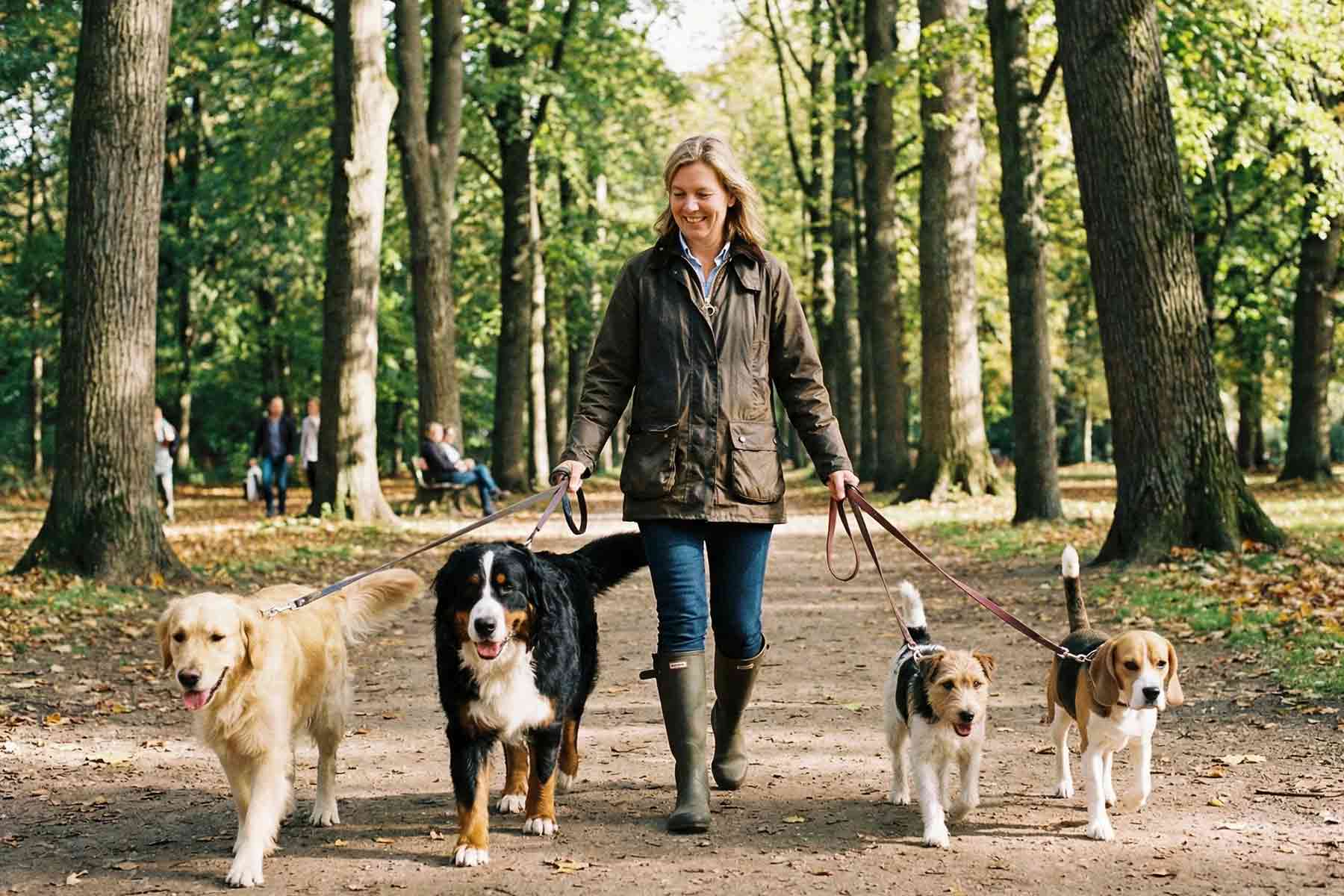
Group walks where you walk multiple dogs simultaneously can significantly increase your hourly rate. Walking four dogs for 30 minutes at $20 each generates $80 for half an hour of work, translating to $160 per hour of active walking time.
Step 6: Grow your business
After setting your rates and getting your legal ducks in a row, the next phase is focused on marketing and securing clients. You need a simple yet effective plan to build your client base from the ground up.
Start by creating high-quality, professional marketing materials like business cards and brochures. Use social media to share engaging photos and videos of your happy clients (with their owners' permission, of course). Focus on building a presence in your local community through word-of-mouth referrals.
To get a full strategy on scaling your operations and managing logistics, check out our in-depth guide: How to start a dog walking business.
How to get dog walking clients
As you look for ways to streamline your business and maximize your visibility, consider using professional platforms designed to connect service providers with local customers.
Create a profile on HomeGuide and take advantage of our free all-in-one booking and business management platform. It instantly connects you with potential customers searching for local dog walkers and pet sitters in your area. Use our tools to manage your schedule, accept bookings, and organize your client list—all for free.
It's an easy, powerful way to fill your schedule and spend more time walking dogs instead of managing paperwork.
FAQs about becoming a dogwalker
How long does it take to become a dog walker?
You can realistically start your dog walking business within 2 to 4 weeks. This timeframe includes gaining initial hands-on experience, obtaining Pet First Aid certification, securing insurance, and completing the basic legal setup. Building a full client roster typically takes 2 to 3+ months.
Do dog walkers need insurance?
Yes, dog walkers need insurance. Liability insurance protects you if a dog is injured, causes an injury, or damages property while in your care. Bonding adds another layer of trust by covering potential theft claims.
How many dogs can one person walk at once?
Most professional dog walkers safely handle 2 to 4 dogs simultaneously, depending on the dogs' sizes, temperaments, and training levels. Many cities have legal limits on the number of dogs one person can walk at once, typically ranging from 4 to 8 dogs maximum.
Using our proprietary cost database, in-depth research, and collaboration with industry experts, we deliver accurate, up-to-date pricing and insights you can trust, every time.